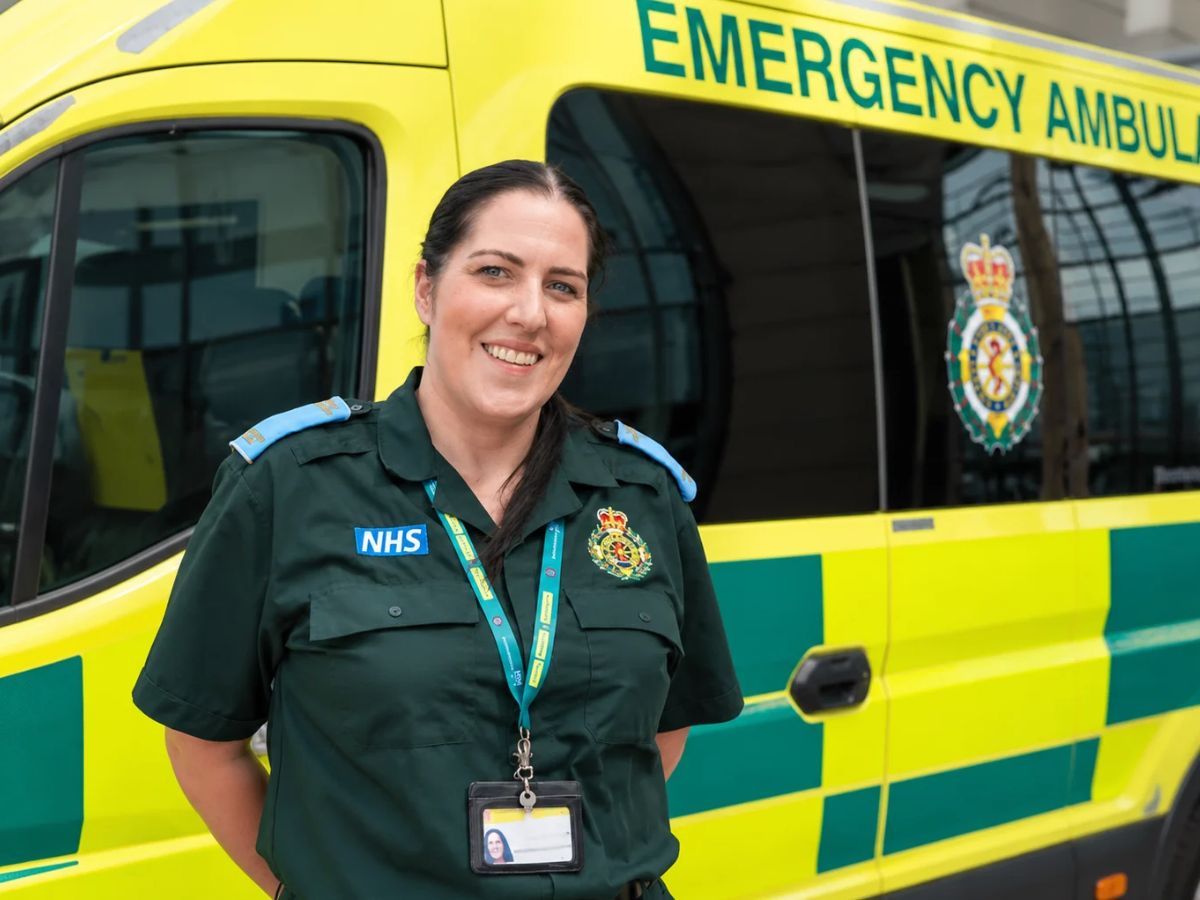
Michelle Brotherton, Non-Emergency Service Operations Delivery Director at West Midlands Ambulance Service
Somewhere in a control room in Stafford or Coventry, a booking handler is working out how an elderly patient with limited mobility will reach a hospital clinic by mid-morning. The journey will not feature in any ministerial speech.If it fails, a consultant loses a patient from the list, a scan slot goes unused, and the waiting list that officials want to see fall edges upwards.
This is the territory overseen by Michelle Brotherton, Non-Emergency Service Operations Delivery Director at West Midlands Ambulance Service. In the past year her teams arranged 792,813 patient journeys. The Trust delivers five Patient Transport Service contracts across the West Midlands and Cheshire and runs four dedicated control rooms, in Stafford, Coventry, Warrington and Frankley. Holding that many contracts together, each with its own commissioners and expectations, is an exercise in operational discipline that rarely earns public credit.
Brotherton's own description of the work is instructive. Control room staff, she says, are at the centre of the service, answering calls, booking journeys and supporting crews on the road. Many directors would place the vehicles at the centre. Placing the control room there suggests an understanding of where patient transport is actually won or lost, which is in the quality of scheduling decisions made hours before a vehicle leaves its station. On the evidence of scale and stated approach, this is an operation led with seriousness.
The national context makes that seriousness valuable. England's elective waiting list remains stubbornly large, and recovery plans lean heavily on productivity: more procedures per theatre session, fewer wasted slots. Missed appointments are an old source of waste, and estimates of their annual cost across England run to more than a billion pounds. Many causes sit outside the NHS's control, but a patient who cannot get to hospital is a cause the system can address. Reliable transport is therefore an input to elective recovery, even if it sits in a different budget line from the operating theatre.
There is also a question of what the service asks of people. Patient Transport Service users tend to be older, frailer or undergoing repeated treatment such as dialysis or cancer therapy, where a missed journey carries clinical consequences. A control room that matches vehicle, crew and patient need accurately, and recovers quickly when a plan falls apart, protects those patients in ways that never appear in a headline performance measure. Brotherton's emphasis on professionalism and compassion in her teams reads less like a slogan than a recognition of that fact.
Policy is moving in a direction that raises the stakes. The government's ambition to shift care from hospitals towards neighbourhood and community settings is sensible in principle, yet it changes the geography of travel. Patients may be sent to a greater number of smaller sites, and each of those adds complexity to routing and scheduling. Leaders who can run multi-contract, multi-region transport operations will be needed to make that shift work in practice, and the people running them are seldom included when strategy is drafted.
For NHS executives and policymakers the implication is plain. Non-emergency transport is too often treated as a procurement detail rather than a component of access. Commissioners should look at operators who manage several contracts across boundaries, as West Midlands Ambulance Service does, and ask what their control room models can teach less settled services. Integrated care boards planning elective recovery would do well to involve transport leaders early, before appointment capacity is created that patients cannot physically reach.
The public record offers limited performance data on the Patient Transport Service itself, and a fair assessment should say so. What it does show is a director responsible for a large, geographically spread operation who understands its mechanics and speaks about the people who run it with evident respect. In a health service that struggles to value its logistical backbone, that kind of leadership is worth recognising, and worth copying.