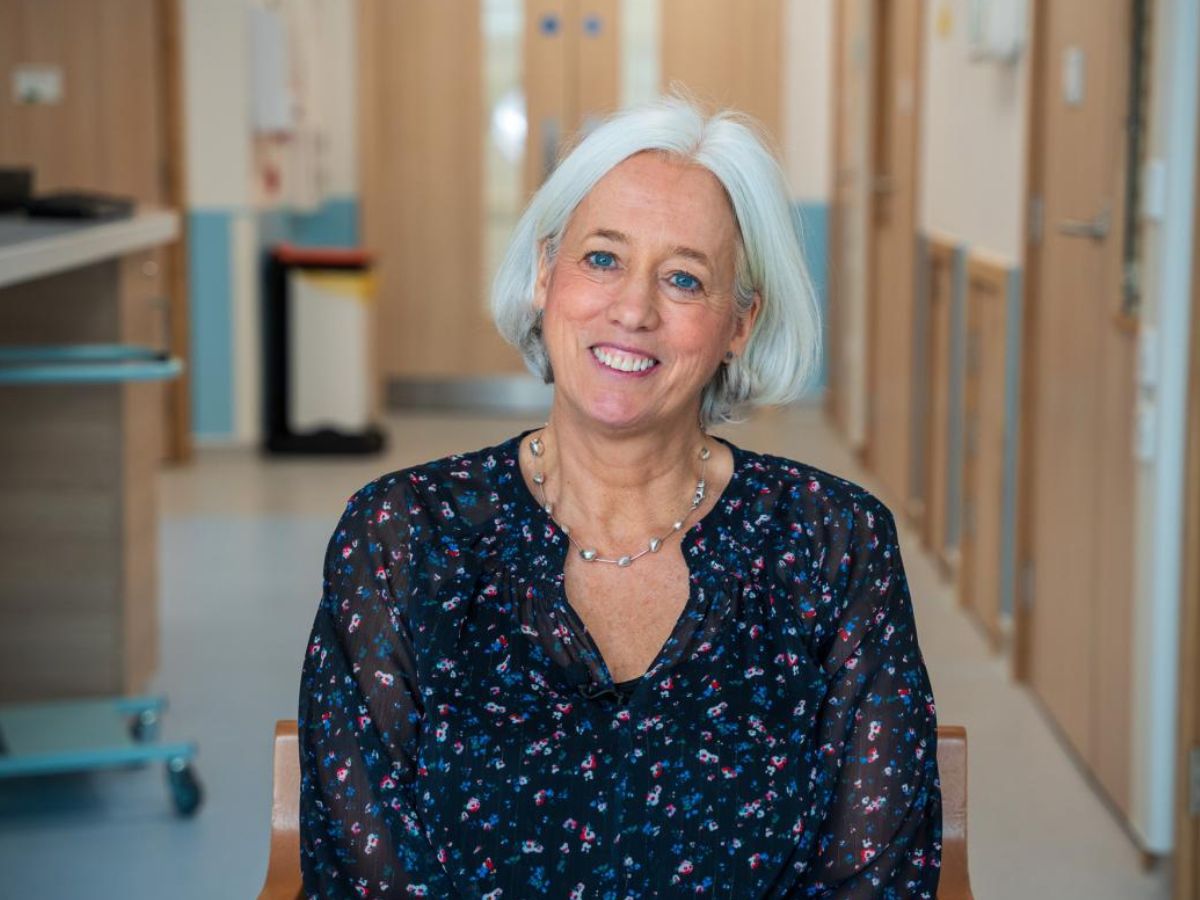
Dr Sarah Jowett, Consultant Gastroenterologist and Speciality Lead
A patient waiting for an endoscopy at Bradford Royal Infirmary now does so in a private pod with its own ensuite, before and after the procedure. It is a modest detail, and the sort that rarely features in discussions of NHS recovery, which tend to run on throughput figures and capital totals. Yet it explains why the Trust's £25m Endoscopy Unit has just won a national design award, and why the clinician who leads the service deserves attention alongside the architecture.
Dr Sarah Jowett has been a consultant gastroenterologist at Bradford Teaching Hospitals since 2003. She is the speciality lead for gastroenterology and endoscopy, and her practice covers the full range of endoscopic modalities. That includes endoscopic ultrasound and ERCP, together with spyglass cholangioscopy, procedures that sit at the technically demanding end of the discipline. She also sits on the regional pancreatic cancer multidisciplinary team, the forum in which diagnostic findings are matched to treatment decisions on some of the most time-sensitive pathways in cancer care.
The public account of the award does not itemise her contribution to the building, and it would be wrong to invent one. What it does show is that the judges commended the unit for patient dignity, infection control and the use of its patient pods. Those are the concerns of someone who has spent two decades watching how a procedure room actually runs, where patients wait anxiously, and how contamination risk shapes every corridor and turnaround. An architect can draw a good building. A clinical lead of long standing is the person who can tell the architect what the building must do on a Tuesday afternoon with a full list.
That distinction matters because NHS capital is scarce and the penalties for getting it wrong are long. A unit built around the wrong flow of patients, or without regard to cleaning cycles, will lose capacity every day for decades. Eight procedure rooms attached to the main hospital represent a considerable commitment for a single trust, and the Trust reports that the unit is already providing more appointments and reducing waiting lists. Diagnostic capacity is the point at which elective recovery and cancer performance meet, and endoscopy is among the services where delay is most visible to patients and most costly to outcomes.
Tenure is the second part of the story. Consultants who remain in one organisation for more than twenty years are not the norm in a workforce under strain, and the knowledge they carry is not easily replaced. Dr Jowett's qualifications in medical education suggest she has also invested in the next cohort, which matters in a speciality where capacity depends on trained endoscopists as much as on rooms. Her own words about the award credit the whole team and everyone involved in the project, which is how a lead who understands that a service is a collective effort tends to speak.
There are lessons here for NHS executives. Clinical leads are often consulted late in capital programmes, once the envelope is fixed and the arguments are about finish and cost. Bradford's result suggests the better course is to involve a credible, experienced specialist from the start and to give her authority over the questions that determine whether a unit performs. Procurement frameworks and delivery partners matter, and the project's local spend, apprenticeships and local employment show that a hospital build can carry wider public value. Even so, the clinical brief decides whether the building justifies its cost.
For policymakers, the case shows that diagnostic expansion announced in Whitehall is delivered by individuals in trusts, and that their judgement shapes the outcome. Funding allocations can create the opportunity, but they cannot supply the clinical authority needed to use it well. Retaining and empowering leaders of Dr Jowett's experience is a workforce policy question as much as an estates one.
The award honours a building. It also records, indirectly, the value of a clinician who has stayed, led and taught in the same hospital for more than two decades. A health service seeking faster diagnosis would do well to count that kind of continuity among its assets.