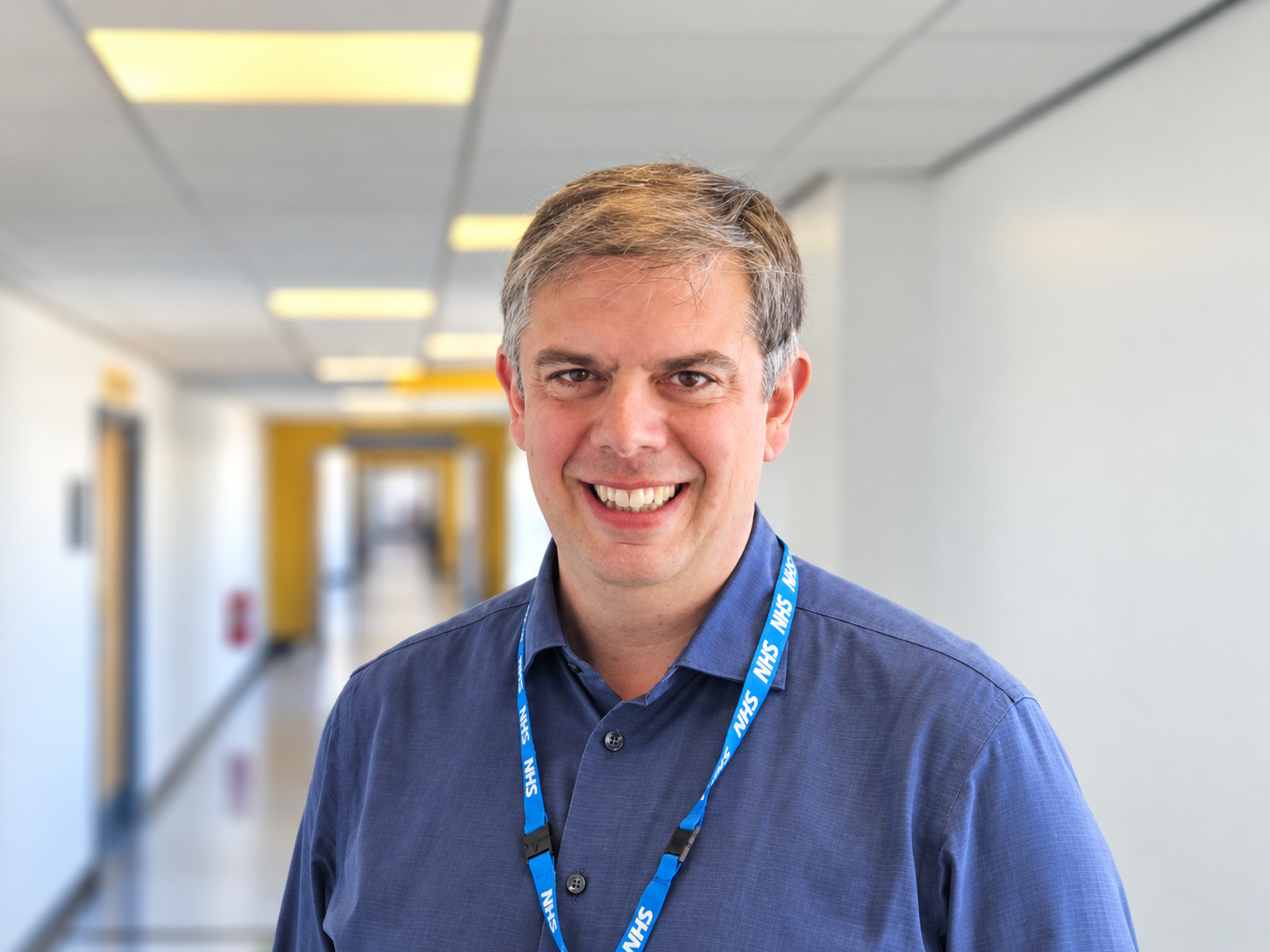
Jon Findlay, COO at Guy's and St Thomas' NHS Foundation Trust
At seven in the morning, before the clinics fill, a hospital's operational lead looks at a screen showing open beds, waiting ambulances and theatre lists at risk of cancellation. None of it makes headlines. Each figure reflects decisions taken days earlier by people who rarely feature in a ministerial speech. Jon Findlay has spent most of his career in that seat, and since January 2017 he has held it as chief operating officer of Guy's and St Thomas' NHS Foundation Trust, among the largest and most scrutinised organisations in the service.
His route matters. He was director of operations at the trust, then moved in January 2014 to Southend University Hospital as chief operating officer and deputy chief executive. Dame Amanda Pritchard, then the trust's chief executive, announced his return in 2016 to succeed her in the post, noting that Southend had given him a different organisational culture and closer working with NHS England and NHS Improvement. That is unusual preparation for an operational role. It combined a smaller hospital's constraints with a view of how national bodies set expectations.
The case for paying attention concerns the role as much as the man. Westminster debates over elective recovery, urgent care and productivity tend to dwell on money, targets and structures. Delivery is decided elsewhere, by whoever turns an annual efficiency expectation into theatre schedules, discharge processes and clinic templates. A chief operating officer who remains in post for the best part of a decade learns where flow breaks and which fixes survive a bad winter. That knowledge is hard to write into guidance and easy to lose when leadership turns over. Patients meet it as a shorter wait for a clinic slot, or an operation that goes ahead on the day it was booked.
Few executive teams can show comparable continuity. Dame Amanda left in 2019 to run NHS England and returned to the trust as chief executive in September 2025, and Mr Findlay was in post at both ends. In between, the trust absorbed the Royal Brompton and Harefield hospitals and, from October 2023, began running a shared electronic patient record with King's College Hospital.
The shared record shows why operational leadership needs depth. Such platforms remove duplication, and the two trusts have reported millions of avoided blood draws as a result. Shared infrastructure also concentrates risk. In June 2024 a ransomware attack on Synnovis, the pathology partnership between the two trusts and a private provider, disrupted blood testing across south east London, postponed operations and strained blood supplies. Mr Findlay has been a member representative on the partnership board since October 2024. Pathology had become an operational dependency governed through a joint venture, and the lesson of that summer was that resilience has to be designed in before it is needed.
Tenure alone proves little. Long service can harden habits, and the trust's results belong to a wide team of clinical and managerial leaders, with the public record saying little about any one executive's contribution. The claim here is narrower. Operational leadership is a public asset that national policy rarely measures.
That gap is becoming consequential. With NHS England being folded into the Department of Health and Social Care and integrated care boards asked to halve their running costs, more operational judgement will rest with trusts themselves. Government will expect them to deliver recovery with fewer intermediaries. Boards should ask how long they keep their operational leaders in post, how those leaders move between organisations as he did, and whether anyone besides the chief operating officer can read the flow of the hospital at seven in the morning. Policymakers could put the same question to the pipeline as a whole, because the supply of experienced operators is finite and no reform programme creates one quickly.
Waiting-list targets will be met or missed on hospital floors, in the hour between the first bed meeting and the first theatre list. Whoever has run that hour for nearly a decade knows things no framework can supply, and the service should be careful about how it values that knowledge.