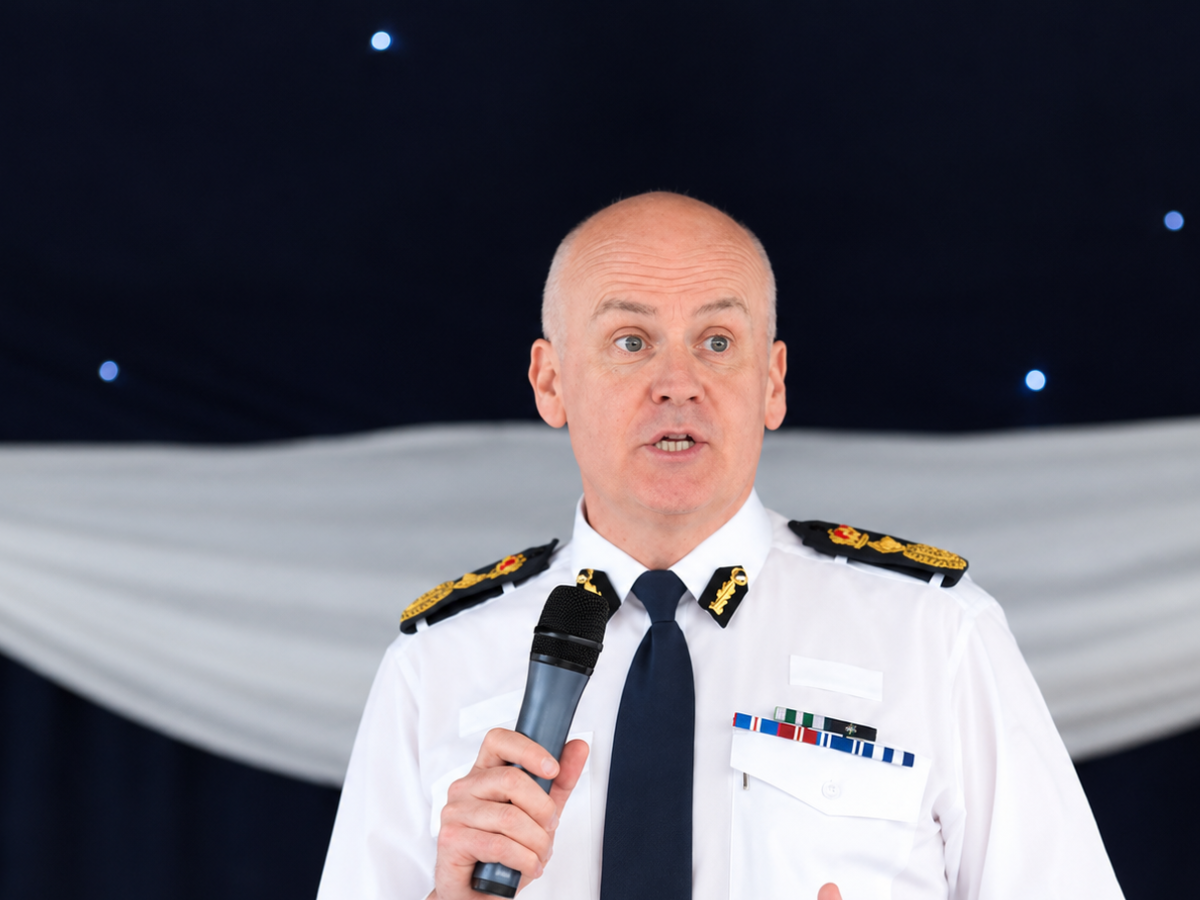
Sam Wadham-Sharpe, Chief Operating Officer at Torbay and South Devon NHS Foundation Trust
By 18 December, a sequence of moves must be complete at Torbay Hospital. Simpson Ward is to relocate to Harbourne Ward at Totnes Community Hospital. Respiratory patients from Midgley Ward in the Tower Block will take over Simpson's space. Hutchings Day Unit leaves level 8 for the Horizon Centre, and Allerton and Cromie wards will each span two levels. The date is the extended deadline set by Devon and Somerset Fire and Rescue Service under its Enforcement Notice, moved from 6 November. Someone has to make that choreography work, bed by bed, in the weeks before winter pressure peaks. In the Trust's structure, that person is the Chief Operating Officer.
Sam Wadham-Sharpe was confirmed in the post in June, having served as interim since May and as deputy before that. The announcement promised stability and continuity. Four months on, those words have a practical meaning. The Tower Block programme is expected to run until February 2028, with construction starting on the first ward floor in spring 2027 and moving through the building one floor at a time. His early years in the substantive role will be spent running a hospital while part of it is rebuilt around patients.
This is an operational story as much as an estates one. Fire compartmentalisation sounds like a capital project, a matter for surveyors and building safety approvals. Its consequences are felt in patient flow. Reduced occupancy in the Tower Block means fewer people cared for in the building at any one time, and the Trust says it will maintain as much inpatient capacity as safely possible without publishing a figure for what that capacity is. That phrase carries the weight of the whole plan, and the COO's performance against it is what patients, regulators and local politicians will watch.
The funding history matters here. The Trust says the risks have been recognised and managed for years. The £8 million secured this week follows £1.8 million announced in September, and one local MP has asked why a crisis was needed before the money was released. The Trust has not framed it that way, and the regional NHS England team has now released the funds. The sequence is nonetheless familiar to anyone in the sector. Backlog maintenance across the NHS estate runs well into the billions of pounds, and capital tends to move at the speed of enforcement action. Trusts with ageing buildings manage risk through training, evacuation planning and incremental investment until a regulator sets a deadline. At that point the cost lands on operations.
There is a constructive side. The Trust's deputy medical director says the changes have accelerated work on same day emergency care and on pathways closer to home. A 12-bed Medical Assessment Unit now exists, and the former EAU4 space has become a discharge lounge that closes overnight. National policy has encouraged this shift for years. A reform adopted under compulsion has less time for testing and less margin if demand overshoots assumptions, and a respiratory ward in winter is a poor place to discover that a pathway needed another month.
For leaders elsewhere in the NHS and for policymakers, Torbay raises a hard question. Estate risk registers deserve scrutiny before a regulator forces the issue, and capital allocation should not reward the trusts that hold out longest. Patients have the simpler instruction, which is to attend their usual location unless the Trust contacts them.
A COO can sequence wards, rotas and discharge lounges. He cannot sequence capital. Mr Wadham-Sharpe has the continuity the Trust wanted, and the programme to February 2028 will show whether that is enough. Any trust with its own ageing tower that waits for its own deadline will put the same role in front of the same arithmetic, with less warning.