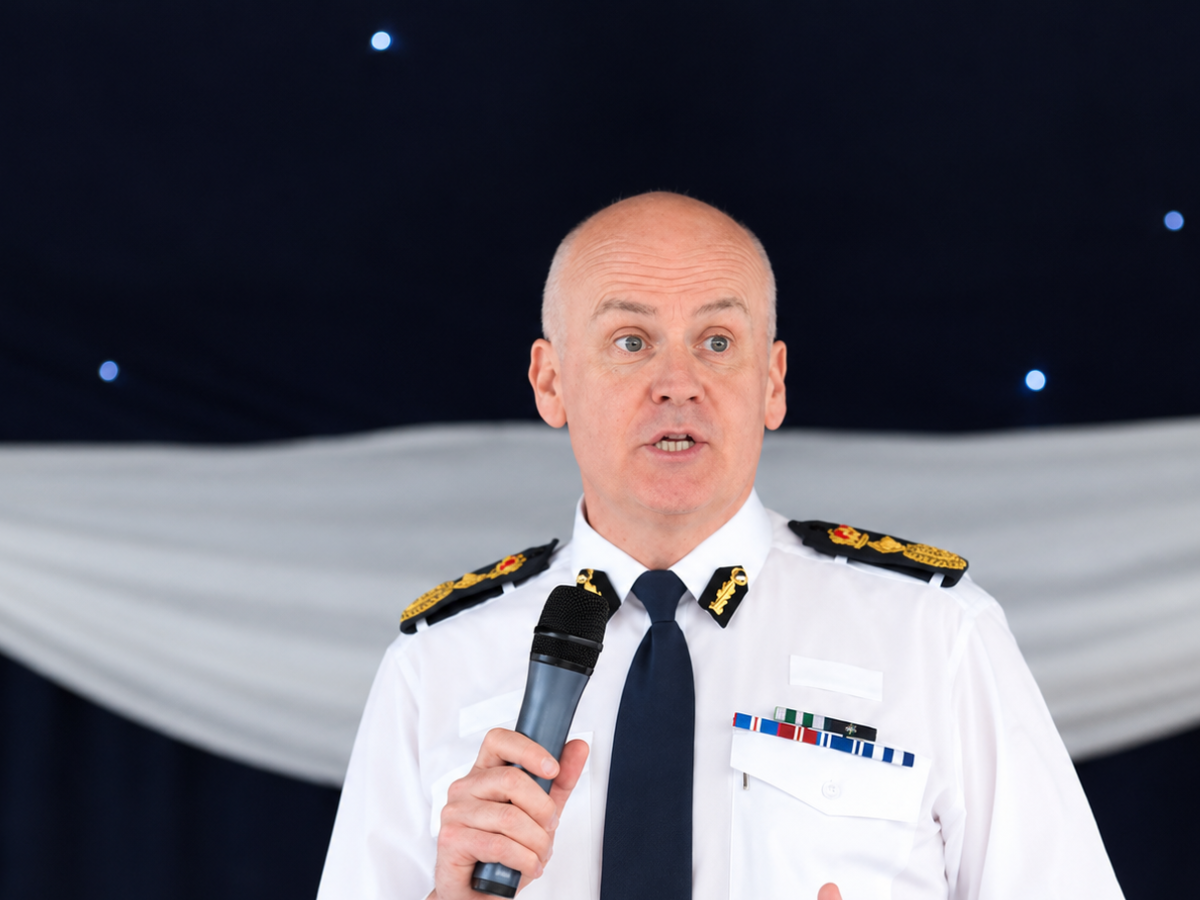
Anthony Marsh, Chief Executive of the West Midlands Ambulance Service University Foundation Trust
Anthony Marsh began his ambulance career in 1987 on patient transport in Essex, ferrying people to routine appointments. Nearly four decades later he has told the health service that its ambulance sector could not mount an adequate response to an attack on the scale of the Manchester Arena bombing or the 7/7 London attacks. Chief executives rarely say such things in public, and rarer still do so while holding a national portfolio for the very subject at issue.
His credentials for the brief are difficult to dispute. He rose through emergency operations in Hampshire, Lancashire and Greater Manchester, where as director of operations he led the ambulance service through the Commonwealth Games. He took his first chief executive post in Essex before moving to the West Midlands when the trust formed in 2006. He holds the national portfolio for emergency planning, response and resilience, advises the Department of Health and Social Care and NHS England as strategic ambulance adviser, and has three master's degrees. Few people in English health care combine operational memory with this much proximity to Whitehall.
That proximity is what makes the warning so pointed. Marsh says that almost a decade after the Manchester Arena bombing, little progress has been made on most of the public inquiry's recommendations on ambulance capacity. The sector has asked for more than £100 million to close gaps in training and equipment. His own trust needs £32 million a year in revenue and £23 million in capital. NHS England has not said how much it will provide or when. The national terrorism threat level, raised to severe earlier this year after a series of stabbings in Golders Green, means the delay carries a live risk.
Marsh deserves credit for stating the problem plainly. Health leaders operate under a strong incentive to reassure ministers and the public, and an executive who puts a figure on a shortfall and names the attacks the system cannot yet answer is accepting reputational exposure. Preparedness failures tend to surface only after an incident, when the inquiry arrives and the recommendations are written. Raising the alarm before that point is what a resilience lead is supposed to do.
The harder question concerns what the warning implies about the portfolio he holds. A national lead who reports that most inquiry recommendations remain unaddressed invites the reader to ask what the role has been able to achieve. The answer may be that the post carries influence without budgetary authority, which is common in NHS governance. Leads advise, commissioners decide, and money moves through channels that a single chief executive cannot direct. If so, the weakness is structural, and Marsh's public intervention reads as the act of someone who has exhausted private routes. Even so, accountability that depends on an individual's willingness to go public is fragile.
There is also a competing pressure to weigh. Ambulance trusts are measured daily on handover delays, response times to heart attacks and strokes, and the queue outside emergency departments. Capital and training money spent on mass casualty readiness is money not spent on the pressures that patients and ministers see every week. Preparedness for a low-probability, high-consequence event always loses the argument to the visible emergency in front of the system. Marsh is effectively asking NHS England to fund insurance in a year when the service is stretched on every front.
For NHS leaders, the lesson is that resilience funding needs a named owner and a date. For policymakers, the unanswered request is a test of whether inquiry recommendations bind anyone once the public attention has passed. For the public, the assumption that someone has already made this safe deserves scrutiny.
On the evidence supplied, Marsh is performing the duty of his role well. He has the experience, he has quantified the gap, and he has said it where it can be read. The verdict on his tenure will depend on what NHS England does next. If the funding arrives, the warning will have worked. If it does not, the record will show that the system's most senior ambulance voice told it plainly, and that nothing followed.