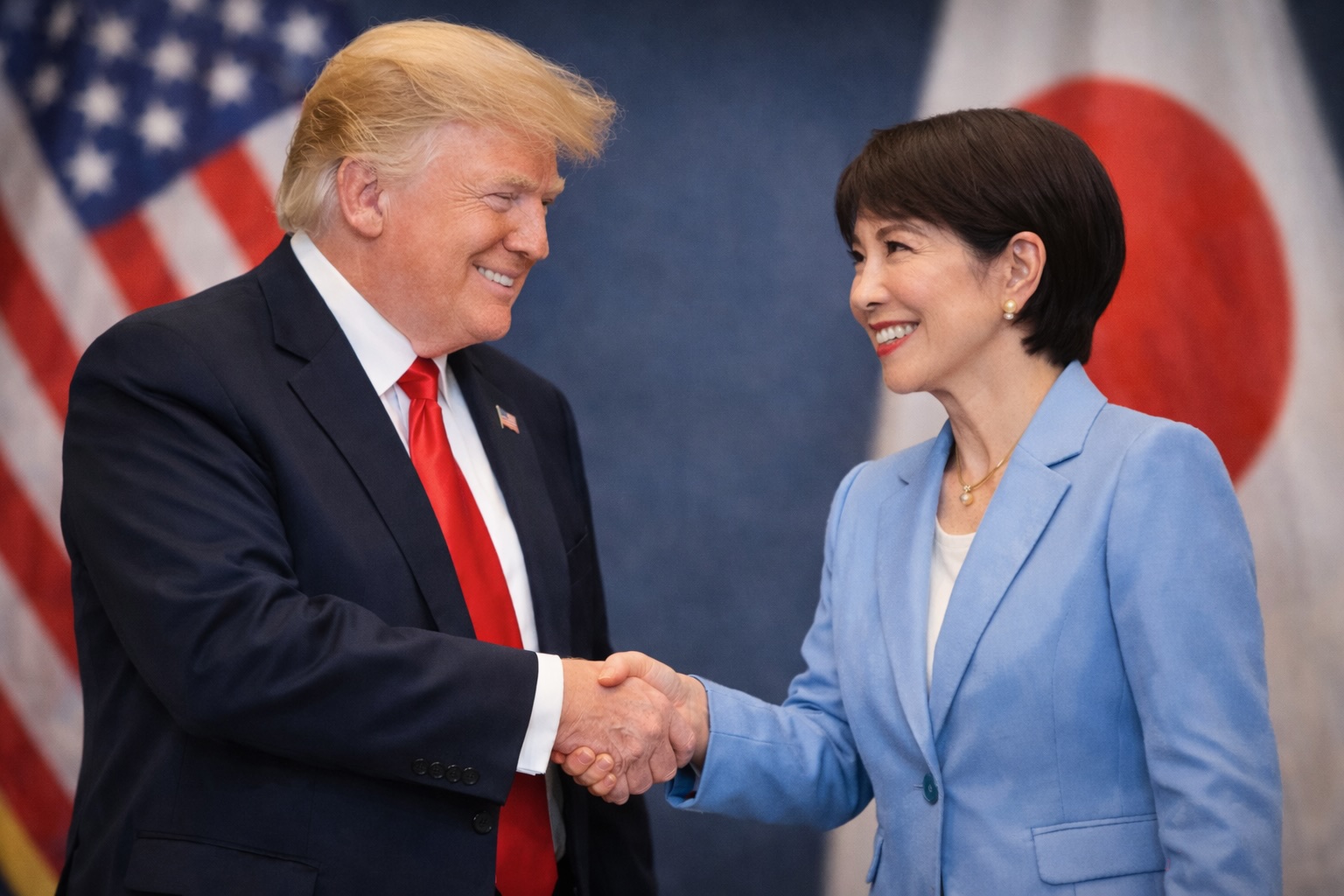
The United States and Japan have formally inaugurated a monumental economic and strategic partnership, committing an immediate £36 billion in joint investments as the critical first phase of a much broader, half-a-trillion-pound trade and investment framework. This landmark agreement, publicly announced on 17 February 2026, is the centrepiece of a high-stakes alliance between US President Donald Trump and Japanese Prime Minister Sanae Takaichi. Its explicit purpose is multi-faceted: to turbocharge economic growth within both nations, dramatically expand domestic industrial and manufacturing capacity, and, most strategically, significantly reduce the dangerous over-reliance on foreign supply chains, especially those currently dominated by the People’s Republic of China.
Targeted Investment in US Energy Infrastructure
This initial, substantial £36 billion tranche of funding is not merely symbolic; it is meticulously targeted at high-impact, transformative infrastructure and manufacturing projects designed to yield immediate strategic benefits. The most significant component, consuming the vast majority of the funds at £33 billion, is slated for the construction of an enormous natural gas power plant in Portsmouth, Ohio. This facility is planned to be operated by SB Energy, a subsidiary of the Japanese multinational conglomerate SoftBank, underscoring the deep financial and technological commitment from the Japanese side.
Upon completion, this Ohio power generation complex is projected to be the largest of its kind in US history, boasting an unprecedented capacity of approximately 9.2 gigawatts. The strategic placement and massive scale of the plant are directly aimed at meeting the rapidly escalating energy demands of America’s burgeoning digital and electrified economies. This includes providing reliable, high-volume power for the hundreds of new data centres required to run advanced Artificial Intelligence (AI) and cloud computing services, as well as supplying the expansive electricity needs of the country’s swiftly growing electric vehicle (EV) charging networks. This investment is viewed by analysts as foundational, positioning the US for the next wave of technological and energy transition.
Boosting Export Capacity and Energy Security
Beyond the energy sector, the initiative addresses critical bottlenecks in the nation’s export capabilities. A substantial £2.1 billion is allocated for the construction of a cutting-edge, deep-water crude export facility on the Texas coast. Named the GulfLink terminal, this project is designed to provide the necessary infrastructure to facilitate an estimated annual volume of crude exports potentially reaching up to £30 billion. The terminal’s deep-water capacity allows for the loading of Very Large Crude Carriers (VLCCs), making US crude oil significantly more competitive and accessible to global markets, thereby enhancing America’s energy security posture and influence abroad.
Securing Critical Materials: The Synthetic Diamond Project
Perhaps the most strategically acute investment is the £600 million project for a synthetic industrial diamond plant to be constructed in Georgia. While appearing modest in comparison to the multi-billion-pound energy projects, this facility addresses a critical materials gap vital for the security of both nations’ advanced industrial base. Synthetic diamonds are not merely luxury goods; they are essential for high-precision tooling, advanced optics, and, critically, are indispensable inputs in the highly competitive semiconductor and advanced manufacturing sectors. By establishing a secure, domestic source for this critical material, the initiative directly mitigates a vulnerability that could be exploited by geopolitical rivals.
The Strategy: Achieving "Technology Sovereignty"
The core strategic rationale underpinning this entire agreement is an unambiguous effort to reduce and eventually eliminate global dependence on China for critical minerals and essential manufacturing inputs. These resources are the foundational components for all modern high-technology applications, from advanced weapons systems to consumer electronics and electric vehicle batteries. By channelling massive investments into domestic energy production, advanced manufacturing, and securing key material inputs, the partnership explicitly aims to achieve what policymakers are terming “technology sovereignty.” This concept centres on the economic security and self-reliance of the United States and Japan, insulating their industrial ecosystems from external geopolitical pressures.
Political Context and Future Outlook
The political backdrop for this monumental announcement is characterised by persistent, high-level geopolitical tensions across the Asia-Pacific region. Prime Minister Takaichi, in her public remarks, emphasised that these projects will serve as a powerful force for strengthening economic ties and deepening the intertwined industrial ecosystems of the United States and Japan, fostering a relationship built on mutual resilience. President Trump, for his part, hailed the investment push as the launch of a “MASSIVE Trade Deal with Japan,” a move he directly credited to the success of his administration’s “tariff strategy” and a forceful political push to end what he termed “foolish dependence on foreign sources.”
This initial £36 billion investment is not an isolated transaction but is the direct, tangible output of a larger £550 billion commitment Japan made under a comprehensive trade agreement finalised in July 2025. That previous agreement was notable for including significant US tariff reductions, demonstrating a reciprocal commitment to open and fair trade in return for strategic investment.
Economists and industry observers anticipate that these initial strategic projects will have an immediate and substantial impact, supporting tens of thousands of well-paying jobs across the target states and further aligning US and Japanese economic priorities with the future-facing sectors of electrification, advanced manufacturing, and Artificial Intelligence. The £36 billion is explicitly framed as only the first, highly impactful step in a multi-year programme. It signals a newly assertive and unified approach by the two allies to strategic competition with Beijing, with further, extensive cooperation and concrete actions expected to be detailed at the next high-level meeting between the two leaders, scheduled for March 2026 in Washington. This partnership marks a decisive pivot toward economic security as the central pillar of the US-Japan alliance.


.jpg)
.jpg)
.jpg)