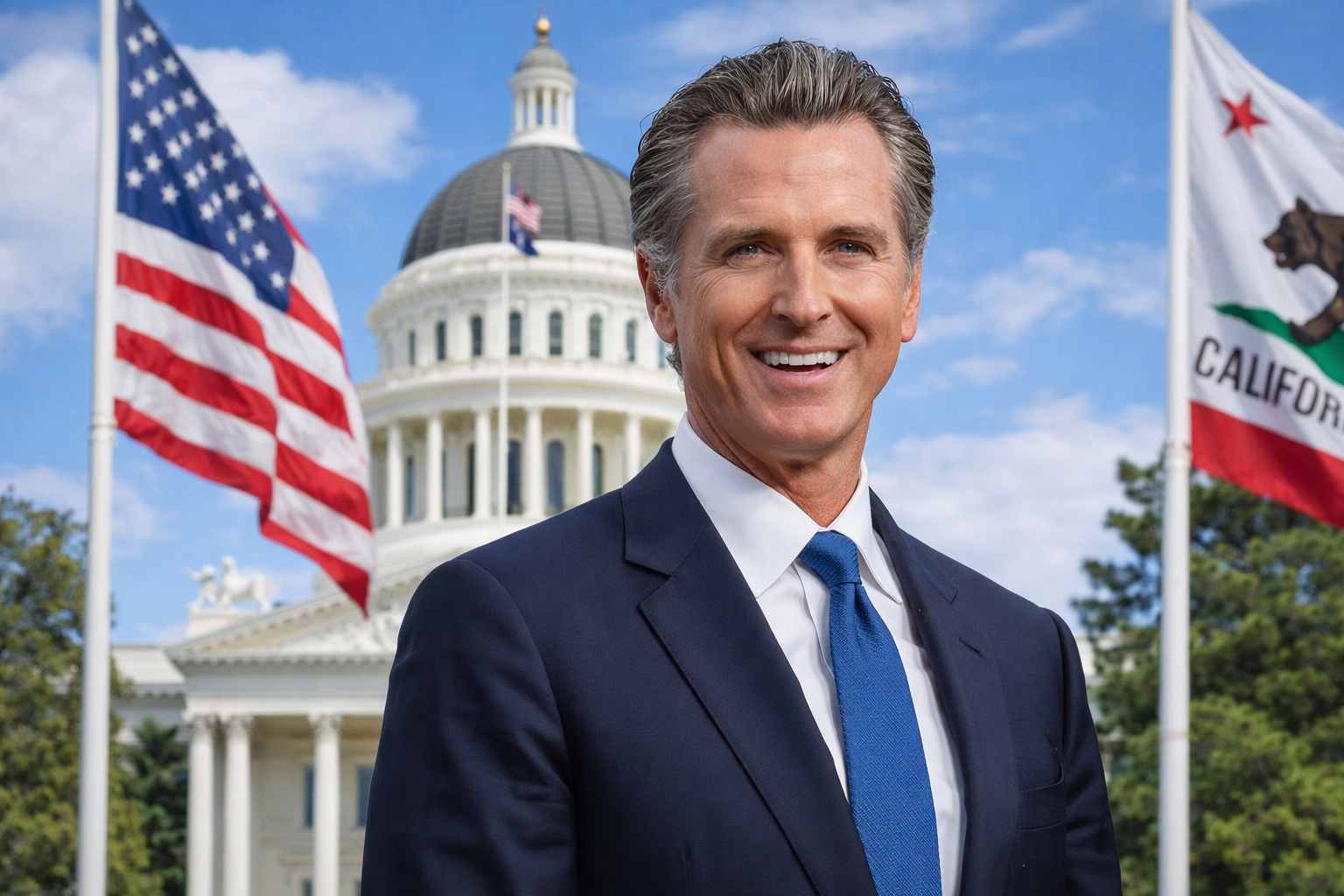
A significant new clean energy partnership between the United Kingdom and the state of California, formalised in London on February 16, 2026, has ignited a fiery political controversy, drawing a particularly sharp rebuke from former US President Donald Trump. This backlash immediately cast a spotlight on the deep and persistent divisions surrounding climate and energy policy, both within the United States and across the international stage. Trump’s condemnation of the agreement was unequivocal, publicly labelling the deal as "inappropriate" and directing intense criticism at both Californian Governor Gavin Newsom and the UK government for choosing to forge this transatlantic alliance.
Framework for Cooperation and Key Objectives
The framework for cooperation is detailed in a comprehensive memorandum of understanding (MoU), which was formally agreed upon by the UK Energy Secretary Ed Miliband and Governor Newsom. The core purpose of this agreement is to significantly bolster cooperation across several key areas: the deployment of clean energy technologies, the stimulation of strategic investment, and coordinated action on climate resilience. The partnership's primary technological and policy focus includes the expansion of offshore wind capacity, the promotion of low-carbon innovation, and the enhancement of resilience against the escalating impacts of climate change. From an economic perspective, a paramount objective for the UK is to secure and expand market access for its leading firms, such as the prominent clean-tech investor Octopus Energy, into California’s vast and dynamic energy market.
The UK government has consistently framed the agreement as a vital strategic economic opportunity, one that is expected to create jobs within the UK while simultaneously accelerating the progress of both jurisdictions toward their ambitious net-zero climate commitments. Governor Newsom, in turn, hailed the partnership as a crucial catalyst for accelerating the clean energy transition across North America, underscoring the commitment of nearly $1 billion in planned UK investment, including the substantial capital injection from Octopus Energy. The multifaceted MoU is explicitly designed to strengthen transatlantic clean energy investment flows, support mutual job creation, foster advanced research collaboration, and enhance joint efforts in nature protection and overall climate resilience.
Trump's Sharp Critique and Policy Divergence
The reaction from Donald Trump, which garnered extensive coverage across US media outlets, was marked by its intense criticism and highly personalised nature. He did not shy away from using a derogatory nickname for Governor Newsom, publicly deriding him as a "loser," and aggressively questioning his actual commitment to environmental goals. Furthermore, he issued a distinct warning to the UK, claiming they were making a profound mistake by aligning themselves with California. Trump asserted that it was "inappropriate" for Great Britain to engage in high-level business with the Governor, launching a broader challenge to California’s progressive governance and its aggressive climate policies. This politically charged attack vividly underscores the fundamental policy divergence on climate and energy that persists within the US political landscape. California continues to pursue some of the most aggressive climate policies globally, setting ambitious emissions reduction targets and implementing extensive regulations. In stark contrast, Trump’s previous administration systematically rolled back numerous federal climate regulations, most notably the repeal of the 2009 Environmental Protection Agency (EPA) endangerment finding, and consistently prioritised the rapid development and exploitation of fossil fuels.
Sub-national Diplomacy and the Future of Climate Action
Despite the political upheaval and noise emanating from Washington, D.C., the UK government maintained a firm stance, emphasising that collaboration with sub-national entities like California constitutes a core, pragmatic component of its overarching strategy. This strategy is centred on advancing global climate goals and significantly boosting UK exports in the competitive green technology sector. This diplomatic incident serves as a clear illustration of a rising international trend: state and regional actors are increasingly asserting significant influence in international diplomacy, particularly concerning critical climate issues, especially in contexts where federal government policies are inconsistent, wavering, or outright hostile to climate action. Climate policy experts and analysts widely argue that truly effective global climate action necessitates diversified, cross-border partnerships that extend well beyond traditional federal governments. This layered approach is deemed essential for mobilising the necessary level of investment, research, and rapid technology deployment required to meet global climate challenges. For the UK, these diversified partnerships offer a pragmatic and secure pathway to securing both investment capital and specialised expertise within the intensely competitive global clean-energy landscape.
The UK-California pact is widely anticipated to stimulate significant technological exchange and substantial investment in critical areas such as advanced offshore wind technology and burgeoning electric vehicle (EV) infrastructure. It represents a concrete example of a more resilient, layered model of international cooperation, one that is designed to adapt to shifting national political priorities and is likely to endure precisely because of its foundational economic and technological benefits. The partnership signifies a crucial development in international climate governance, demonstrating how proactive sub-national actors can bypass federal stagnation to drive global environmental and economic progress. This strategic alliance not only focuses on mutual clean energy deployment but also serves as a potent symbol of enduring transatlantic alignment on climate objectives, despite the deep political fissures in Washington.


.jpg)
.jpg)
.jpg)