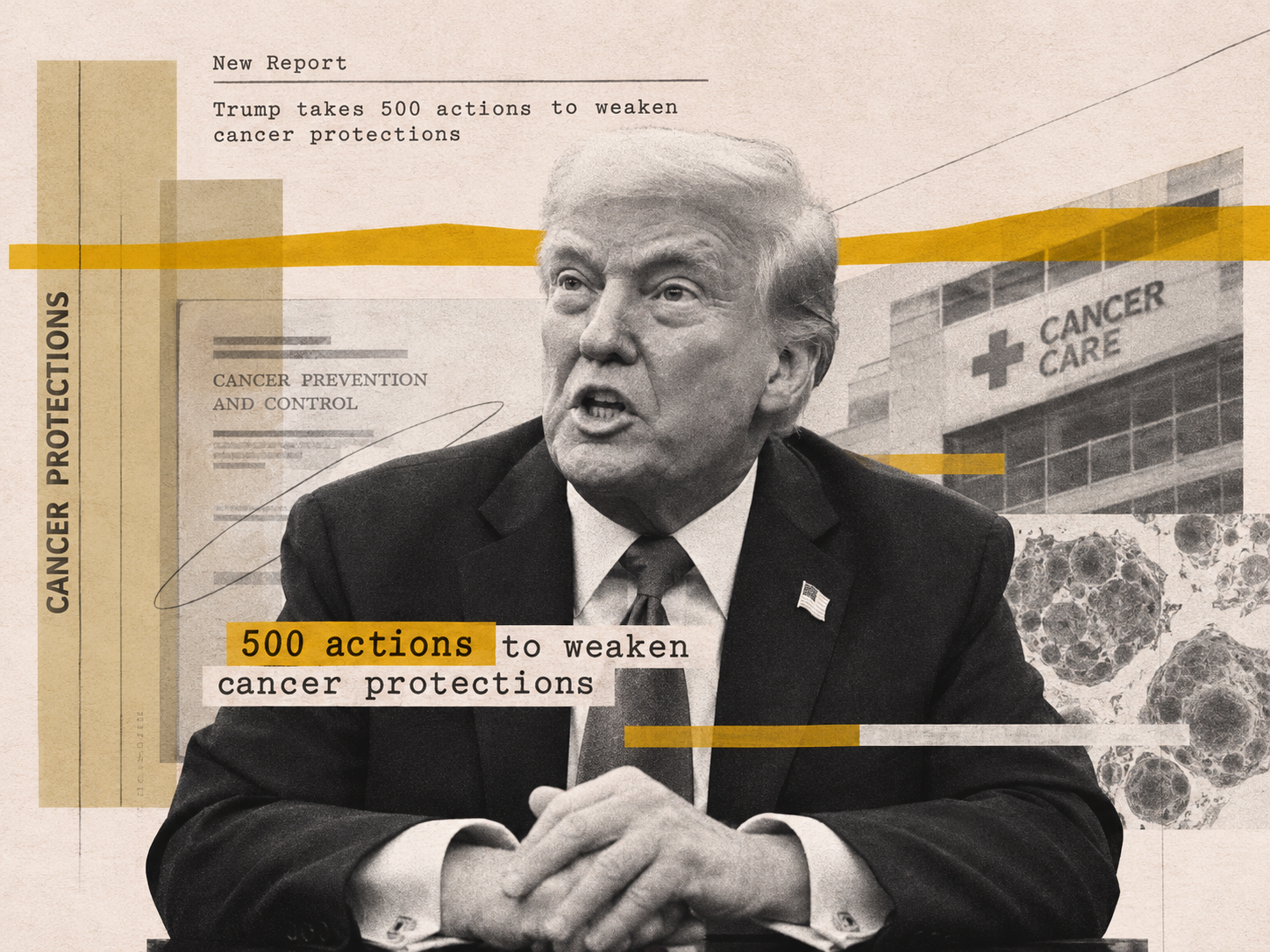
Regulatory history sometimes turns on a phrase. Under President Donald Trump's second administration, the United States Environmental Protection Agency (EPA) is facing criticism over a shift in how it assesses exposure to carcinogens. For decades, American protection against many cancer-causing substances has rested on the premise that no level of exposure can be assumed safe. The agency is now said to be replacing it with thresholds beneath which exposure counts as acceptable, with formaldehyde among the most prominent examples.The claim comes from an October issue brief by the Natural Resources Defense Council (NRDC), an advocacy group that has long litigated against the agency, so it is best read as the account of a party to the dispute. The group describes a coordinated, government-wide programme of rollbacks under Trump's administration.
The headline figure needs care. The 500 actions in the group's count are its running tally of measures across environmental and health policy since January 2025, and only a portion concern carcinogens. The carcinogen strands are specific enough. They include the dismantling of protections against PFAS, relaxed radiation safeguards around nuclear plants, support for liability protection for makers of a weedkiller whose active ingredient is classed as a probable human carcinogen, and a proposal to rescind a 2024 rule requiring emitters of ethylene oxide to cut releases by about 90 per cent. A Harvard analysis estimated that rescission would leave around 2.3 million people exposed while saving industry some $47 million a year.
The link to Britain is indirect and structural. American rules do not bind British regulators, and nothing in the group's material shows exposure rising in this country. The relevance lies in how the NHS now describes its own ambitions. Published on 4 February, the National Cancer Plan for England sets a goal that, by 2035, three in four people diagnosed with cancer will either survive for at least five years or go on to live well beyond their diagnosis. It sits alongside a 10 Year Health Plan built on a shift from sickness to prevention. The prevention commitments summarised by the sector concentrate on smoking, alcohol, obesity, UV exposure and air pollution, risks where the health service has recognised levers in screening, advice and clinical contact.
The timing matters because younger adults are being diagnosed more often. Cancer Research UK analysis found that incidence among 25 to 49 year olds rose by 24 per cent between the early 1990s and 2019, and almost 35,000 people under 50 now receive a diagnosis each year. Bowel cancer in under 50s in England rose from 3.9 to 8.4 cases per 100,000 between 2001 and 2023, according to the World Cancer Research Fund. Better detection explains part of the pattern, though experts doubt it explains the scale. The causes are unknown, and the evidence does not currently tie these rises to chemical exposure. A study following 250,000 adults, Prospect-UK, is examining diet and lifestyle. When causes are unknown, however, the rules that limit exposure to suspected carcinogens become the precautionary line, and the NHS has no hand on them. Every avoidable case also arrives through a diagnostic system already competing with the waiting list the government has promised to cut, so the operational price falls on trusts and not on the departments that set exposure rules.
Who holds those levers in Britain has an unglamorous answer. Defra holds policy on chemicals and the Health and Safety Executive administers UK REACH, the registration scheme that took effect at the end of 2020. The Cancer Plan belongs to the Department of Health and Social Care. Transitional registration deadlines under UK REACH have been extended more than once, most recently this summer, and Defra is consulting on an alternative model intended in part to reduce costs for business. Ministers have also asked regulators to weigh economic growth in their decisions. Each step is defensible as a response to compliance burden, and none amounts to a rollback. Delay removes no protection. It does push back the date by which regulators will hold the hazard data needed to know which protections are required.
Trade is the route by which American practice might reach British rules. Chemical and pesticide standards have been a recurring point of friction in UK and US discussions since the first post-Brexit negotiations, and the Trump administration's approach to exposure limits, which places greater emphasis on the costs of regulation to industry, could carry that view into any renewed talks. Nothing in the public material points to a specific demand at present, though the pressure is easy to anticipate.
The practical implications fall unevenly. NHS leaders and the Department of Health and Social Care could seek a formal health impact test on chemical regulatory decisions, with the UK Health Security Agency as a consultee. That would give the cancer plan a say in decisions that shape its outcomes. Life sciences and health-tech businesses should note that exposure monitoring linked to NHS records is an underdeveloped field, and the research programmes the NRDC says are being run down in the United States leave an opening for British data infrastructure to supply evidence that others will lack. Patients and the public hear the word prevention and reasonably assume it extends to what they breathe and drink.
A cancer plan can set a survival target for 2035. It cannot answer for exposures decided in other departments. The American episode, unfolding under Donald Trump's administration, shows how quickly such protections can be recast as costs once political attention moves on, and the British version of that risk would arrive as slippage with no single decision to oppose. Britain should settle now who answers for cancers that begin outside the health service. Until it does, prevention will remain a commitment made by the part of government least able to keep it.