The debate around the NHS Federated Data Platform has largely been framed through the lens of procurement, vendors and governance. These questions are important and deserve scrutiny, particularly in a system that holds some of the most sensitive data in the country. Yet this framing captures only a narrow slice of what is changing. It risks reducing a structural transformation into a contractual discussion, when the implications extend far beyond the boundaries of a single programme or supplier.
The more consequential shift lies in how the NHS is beginning to understand and operate as a system. For decades, it has functioned as a national service in principle but a fragmented network in practice. Data has been generated everywhere but interpreted in isolation. A patient’s journey has often spanned multiple organisations, yet no single, consistent view has followed that journey in real time. As a result, local and regional variation in waiting times, access to treatment and discharge performance has remained one of the defining characteristics of the NHS. Delays have arisen not only from demand, but from the inability to see clearly where patients are in their pathway and where capacity exists across the system.
Enhancing Local and National Capabilities
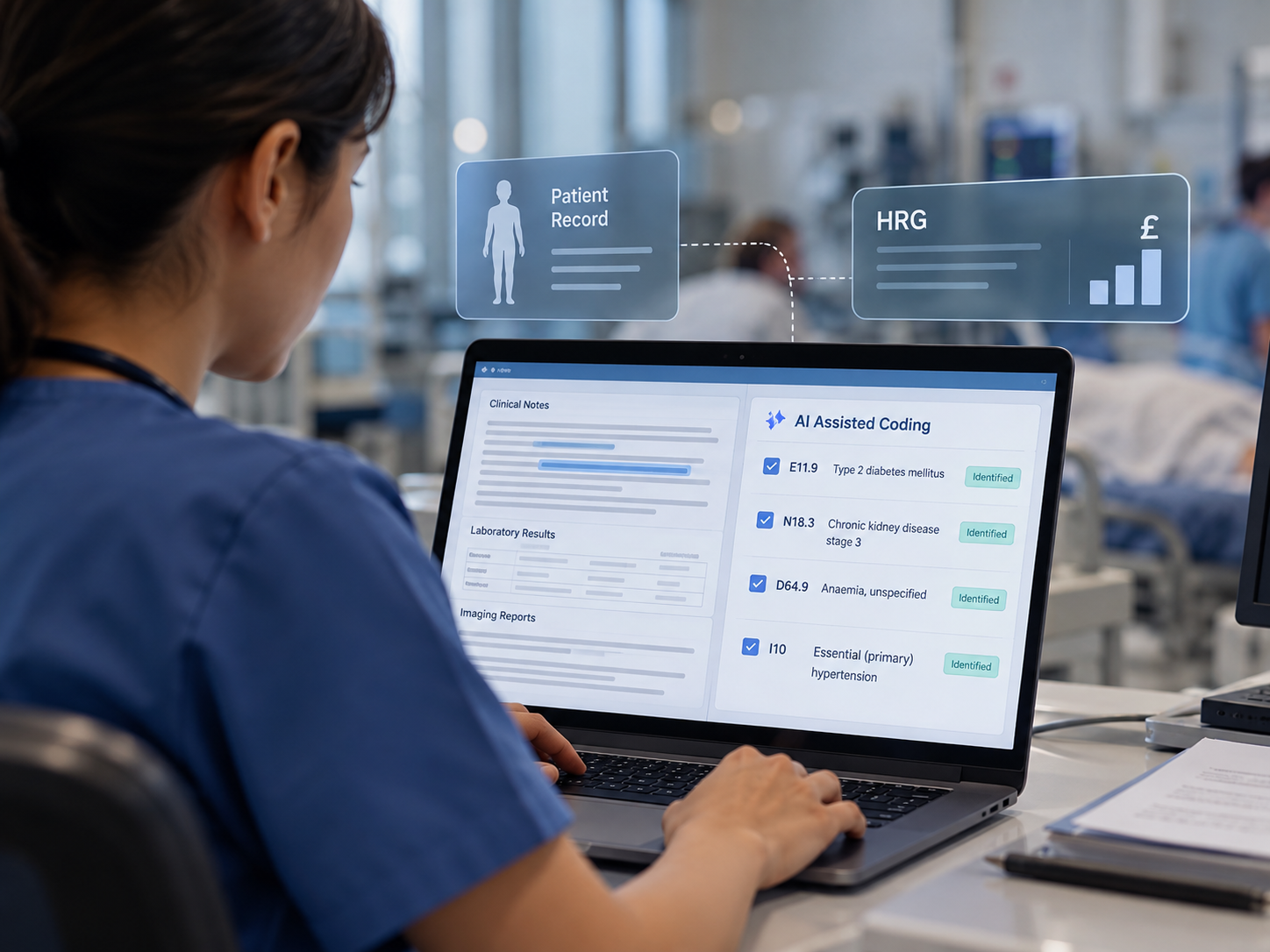
The Federated Data Platform introduces a different model. Rather than replacing local systems, it connects them, creating a shared layer of visibility across organisations, regions and care settings. This allows both local teams and national leaders to work from the same underlying picture. A patient pathway becomes visible end to end, from referral through to treatment and discharge, regardless of where that care takes place.
Across NHS trusts, the impact is already being described in practical and operational terms. At University Hospitals Sussex NHS Foundation Trust, leaders have pointed to a fundamental change in how demand is understood and managed. They describe the platform as having “completely transformed how we manage our waiting lists,” reflecting a move away from static, often outdated records towards a dynamic view of patient pathways that can be actively managed in real time.
In North Cumbria Integrated Care NHS Foundation Trust, the changes are equally tangible at the level of day-to-day operations. Tasks that previously required three to four hours of manual coordination can now be completed in as little as 10 to 15 minutes. This is not simply a matter of efficiency in abstract terms. It represents a reallocation of time and effort, where administrative burden is reduced and capacity is redirected towards delivering care.
Benefits of More Connected Data
These examples illustrate a broader pattern that is emerging across the system. When data is connected, the nature of work changes. Coordination becomes less reliant on manual processes and more dependent on shared visibility. Decisions are made earlier and with greater confidence. Variation is easier to identify and address. Over time, these changes accumulate, reshaping how services are delivered and experienced.
One of the most significant implications lies in the ability to address regional variation more effectively. The NHS has long grappled with differences in performance across parts of the country, with patients experiencing markedly different waiting times and outcomes depending on where they receive care. Local improvement initiatives have achieved progress in specific areas, but the absence of a consistent, system-wide view has limited the ability to coordinate those efforts at scale.
Connected data begins to change that dynamic. By providing a shared understanding of where patients are in their pathway and where capacity exists, it enables a more coordinated approach to managing demand across regions. Local teams retain the ability to respond to their specific context, but they do so with visibility of the wider system. National oversight, in turn, is grounded in real-time operational insight rather than aggregated reporting that may already be out of date.
Addressing Fragmentation Worth £6.2 Billion
This balance between local autonomy and national capability has been attempted before, most notably through the National Programme for IT launched in 2003. That programme sought to impose a single, centralised system across the NHS, at a cost of £6.2 billion. Its failure is well documented, and it reflected a fundamental misalignment between the complexity of local services and the rigidity of a centrally designed solution.
The approach now is materially different. The Federated Data Platform does not seek to replace local systems or enforce uniformity. Instead, it enables interoperability, allowing diverse systems to remain in place while making their data visible and usable across the wider network. Local capability is preserved, while national coordination is introduced. This shift from centralisation to connection is not merely technical. It reflects a more mature understanding of how complex systems operate.
Within this model, the question of data sovereignty remains central. The NHS retains ownership and control of its data, with the platform operating under its instruction and governance. Data is not commercialised or repurposed beyond its defined clinical and operational uses. This ensures that while external technology providers may supply infrastructure, the authority over data remains within the public system.
Implications Beyond Healthcare
The implications extend beyond healthcare delivery into the broader functioning of the economy. A more efficient NHS supports economic productivity by enabling individuals to return to work more quickly and by reducing the long-term burden of untreated or poorly managed conditions. Delays in care carry costs that extend far beyond the health system, affecting workforce participation, social support systems and overall economic performance.
The same infrastructure also underpins advances in research and innovation. For organisations working in complex specialties such as oncology, the ability to analyse data across populations rather than individual institutions represents a significant step forward. Patterns in diagnosis, treatment response and outcomes can be identified at scale, supporting more precise and effective interventions.
This capability transforms the NHS from a system that delivers care into one that continuously learns from it. It enables a feedback loop between clinical practice and research, where insights generated from real-world data inform future treatment approaches and service design.
Cultural Advancements Across Systems
The introduction of this kind of infrastructure also has cultural implications. When data is accessible and reliable, it changes how decisions are made. Organisations shift from reactive management to proactive planning. Innovation becomes embedded within the system rather than dependent on isolated initiatives. Over time, expectations evolve, and what was once considered acceptable performance is reassessed in light of what is now possible.
This is where the concept of a data dividend becomes tangible. The benefits of connected data are not confined to a single metric or outcome. They accumulate across multiple dimensions of the system. Improved visibility leads to better coordination. Better coordination leads to more efficient use of resources. More efficient use of resources leads to improved access and outcomes for patients.
These effects are reinforcing rather than isolated. The alternative is a continuation of the current state, where fragmentation persists and staff compensate for structural inefficiencies through additional effort. In such a system, patients experience delays that could be avoided, and taxpayers fund a service that operates below its potential because the information required to optimise it is not fully accessible.
That position carries its own cost, both human and economic. Patients deserve a system that can see them clearly across their care journey and respond accordingly. Staff should not be required to bridge gaps in infrastructure through workarounds and manual coordination. Taxpayers should expect that the NHS operates with the same level of connectivity and insight that is taken for granted in other forms of national infrastructure.


.jpg)