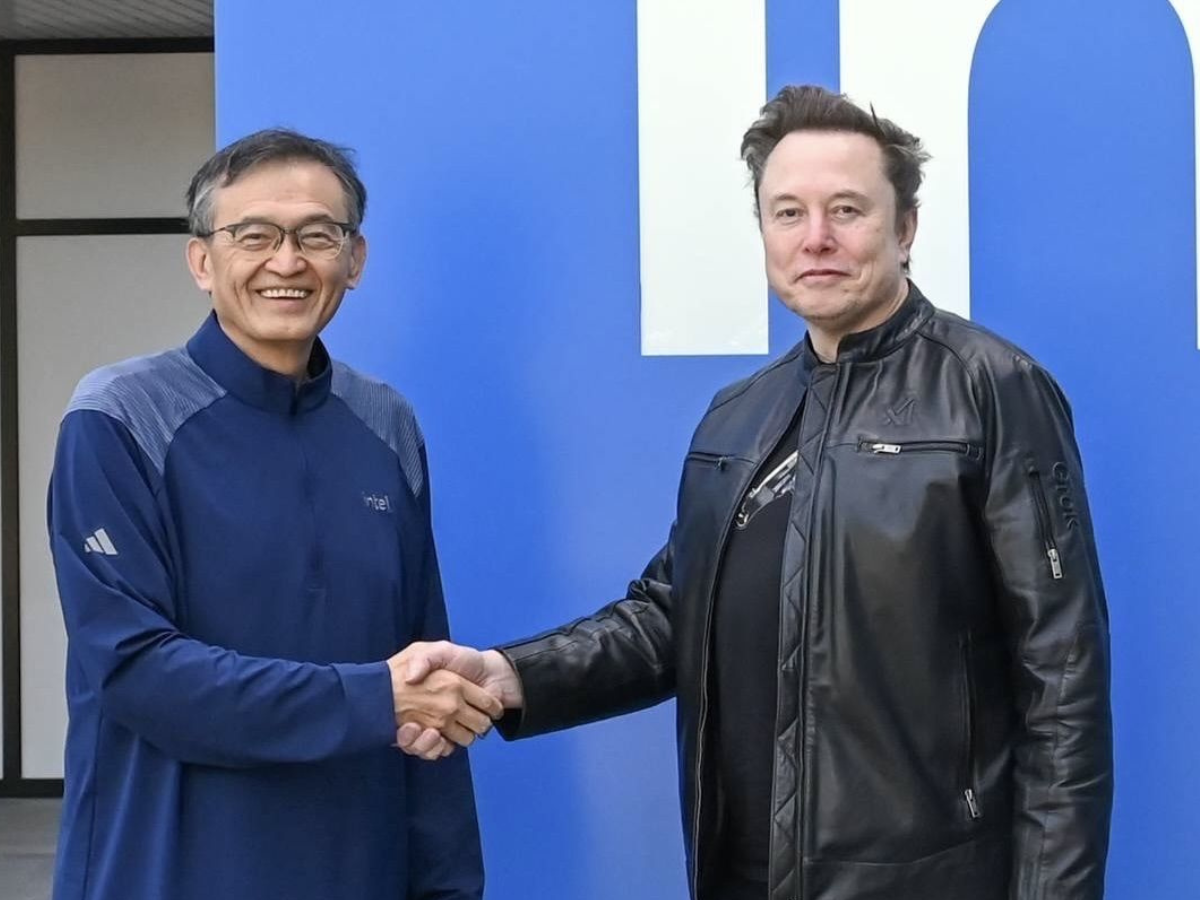
Intel has agreed to join SpaceX and Tesla in an ambitious effort to build a new U.S. semiconductor factory in Texas, though the full scope of its involvement remains unclear.
“Our ability to design, fabricate, and package ultra-high-performance chips at scale will help accelerate Terafab’s aim to produce 1 TW/year of compute to power future advances in AI and robotics,” Intel said in a corporate post on X. Beyond that statement, the company has not shared further details about its role or financial commitments.
The project traces back to March, when Elon Musk announced a collaboration between SpaceX and Tesla to develop chips for AI compute and satellite systems. The initiative also aims to support SpaceX’s proposed space-based data center, as well as the long-term vision of autonomous Tesla vehicles and humanoid robots. Dubbed Terafab, the project carries enormous ambitions but has also raised significant questions about feasibility.
Building a semiconductor fabrication facility is among the most challenging and expensive undertakings in the corporate world. A typical chip fab requires years of construction and planning, and costs can exceed $20 billion before a single chip rolls off the line. These facilities demand enormous clean rooms filled with thousands of highly specialised machines capable of carving microscopic circuits into silicon with extraordinary precision. For SpaceX and Tesla, two companies with no prior experience in chip manufacturing, the announcement prompted widespread skepticism about whether they could realistically pull off such a project.
Intel’s involvement now provides a clearer picture of how Terafab might actually work in practice. Rather than SpaceX and Tesla attempting to build and operate a fab on their own, Intel, a company with decades of semiconductor manufacturing expertise, appears positioned to serve as the backbone of the operation. Intel has been actively seeking large anchor customers to shore up its foundry business, a division of the company that manufactures chips on behalf of outside clients. Terafab could represent a significant win on that front, giving Intel not one but two high-profile customers in SpaceX and Tesla.
That said, the arrangement may come as a disappointment to some observers who had hoped Terafab would represent a genuinely disruptive, from-scratch approach to chip manufacturing. Musk’s companies have built their reputations on unconventional engineering philosophies, moving fast, vertically integrating production, and rejecting legacy industry assumptions. Partnering with Intel, a legacy industry giant, suggests Terafab will operate more within established norms than outside them.
Intel itself has been navigating a difficult period in the semiconductor industry. Once the dominant force in U.S. chip production, the company has lost considerable ground to rivals in recent years. Nvidia has surged ahead by supplying the graphics processors that power artificial intelligence workloads, while AMD has steadily gained market share in both consumer and data center processors. Both competitors have embraced the fabless model, in which chip designers focus solely on architecture and design while outsourcing physical manufacturing to specialised foundries like Taiwan Semiconductor Manufacturing Company.
Intel, by contrast, has continued to invest heavily in its own manufacturing capabilities, a strategy that has been costly and at times troubled by production delays. The Terafab partnership could offer a much-needed boost, validating Intel’s foundry ambitions and providing a stream of high-profile orders.
Markets reacted positively to the news. Intel’s stock climbed more than 3% on the day of the announcement, trading at $52.28 as of 2 p.m. ET, roughly 2.9% above its opening price. Whether that enthusiasm is sustained will likely depend on how much additional detail Intel and its Terafab partners choose to share in the weeks ahead.


.jpg)