The global race to control the future of patient health has entered a new phase, and the starting gun has just been fired again. Verily’s latest $300 million capital injection is not simply another funding round; it is a signal that the battle for healthcare’s data backbone is accelerating at pace. In a market where precision, speed and scale determine winners, the lines are now being drawn between technology platforms and traditional care systems.
At its core, this is no longer a healthcare story. It is a market race, where patient data has become the most valuable asset and artificial intelligence the engine that will determine who captures it. Verily’s raise, backed by a mix of institutional capital and strategic partners, is designed to push deeper into precision health, where clinical data, genomics and real-world evidence converge into a single operating system. The company’s broader strategy reflects a decisive pivot seen across the sector: away from hardware and into software-led infrastructure that can ingest, harmonise and activate vast datasets at scale. In simple terms, the winners will not be those who treat patients, but those who understand them first, fastest and most completely.
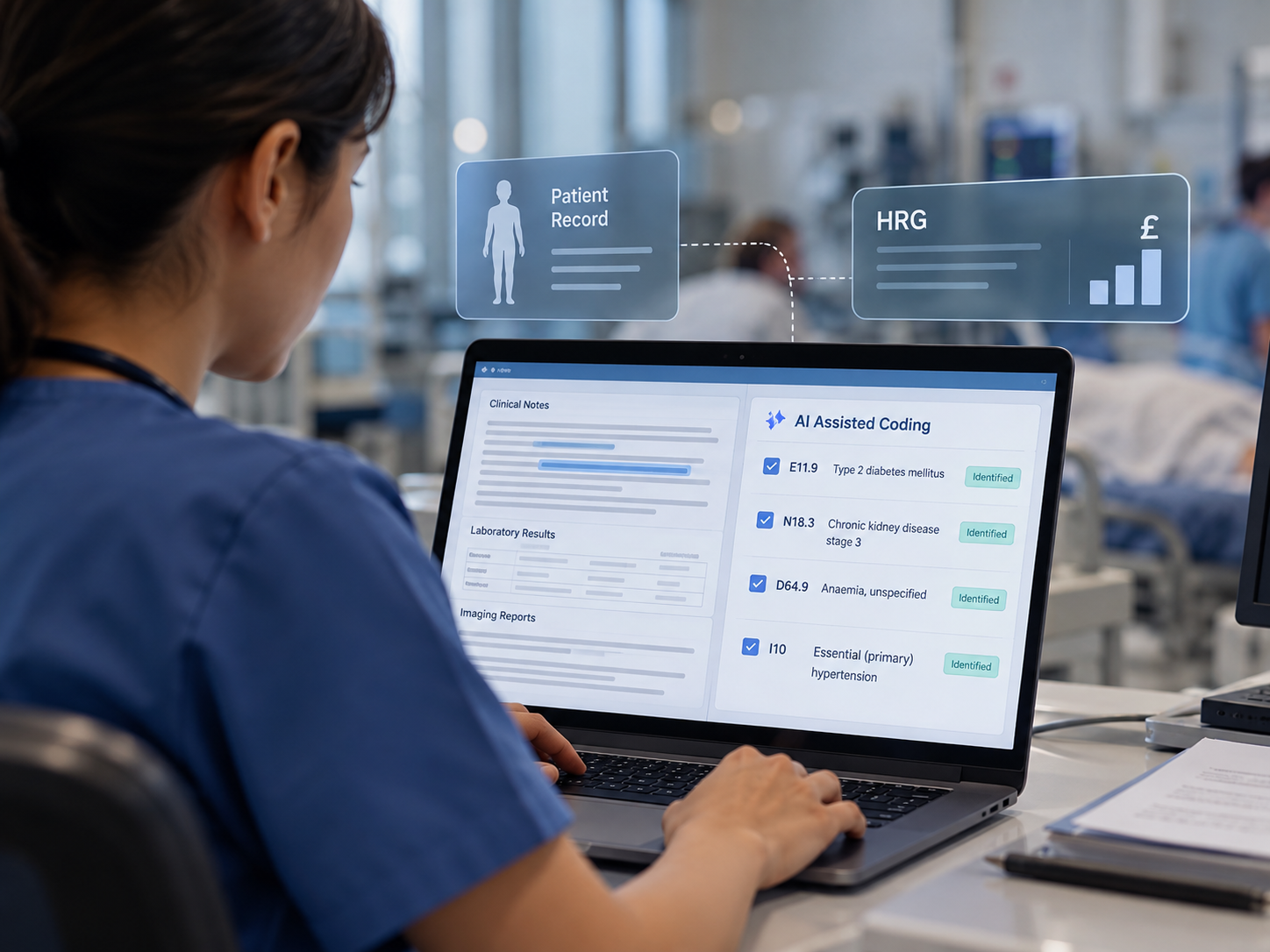
What makes this moment significant is not just the capital, but the architecture being built behind it. Verily’s platform approach, anchored in its AI-native data environment, is designed to act as the connective tissue between fragmented healthcare systems. Its infrastructure enables the ingestion and standardisation of complex biomedical data, turning disparate information into something machine-readable and clinically actionable. This is the real prize: a system where data is not stored but continuously refined, exchanged and deployed across research, clinical trials and care delivery. The implications are profound. Pharmaceutical companies gain faster routes to evidence. Health systems gain predictive insight. Patients, in theory, receive more personalised care. But beneath that promise sits a commercial reality. Whoever owns the infrastructure owns the leverage. In a world of rising costs and constrained health systems, that leverage is becoming increasingly valuable.
The competitive landscape is shifting accordingly. Technology firms, once peripheral to healthcare delivery, are now positioning themselves as indispensable intermediaries. Partnerships with device manufacturers and data providers are expanding the scope of what can be measured, monitored and monetised. Recent collaborations integrating wearable data into clinical research environments point to a future where continuous patient monitoring feeds directly into drug development and care pathways. Meanwhile, the lowering of barriers to entry for researchers through open access platforms signals a deliberate attempt to scale ecosystems, not just products. This is platform economics applied to healthcare: build once, scale infinitely, and capture value at every layer. For incumbents, particularly traditional providers and smaller digital health firms, the risk is clear. Without access to these platforms, they risk becoming downstream participants in a system controlled elsewhere.
The stakes, however, extend far beyond corporate competition. This is a race that will define how healthcare itself is delivered over the next decade. Precision health promises earlier intervention, better outcomes and reduced costs, but it also concentrates power in the hands of those who control data flows. Governments and health systems face a strategic dilemma: partner with these emerging platforms and accelerate innovation, or attempt to build competing infrastructure and risk falling behind. For investors, the direction of travel is unmistakable. Capital is flowing toward companies that can aggregate, analyse and operationalise patient data at scale. For patients, the outcome is less certain. The promise of personalised care is compelling, but it comes with questions about privacy, control and equity.
What is clear is that the market has moved beyond experimentation. The era of pilot programmes and isolated digital tools is over. We are now in a phase of consolidation and scale, where a small number of platforms will emerge as the operating systems of global healthcare. Verily’s latest move is not an isolated event; it is part of a broader acceleration that is reshaping the industry in real time. The race is no longer theoretical. It is active, capitalised and fiercely contested. And like all races of this kind, there will be winners who define the future, and a long tail of participants who are forced to adapt to it.



.jpg)