A 21-year-old woman died in Jefferson County, Pennsylvania, on 30 September, after giving birth at home. Her death certificate lists multiple organ failure, postpartum haemorrhage, liver failure and suspected measles. Her baby survived. On 4 November, state officials confirmed her death as Pennsylvania’s sixth measles-associated fatality this year. The announcement came as doctors and public health departments were seeking clearer federal guidance on the risks of measles during pregnancy. Two infants had already died in August. Pennsylvania has recorded 1,467 cases across 45 counties, including 77 pregnant women. The federal health agency, meanwhile, lists four measles deaths nationally in 2026, while Pennsylvania and New York have confirmed seven between them. The discrepancy is more than an uncomfortable statistical disagreement. It raises serious questions about who is counting, who is listening and whether America's public health leadership can still speak with one authoritative voice.
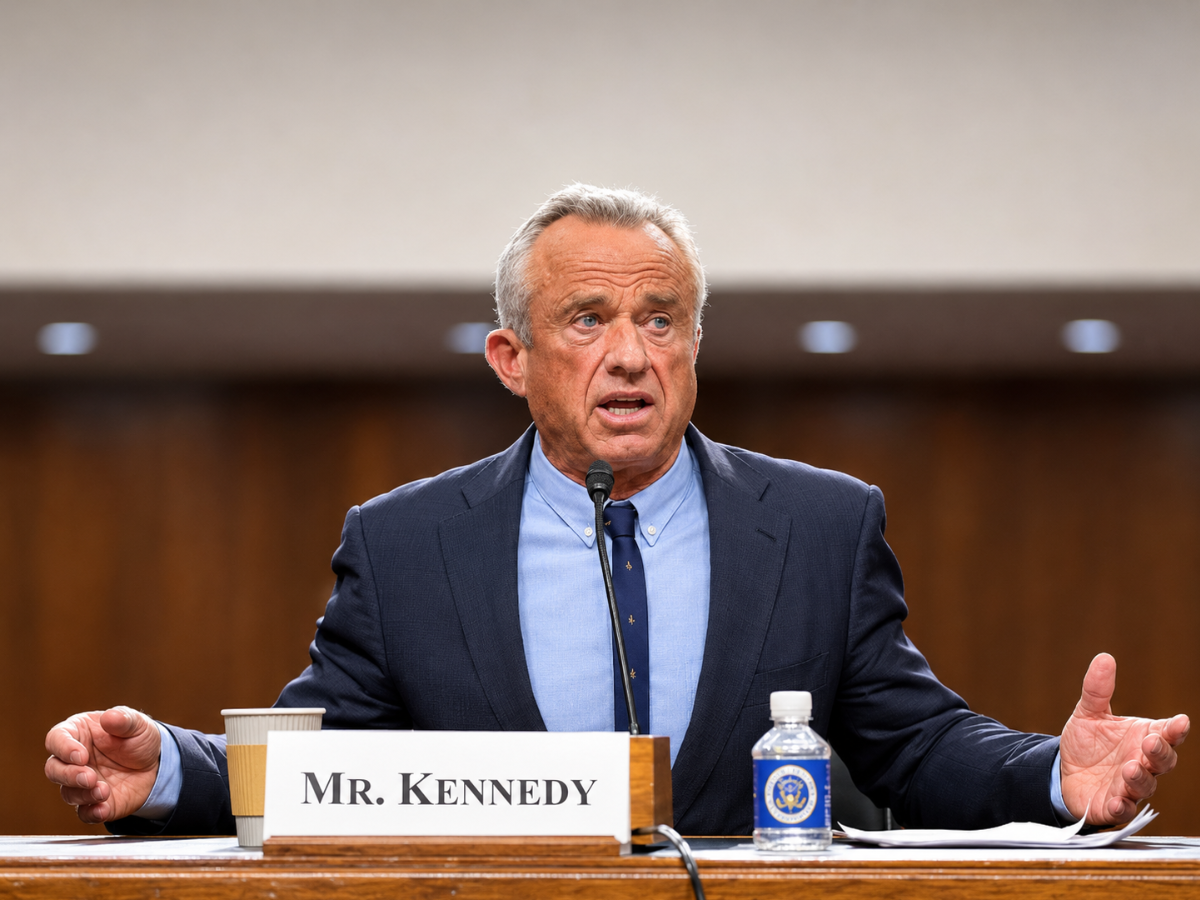
The immediate temptation is to blame the paralysis of Washington's vaccine advisory system. Robert F Kennedy Jr dismissed all 17 members of the Advisory Committee on Immunization Practices in June 2025. In March, a federal judge suspended the appointments of his replacements and the votes they had taken. The committee has not functioned since. Yet the clinical interventions doctors are demanding have not disappeared with its members. Federal guidance already permits an early measles vaccine dose for infants aged six to eleven months where transmission threatens young babies, as well as a second dose for children as soon as 28 days after the first. Neither requires a committee vote. What has been conspicuously absent is a federal authority willing to communicate these options forcefully, alongside a national agency whose assessment of deaths commands the confidence of state officials. This exposes serious shortcomings in public health leadership and the communication of vital medical guidance. Rebuilding an advisory committee alone will not repair it.
British policymakers should resist the temptation to regard America's predicament as somebody else's problem. On 26 January, the World Health Organization announced that the United Kingdom had lost its measles elimination status, following 3,681 cases in 2024 and the re-establishment of transmission. In England, just 91.9 per cent of five-year-olds received one MMR dose in 2024/25, while only 83.7 per cent had received both. The latter figure is the lowest since 2009/10 and falls considerably short of the 95 per cent coverage needed to prevent sustained transmission. A child died of measles in 2025. Britain is already confronting a quieter version of the American crisis, with the same uncomfortable possibility that preventable illness can expose weaknesses long hidden beneath national health statistics.
On paper, Britain's advisory arrangements look considerably more robust. The Joint Committee on Vaccination and Immunisation operates outside the immediate political cycle, while this year's introduction of a combined measles, mumps, rubella and varicella vaccine, alongside an earlier second dose, demonstrates that the machinery can still deliver meaningful policy changes. Ministers should resist congratulating themselves too readily. Advice does not administer an injection. It must be accepted by government, translated into clinical practice and supported by child health records that allow community providers to identify precisely which children have been missed. Even the most independent committee remains powerless when the delivery system downstream cannot locate the people it is supposed to protect.
The geographical divide makes that weakness particularly difficult to ignore. UKHSA data for April 2026 put first-dose coverage at just 72.0 per cent in London and 83.0 per cent in the South West. The agency also reports that vaccination coverage is lowest in London and more deprived communities across every vaccine measured. In 2024/25, only 64.3 per cent of five-year-olds in Enfield had received both MMR doses, while Hackney recorded roughly seven in ten. Researchers at Queen Mary University of London have linked recent outbreaks to urban communities with high residential mobility, arguing that children's immunisation status should be reviewed when they register with a new GP. It is a practical intervention, hardly a grand national strategy, but one that depends on patient records moving reliably between practices and community providers. For health technology suppliers and the digital teams within integrated care boards, this represents a tangible opportunity to improve vaccination tracking, with an outcome that can be measured in coverage rather than software contracts.
The more formidable obstacle is capacity. GP practices and health visiting teams are expected to deliver catch-up vaccinations to older children and adults, a campaign UKHSA says is necessary, while simultaneously managing the familiar pressures of winter demand. Public health specialists have called for easier access to GPs and more health visitors able to vaccinate babies at home. Both proposals require people, time and money, commodities already in short supply across parts of the NHS. As national NHS responsibilities are redrawn, there must also be clarity over who is accountable for vaccination uptake in individual boroughs. Directors of public health and integrated care boards are obvious candidates, although their responsibilities and powers differ. Without a clearly identified owner, a catch-up campaign risks becoming another well-publicised initiative whose progress nobody is required to explain.
Public confidence presents a further challenge, particularly when misinformation crosses borders faster than official reassurance. In November 2025, the medicines regulator issued a statement reaffirming the safety of childhood vaccination in direct response to developments in America. That intervention was itself an acknowledgement that decisions and controversies in Washington can influence parental attitudes in Britain. UKHSA reported on 27 August that vaccination uptake by school entry was showing signs of stabilising. That is welcome progress, but it remains vulnerable to the next outbreak, the next alarming headline and the next high-profile death. Ministers will need to communicate early, clearly and without equivocation when public confidence is tested. America's conflicting death counts offer a warning of what happens when official silence leaves individual states and local authorities to establish the public narrative themselves.
America may eventually reconstitute its advisory committee, and a court could yet restore its previous decisions. Neither outcome will identify an unvaccinated child or reach a pregnant woman who lacks immunity. England already has an independent committee capable of providing expert advice. What it lacks, in the communities where measles is spreading, is sufficient clinical capacity, reliable information-sharing and clear local accountability to turn that advice into action. The test of whether Britain can regain measles elimination status will not be passed in a Whitehall meeting or announced at a press conference. It will be decided in places such as Enfield and Hackney, where the gap between national vaccination ambitions and the reality facing families remains painfully visible.