East Lancashire Hospitals NHS Trust has begun introducing ambient voice technology, and the early reports from clinicians are worth the attention of health leaders well beyond the north west. The software listens to a consultation, transcribes it in real time and maps the conversation onto standard templates to produce the medical record and any follow-up letter. Deployment starts now in community care and will extend to acute hospital departments in early 2027.
The timing matters. Ministers have set out an ambition to shift the NHS from analogue to digital, and every trust is being asked to improve productivity while waiting lists remain stubbornly high. Documentation sits awkwardly in that picture. It is essential to safe care, yet it consumes hours that clinicians would rather spend with patients. A tool that returns some of that time creates capacity without recruiting a single additional member of staff, which is a rare thing in a service with a constrained workforce and tight finances.
The governance arrangements deserve as much attention as the technology. Clinicians must obtain explicit verbal consent from the patient before the tool is switched on. Medical staff remain legally and clinically accountable for every draft the software produces, and they are expected to review and verify each one before it enters the record. This is the right settlement. Public confidence in AI within healthcare is still forming, and it will rest on whether patients are asked first and whether a named professional stands behind what is written down. Placing accountability with the clinician, and securing the patient's agreement at the outset, gives the trust a defensible footing from the first appointment.
The review requirement also carries a practical lesson for NHS leaders elsewhere. Checking an AI-generated draft is only meaningful if the clinician has time to do it properly. Job plans and clinic schedules should recognise that reviewing is real work, and that its quality will determine whether the technology reduces risk or quietly adds to it. Trusts that treat verification as an afterthought will lose much of the benefit they were promised.
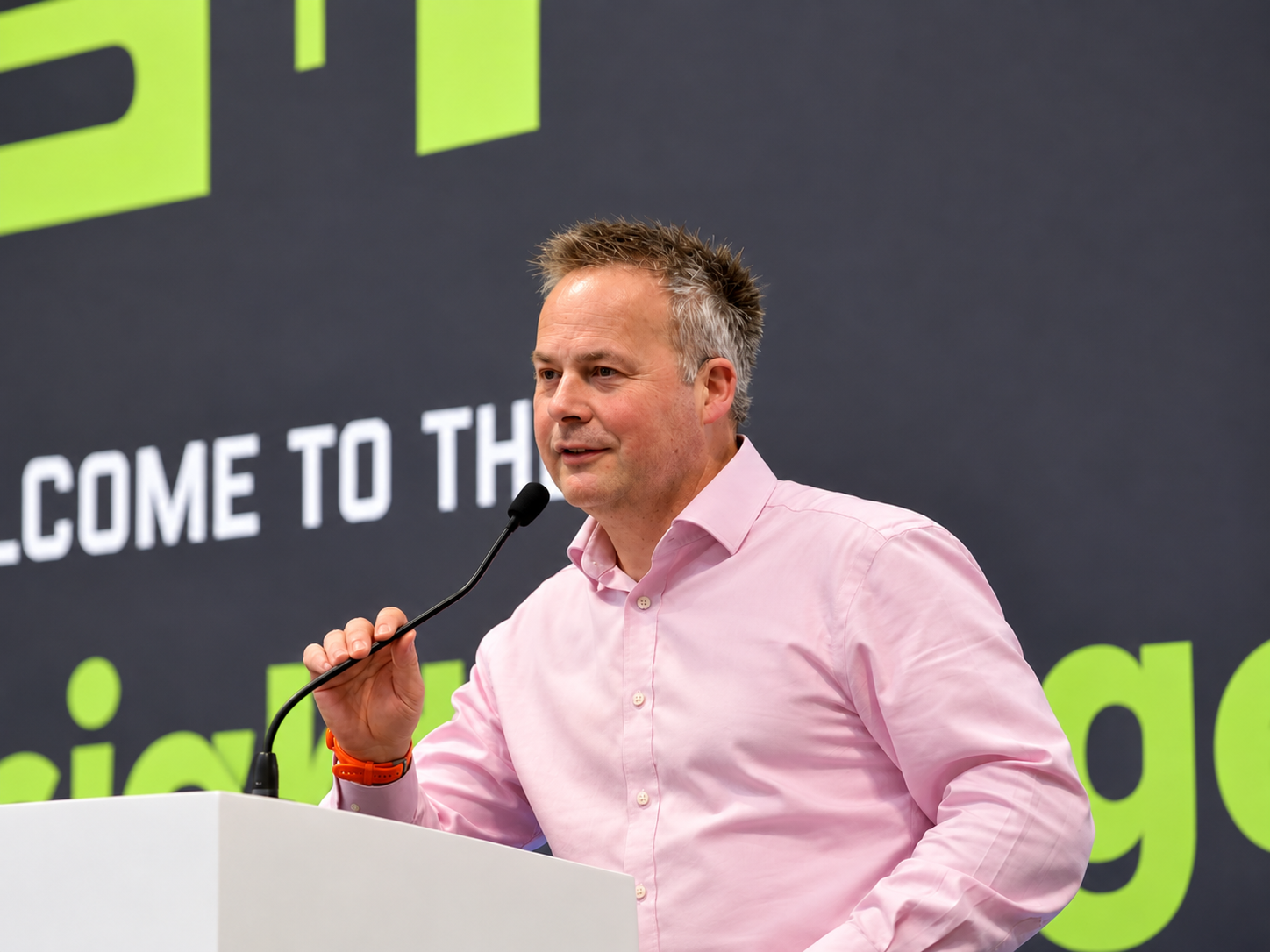
Chris Gardner, a consultant paediatrician who helped trial the system and advised on the rollout, has pointed to several gains seen so far. Administrative burden has fallen. Communication between departments has improved, because the records and letters generated from a consultation are consistent and arrive promptly. Perhaps most striking is the effect in the room itself. Doctors can maintain eye contact with patients rather than typing or taking notes, and the quality of the interaction has risen as a result.
Paediatrics is a telling setting for that last point. Consultations often involve an anxious parent and a frightened child, and the clinician's attention is part of the treatment. A doctor who is looking at a keyboard is absent in a small but real way. Removing that barrier addresses a complaint patients have made for years about computerised consultations, and it does so without asking the clinician to work any harder.
Technology of this kind succeeds or fails on the confidence of the people using it, which is why the trust's workforce plans are as significant as the software. At this month's board meeting, members received an update on the trust's involvement in the national CLEAR apprenticeship scheme. The programme gives NHS staff formal qualifications in the safe deployment of artificial intelligence while they deliver live service-improvement projects. Learning is tied directly to operational work, so the skills are developed where they are needed and the projects benefit immediately.
That design answers a persistent weakness in NHS digital programmes. Systems have too often been purchased and installed before the organisation had the people to adapt them to local practice. A cohort of staff who understand both the limits of AI and the realities of a ward or clinic is a durable asset. It also gives the trust internal expertise to question suppliers, test claims and spot problems early, which matters as procurement of AI tools accelerates across the service.
The board also received a progress report on the joint electronic patient record. East Lancashire is working with Blackpool Teaching Hospitals, Lancashire Teaching Hospitals and University Hospitals of Morecambe Bay to build a single regional platform for sharing and updating patient data across trusts. For patients who move between hospitals in the area, and many do, the prospect of one coherent record is a significant improvement on the repeated histories and delayed letters that frustrate both families and clinicians.
The two developments reinforce each other. Ambient voice technology produces structured, timely documentation, and its value grows when that documentation flows into a record that every relevant clinician can see. A transcribed consultation that stays within one trust's system helps one department. The same consultation feeding a regional record can inform a colleague in another hospital the following week. Health-tech suppliers should take note, since interoperability and adherence to shared standards will increasingly decide which products find a place in such platforms.
Policymakers will want to watch Lancashire closely. The county is assembling the elements that national strategy keeps describing in the abstract: a tool that relieves clinicians, a workforce trained to use it safely, and a shared data foundation underneath. Each piece is modest alone, and the combination is where the promise lies. The evidence to be gathered over the coming year, on time saved, record quality, patient experience and the reliability of clinician review, will matter more than any announcement. If it confirms the early reports, East Lancashire will have shown that digital reform in the NHS can begin in the consulting room, with the patient's consent and the clinician's judgement intact, and then be built outward.