The digital health market has no shortage of ambition. New platforms launch every month, each promising better care, smarter decisions, and more personalised experiences. Yet from a patient and life sciences perspective, the real question is much simpler. Does it actually improve outcomes in a way that can be seen, felt, and measured?
Too often, the answer is unclear.
The gap is not driven by a lack of technology. It is driven by a lack of focus on what truly matters to patients and the evidence expectations of life sciences. Platforms that succeed do not try to do everything. They concentrate on delivering meaningful impact where it counts most.
So what defines the platforms that are genuinely moving the needle.
Precision beats ambition
Patients do not experience healthcare as a broad system. They experience it through specific conditions, symptoms, and moments of need. The same is true for life sciences teams developing therapies and evidence strategies.
The strongest platforms reflect this reality. They focus deeply on defined disease areas, building a detailed understanding of patient journeys, intervention points, and outcomes that matter. This depth allows for better monitoring, earlier intervention, and more relevant support.
For patients, this means care that feels tailored rather than generic. For life sciences, it creates cleaner, more reliable data that can support regulatory, clinical, and commercial decisions.
Patients are partners, not endpoints
Engagement is where most platforms fail. If a patient does not use the technology consistently, the value disappears quickly.
The difference lies in how the platform is built. When patients are involved early and continuously, the result is something that fits into real life. It is easier to use, easier to trust, and far more likely to drive behaviour change.
This has direct implications for life sciences. Patient engagement is not just a user metric. It is critical for generating high quality real world evidence, understanding treatment adherence, and capturing outcomes that matter beyond clinical settings.
When patients feel heard, they stay engaged. When they stay engaged, the data becomes meaningful.
Clinical alignment creates confidence
Patients want reassurance that the tools they are using are grounded in real medicine, not trends. Life sciences organisations need confidence that any data generated is credible and aligned with clinical standards.
The platforms that succeed are built alongside clinicians and closely follow established medical guidance. They support decision making rather than complicate it.
For patients, this builds trust. For life sciences, it ensures that insights generated from the platform can stand up to scrutiny, whether that is in regulatory discussions, payer conversations, or internal strategy.
Start with real needs
There is a clear difference between platforms built around real problems and those built around technical capability.
Patients value solutions that address tangible challenges. Managing symptoms, reducing hospital visits, improving quality of life. These are the outcomes that matter day to day.
Life sciences organisations are equally focused on real impact. Demonstrating that a therapy improves outcomes in practice, reduces system burden, or enhances patient experience is increasingly essential.
The most effective platforms begin with these needs and design backwards. This ensures that every feature has a purpose and every outcome can be measured.
Evidence builds trust and value
In healthcare, credibility comes from proof. Patients are becoming more informed and more selective about the tools they trust. Life sciences organisations operate in an environment where evidence is everything.
A strong platform demonstrates its value through real world outcomes. This includes improvements in patient health, adherence to treatment, and reductions in avoidable healthcare utilisation.
For life sciences, this evidence is powerful. It supports regulatory submissions, strengthens payer discussions, and enables more precise market access strategies. For patients, it provides reassurance that the platform is not just another app, but something that genuinely supports their care.
Insight drives action
Collecting data is no longer the challenge. The challenge is making that data useful.
Patients do not need complex dashboards. They need clear guidance. When should I act. What should I change. Do I need to speak to a clinician.
The best platforms translate data into simple, actionable insights. They reduce uncertainty and help patients feel more in control of their health.
For life sciences, this creates a richer understanding of how therapies perform in the real world. It highlights patterns, identifies risks earlier, and supports more proactive care models.
Trust depends on how data is handled
Patients are increasingly aware of how their data is used. Trust is no longer assumed. It must be earned.
Platforms that succeed are transparent about data use, secure by design, and respectful of patient consent. They make it clear how data contributes to care and where it creates value.
For life sciences, this trust is critical. Access to high quality, consented data underpins everything from research to commercial strategy. Without trust, that access disappears.
Handled correctly, data becomes a shared asset that benefits patients, clinicians, and the wider ecosystem.
The platforms that are shaping the future of digital health are not defined by the volume of features they offer. They are defined by their ability to deliver meaningful outcomes for patients and credible evidence for life sciences.
That balance is where real value sits.
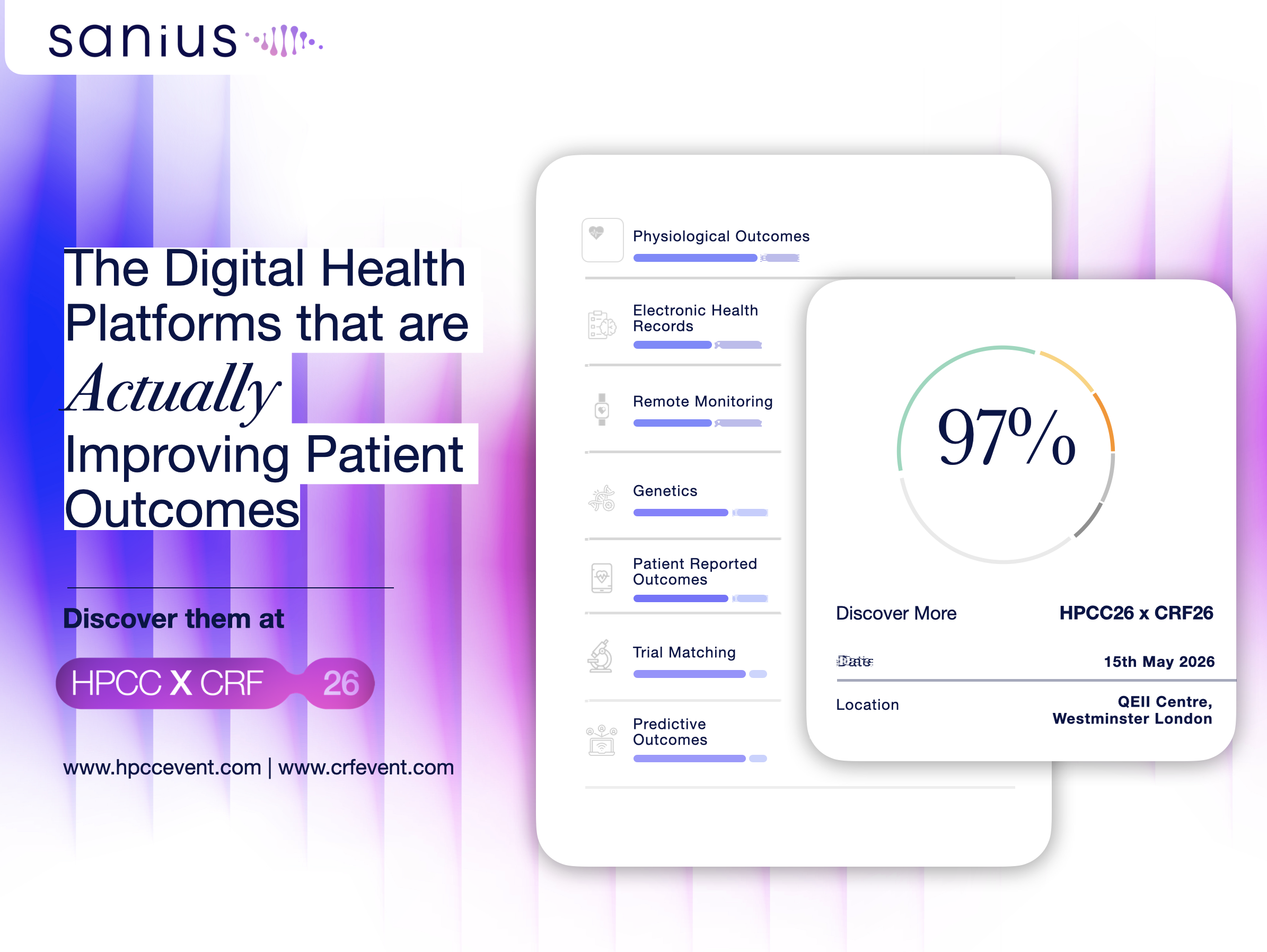
If you want to see how these approaches are being applied in practice, the upcoming CRF and HPCC events on May 15 bring together organisations focused on delivering measurable impact across patient care and life sciences.
More information can be found at https://www.crfevent.com and https://www.hpccevent.com.


.jpg)