
Imperial College Healthcare was not short of demand. It was constrained by flow. Delayed discharges, underutilised theatres and fragmented clinic scheduling were limiting performance. With the deployment of the Federated Data Platform, the trust has shifted from capacity constraint to capacity optimisation. The result is more patients treated, faster discharge and a measurable expansion in outpatient activity without adding new infrastructure.
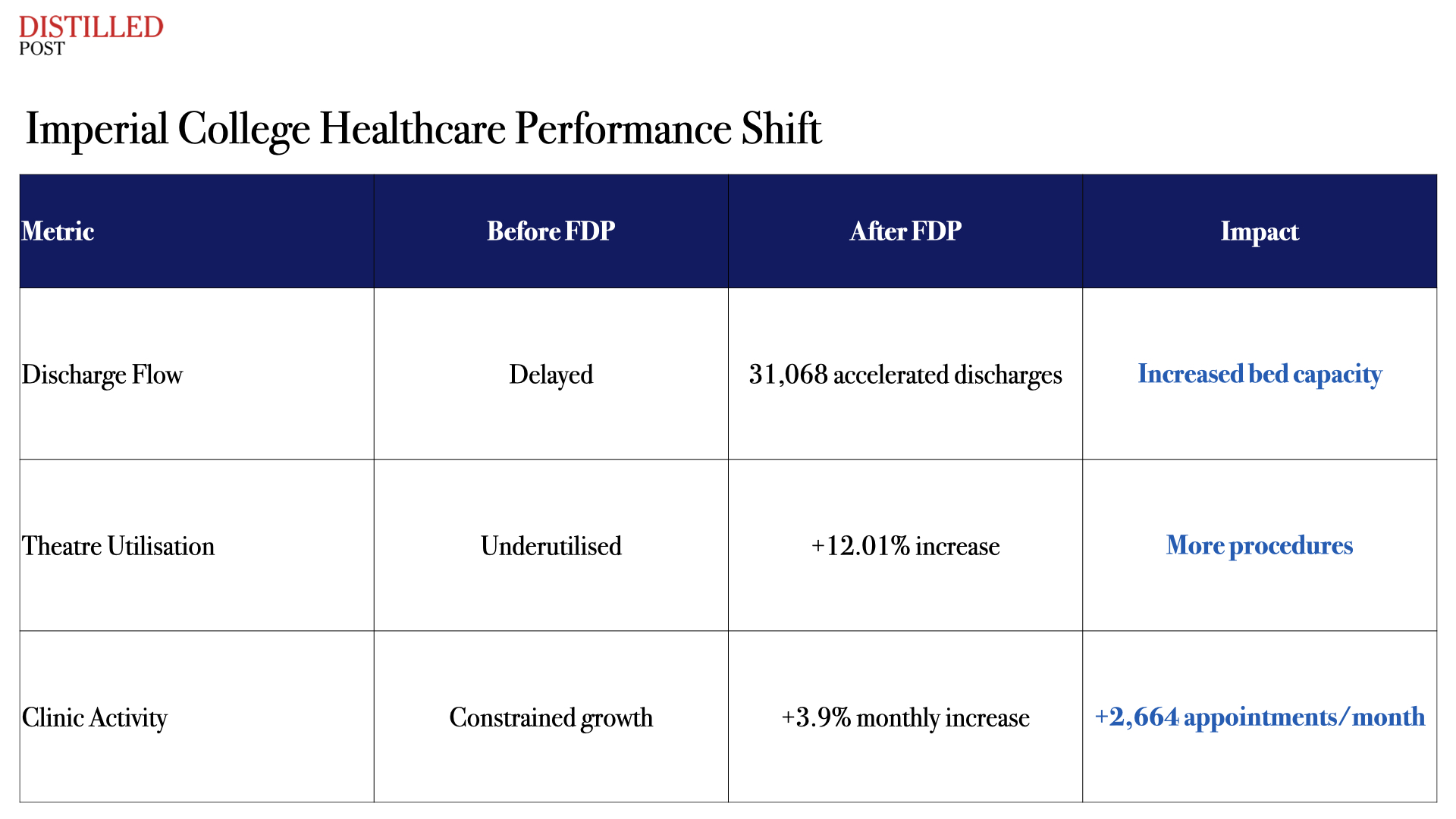
Before FDP, the challenge was familiar. Discharge delays created bottlenecks across wards, reducing bed availability and slowing elective throughput. Clinics were growing, but not fast enough to meet demand. Theatre utilisation was below potential, with inefficiencies driven by scheduling gaps and poor visibility of downstream capacity.
The introduction of FDP changed how the trust operated day to day. By connecting inpatient flow, clinic scheduling and operational planning through a unified data layer, teams could coordinate decisions in real time. Discharge planning became proactive. Clinic expansion became data driven. Theatre capacity could be aligned with actual patient readiness.
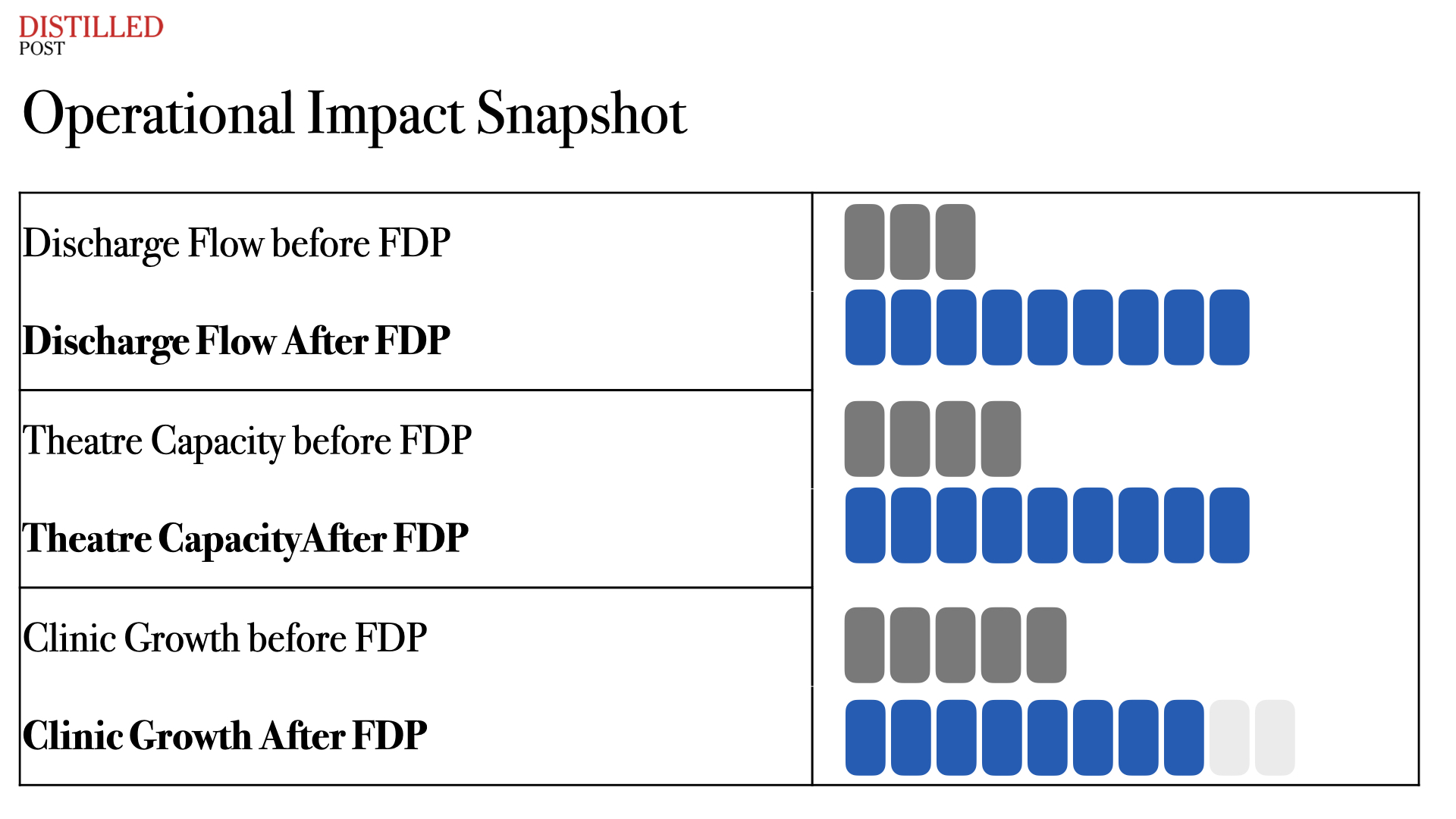
The results are clear. Over 31,000 patient discharges were accelerated, directly improving bed availability and reducing system pressure. Theatre utilisation increased by 12.01 percent, unlocking additional surgical throughput without expanding estate. At the same time, clinics grew by 3.9 percent month on month, resulting in 2,664 additional appointments every month.
This is where the impact compounds. More discharges create more beds. More beds enable more procedures. More procedures reduce backlog. And more clinics increase access upstream, preventing bottlenecks before they form.
What Imperial demonstrates is simple but powerful. You do not need more hospitals to treat more patients. You need better flow.
The FDP has enabled the trust to move from fragmented planning to coordinated execution. Clinical and operational teams are now working from a shared view of capacity, allowing them to act earlier and with greater precision.
This is not just efficiency. It is system performance. And it shows how data, when operationalised properly, becomes a lever for scale.


.jpg)