World leaders converged on New York this week for the opening of the 81st United Nations General Assembly, held under the theme "Restoring Trust, Managing Transformation: A United Nations That Delivers for All." The gathering unfolds against a backdrop that even seasoned diplomats describe as unusually bleak: war in the Middle East, the grinding conflict between Russia and Ukraine, rising energy costs and mounting anxiety over artificial intelligence.
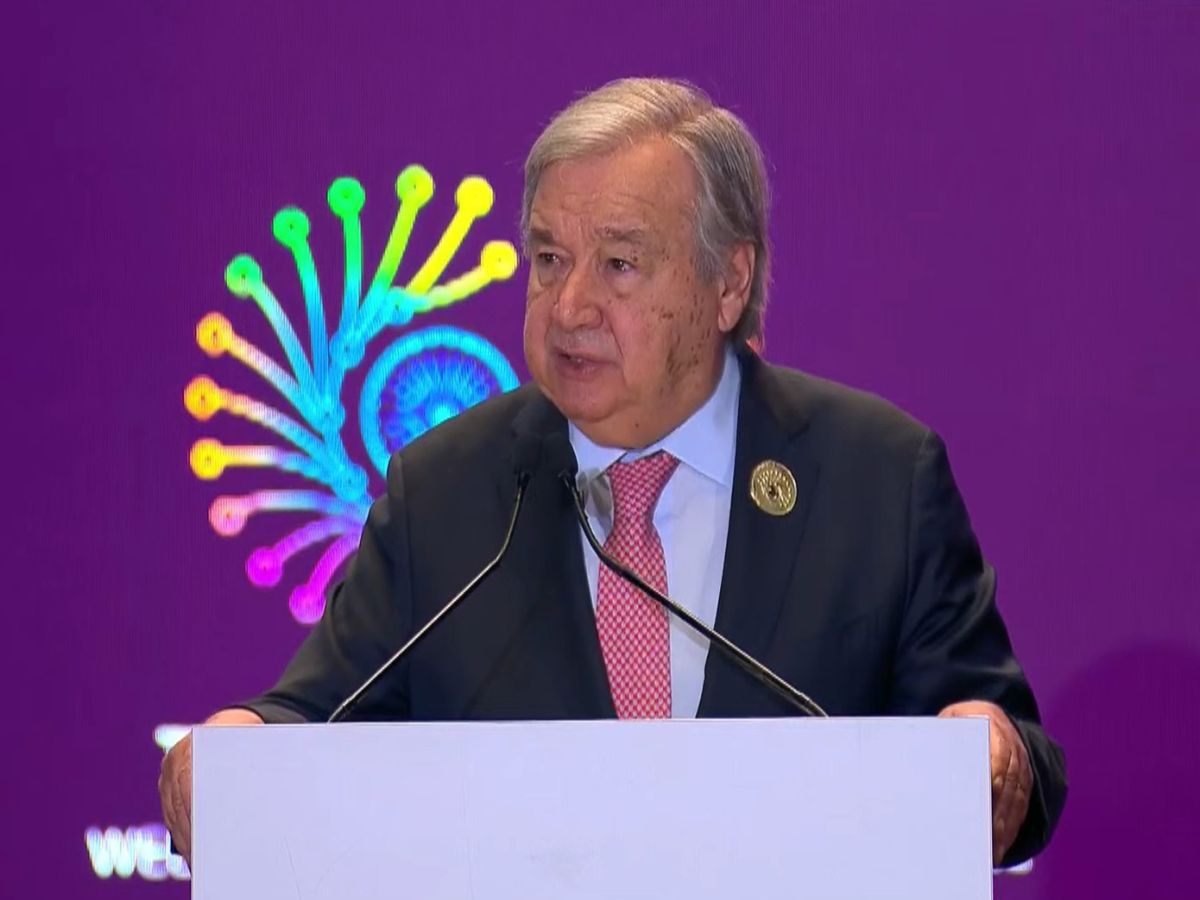
Secretary-General António Guterres, who will step down at the end of December after two terms in office, used the days before the debate to warn that the world had entered a moment as threatening as any he has faced during his tenure. He has pointed to what he calls three existential threats facing the international community: runaway artificial intelligence, the climate crisis and deepening global inequality. His farewell address to the Assembly is expected to press the case for international law, human rights protections and a renewed commitment to multilateralism, themes he has returned to throughout a tenure now closing under considerable strain.
Artificial intelligence has moved further up the UN's agenda than in previous years. Guterres has argued that governments cannot treat AI development as a matter for individual states alone, warning against what he has called a race to the bottom on safety standards. A coalition of countries, led by Finland and Norway, used the week to launch a call for international control of frontier AI models, urging member states to build shared standards and verification mechanisms and to explore a new international body capable of acting when capability thresholds are crossed. The proposal has drawn support from a number of governments but faces resistance from major AI powers, including the United States, China and Russia, none of which has shown appetite for external oversight of their domestic industries.
The Middle East remains the most immediate crisis on the agenda. The conflict between Israel and Iran, compounded by direct American involvement, has unsettled oil markets and raised concern over shipping through the Strait of Hormuz and the Bab al-Mandab Strait. Iranian President Masoud Pezeshkian is due to address the Assembly, as is Israeli Prime Minister Benjamin Netanyahu, while Palestinian President Mahmoud Abbas is expected to speak by video link. The Security Council also held a session on Ukraine this week, though little was resolved. Diplomats note that veto divisions among the five permanent members continue to leave the council largely unable to act on either conflict, a paralysis that has become a familiar feature of General Assembly weeks in recent years.
Notably absent from New York are Chinese President Xi Jinping, who is instead meeting Donald Trump in Washington, along with Indian Prime Minister Narendra Modi and South African President Cyril Ramaphosa. Trump himself is attending, along with Ukrainian President Volodymyr Zelensky and Venezuelan President Delcy Rodríguez.
The UN's financial position remains precarious. Washington has begun transferring funds towards its outstanding dues, including $725 million towards the regular budget and further payments running well over $100 million towards peacekeeping operations, though the United States still owes several billion dollars in arrears. Guterres has previously warned that the organisation faces the risk of financial collapse without fuller and more consistent payment from member states.
The race to succeed Guterres has narrowed. Former Chilean president Michelle Bachelet withdrew her candidacy last weekend after placing poorly in an informal Security Council straw poll, leaving seven candidates in contention. Rebeca Grynspan of Costa Rica has emerged as the frontrunner, though the final choice rests with the Security Council's permanent members, whose competing interests have complicated past selections. Analysts including Richard Gowan of the International Crisis Group and former US ambassador Robert A. Wood have both suggested that this year's process is likely to prove just as contentious as the crises now crowding the Assembly's agenda.



.jpg)