
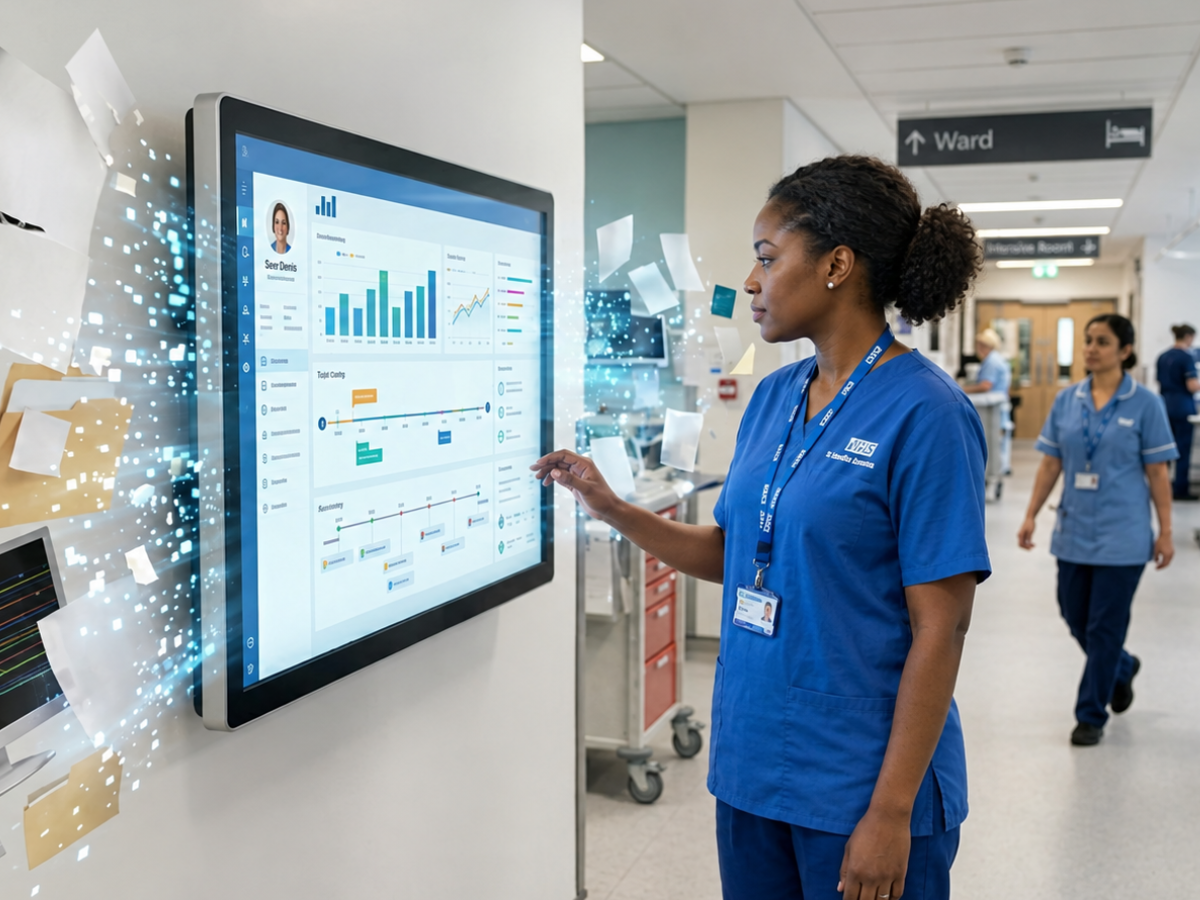
For years, the healthcare AI conversation has been dominated by what might be possible. In 2026, that conversation feels increasingly outdated.
AI is now being deployed across the patient journey, finding disease earlier, identifying patients who have disappeared inside fragmented health systems, predicting deterioration, guiding treatment decisions and increasingly taking on parts of the operational workload surrounding care.
The more important question is no longer whether AI will be used in healthcare. It is where AI genuinely changes an outcome, and whether healthcare systems can govern adoption quickly enough.
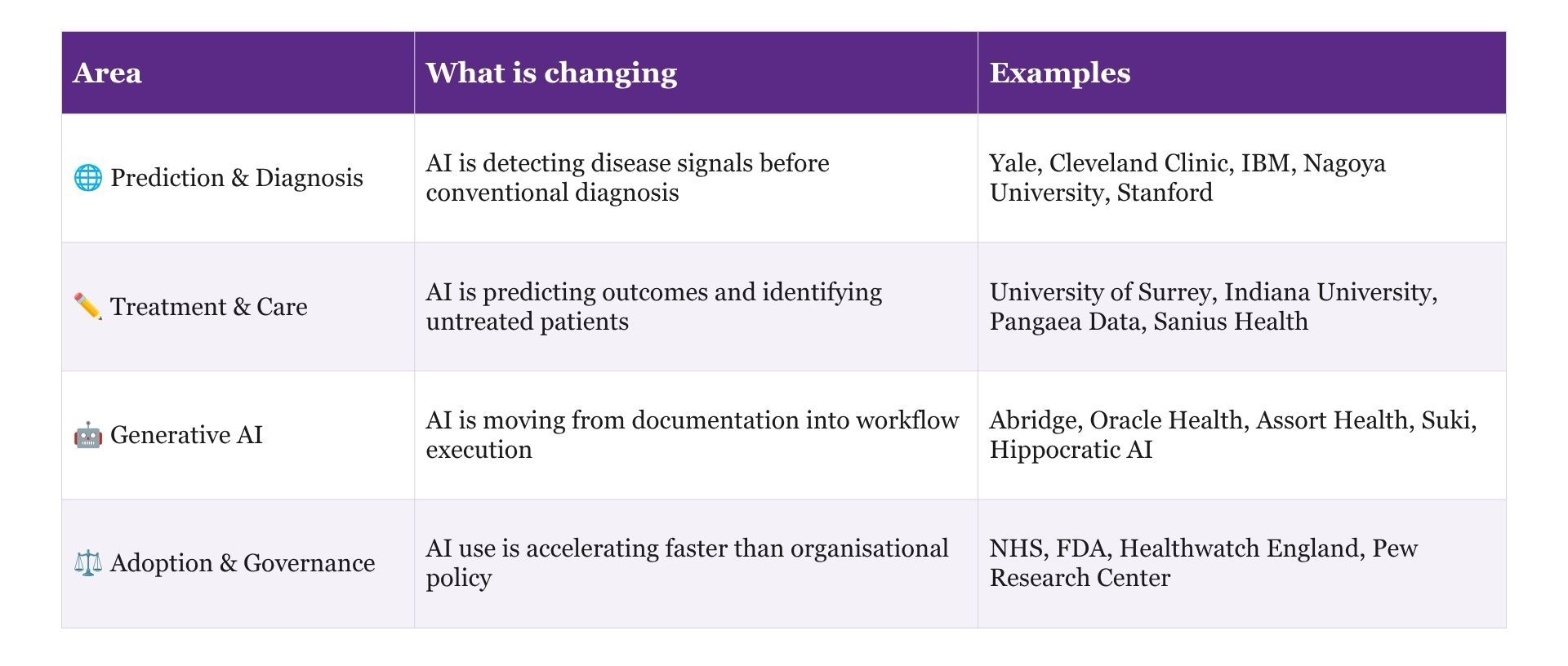
Some of the most compelling developments in healthcare AI are happening before a diagnosis is ever made. Researchers are increasingly finding clinically useful signals inside data that healthcare systems were already collecting for completely different reasons.
An AI system has demonstrated the ability to identify signs associated with heart failure and valve disease from routine ECG data in under two seconds. Across approximately 67,000 US patients, the system identified up to 81% of heart failure cases and 90% of valve disease cases.
The potential value is not necessarily replacing diagnosis. It is triage. If routinely collected ECGs can identify people who warrant further investigation, AI could help patients reach echocardiography or specialist review much earlier.
Researchers have shown that AI can extract information about high blood pressure, coronary artery disease and stroke risk from routine mammograms. The work involved almost 100,000 images from around 30,000 women. Existing screening infrastructure could therefore become another route for identifying cardiovascular risk.
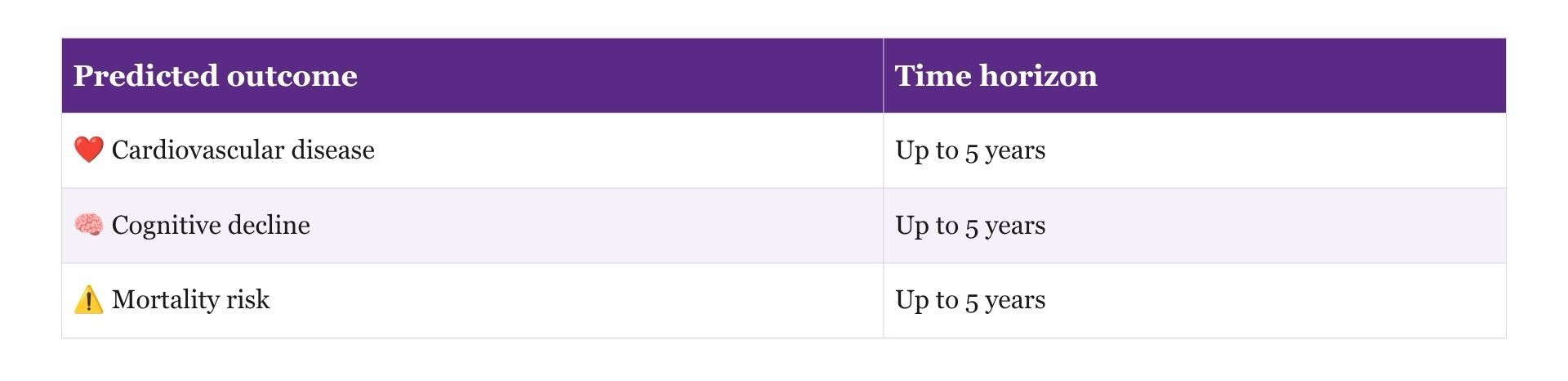
Researchers involving Yale, Cleveland Clinic and IBM have reanalysed more than 10,000 overnight sleep studies. Their models identified associations with five-year mortality risk, cardiovascular disease and cognitive decline. The highest-risk population reportedly experienced approximately twice the mortality of the lowest-risk group.
A Nagoya University spin-off is seeking Japanese approval for an AI-supported urine test designed to detect pancreatic cancer. Validation remains important, but the wider trend is significant: AI is increasingly being combined with relatively simple biological samples to identify complex disease.
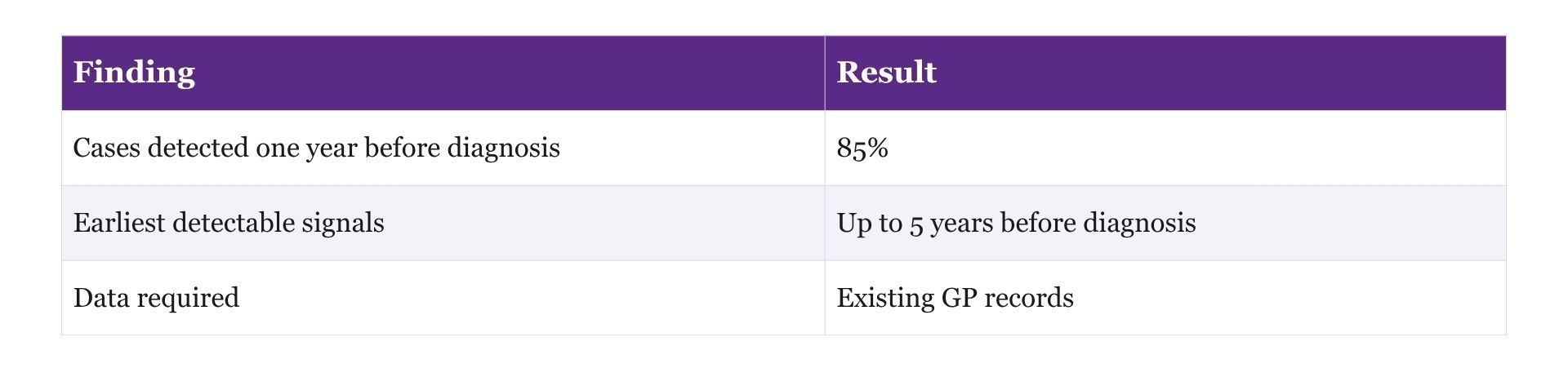
UK researchers have developed an AI model that searches routine primary care records for patterns associated with bladder cancer. Using approximately 70,000 Welsh patient records, the system reportedly identifies 85% of cases reliably a year ahead and signals as much as five years before diagnosis.
Swedish researchers developed FRACTURE-ML using health information from approximately 3.5 million people. The system reportedly identified nearly seven times more people at risk of hip fracture within two years than conventional Swedish screening approaches, using illnesses, medicines and basic records rather than requiring additional scans or appointments.
Stanford researchers have reported that the way children construct sentences may contain signals associated with anxiety and depression years later. The model focused less on what children were discussing and more on patterns in how language was structured, with predictive signals reported as far as six years ahead.
Rare and ultra-rare disease represents an especially important opportunity for AI-enabled patient identification. Sanius Health is working with an undisclosed large pharmaceutical company on an AI-enabled Rare Disease Patient Find programme designed to identify people who may have rare and ultra-rare conditions earlier.
The approach analyses signals across real-world healthcare data to identify patient journeys that may resemble rare disease phenotypes, including cases where the disease has not yet been formally coded or diagnosed.
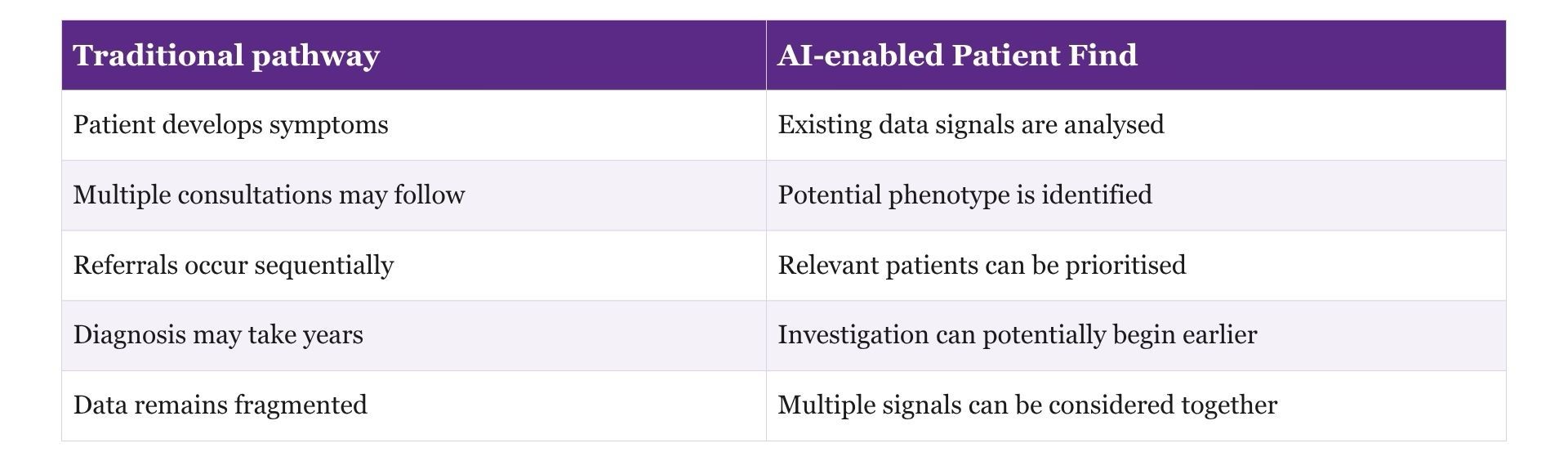
For patients with rare disease, diagnostic delay is not simply inconvenient. It can mean years of uncertainty, repeated appointments, inappropriate treatment and delayed access to specialist care.
The potential role of AI is therefore much bigger than search. It is about recognising patterns across fragmented patient journeys that individual clinicians or individual healthcare organisations may never see in one place.
Finding the patient healthcare has not yet realised it is looking for.
AI is also moving rapidly downstream from diagnosis into treatment and ongoing care. The opportunity here is personalisation: using individual trajectories, records and biological data to understand what may happen next.
University of Surrey researchers analysed approximately 12,700 UK Biobank participants following heart attacks and identified three distinct recovery trajectories across five years. One group, strongly associated with smoking, reportedly experienced a 44% mortality rate, creating an opportunity to identify much earlier which patients may require more intensive follow-up.
Indiana University researchers developed an explainable six-point AI score designed to predict dangerous bleeding into heart muscle following severe heart attacks. The model reportedly achieved more than 84% accuracy and was designed to show which factors contributed to the prediction rather than simply providing an unexplained risk score.
Hong Kong Polytechnic University has developed a digital twin platform for lung cancer that combines genomics, imaging, clinical records and treatment information. The system reportedly achieved 82.5% accuracy in predicting response to immunotherapy during testing. The more important concept is the creation of a digital representation of a patient that changes as the real patient changes.
Pangaea Data is using AI to analyse clinical notes and identify patients who may be untreated or under-treated despite lacking conventional structured diagnosis codes. This addresses a basic weakness of healthcare databases: important information can sit inside discharge letters, specialist notes, historical records and referral documentation while remaining invisible to traditional database searches.
The first major clinical use case for generative AI was documentation. That was probably only the opening act. The market is now moving from AI that records work towards AI that performs parts of the workflow itself.
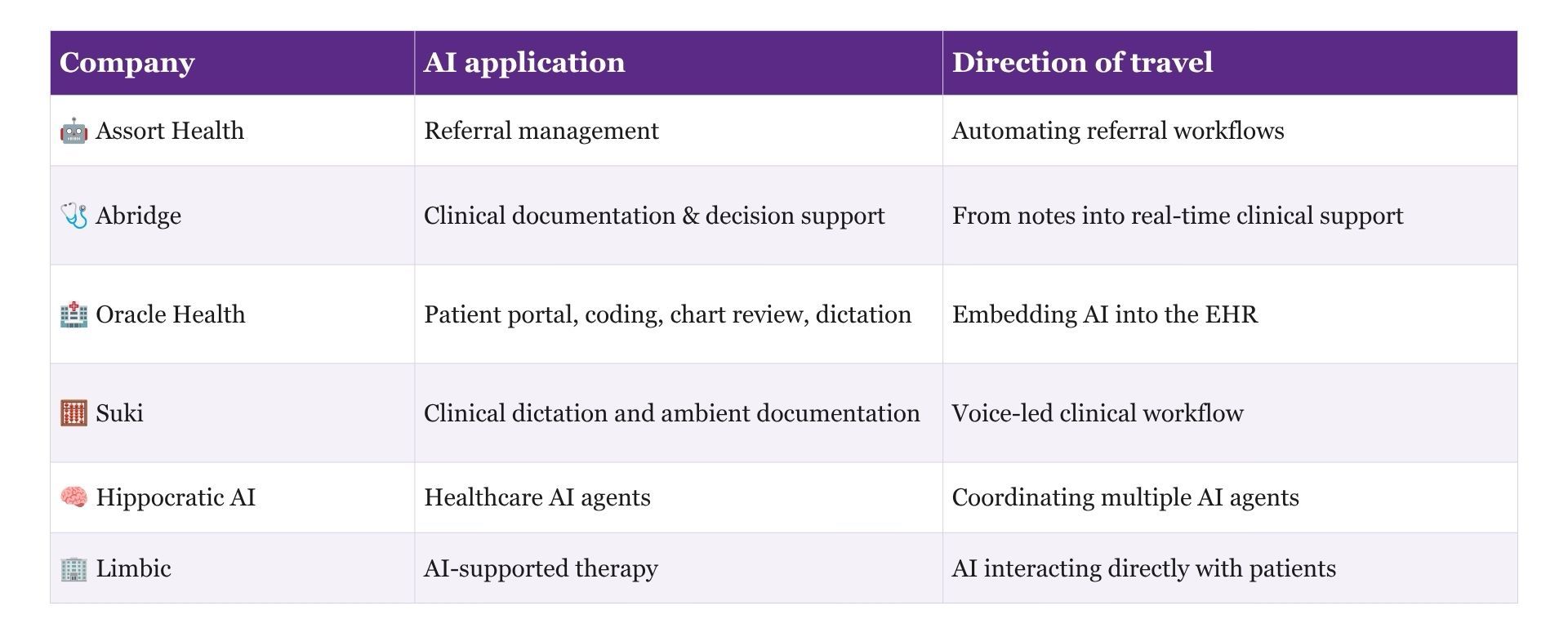
Assort Health has deployed an AI referral agent which reportedly automates 87% of referral workflows and converts 79% into booked appointments. It also reportedly identifies a more suitable specialist than the initial referral choice in approximately half of cases.
Abridge has expanded from AI-generated clinical documentation into decision support across approximately 300 health systems. The system can surface evidence during clinical encounters rather than simply producing notes afterwards.
Documentation → Decision Support → Workflow Automation
Oracle Health has introduced AI functionality into its patient portal that allows patients to ask plain-language questions about their own health information. The company has also expanded clinician-facing capabilities including coding, chart review, dictation and clinical workflow support.
Suki has introduced AI-powered clinical dictation alongside its ambient documentation technology. Clinicians can dictate and edit clinical notes using voice before moving information into platforms including Epic and Meditech. Healthcare professionals may increasingly interact with software by speaking rather than clicking.
Hippocratic AI has launched a supervisory layer designed to coordinate multiple healthcare AI agents. The company has claimed approximately 250 million patient interactions without safety incidents in production. As AI systems move towards this model, governance becomes considerably more important.
Healthcare’s biggest AI challenge may ultimately be organisational rather than technical. Adoption is happening faster than governance.
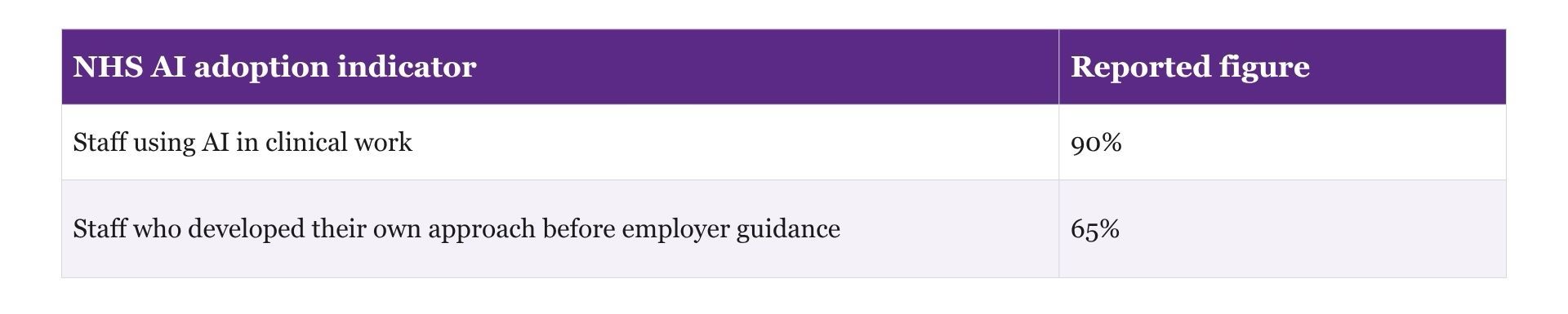
A survey of 1,000 NHS staff cited in the source material reported that 90% were already using AI in clinical work. More strikingly, 65% reportedly developed their own way of using AI before their employer issued formal guidance.
Healthwatch England has warned that AI-generated clinical documentation can introduce incorrect information into patient records, including incorrect medicines and diagnoses. In one reported case, wording relating to an MRI result was materially changed by AI transcription.
The FDA is seeking public input on how generative AI medical devices should be regulated, with a proposed risk framework under consideration and consultation running until 19 October. Conventional medical-device regulation was largely designed around systems that behaved predictably after approval; generative AI may not fit that model neatly.
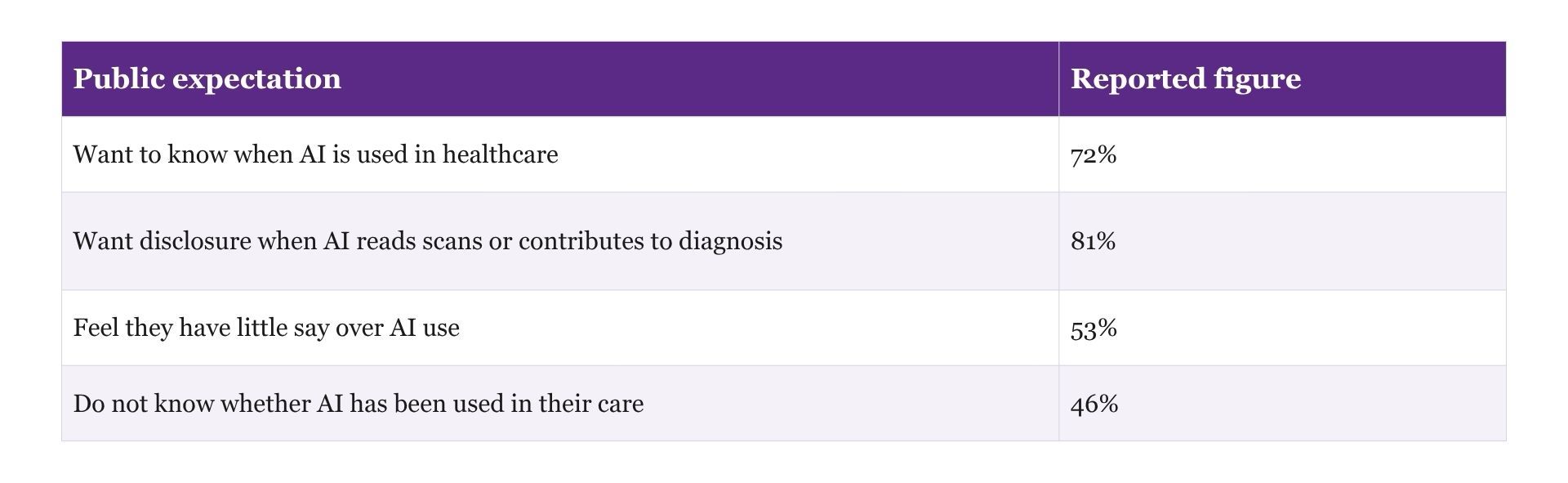
Pew Research Center has reported strong public demand for transparency around healthcare AI. Trust may therefore become as important as accuracy: patients may accept extensive AI involvement in healthcare, but increasingly expect to know when it is happening.
The most important development in healthcare AI is not any single model, company or algorithm. It is the change in where intelligence sits within the healthcare pathway.
🔮 Before diagnosis
🔍 Across fragmented records
🩺 During clinical encounters
🧬 Inside treatment decisions
📞 Between appointments
🤖 Across administrative workflows
📊 Across entire patient populations
For common diseases, this could mean earlier intervention. For overstretched health systems, it could mean removing significant administrative friction. For clinicians, it could mean having relevant information surfaced before they have to search for it. For life sciences companies, it could transform how appropriate patient populations are identified.
And for rare disease patients, the impact could be much more profound. Instead of spending years waiting for healthcare to connect a collection of seemingly unrelated symptoms, AI may increasingly be capable of identifying the pattern first.
The winners will not simply be the systems capable of generating the best answers. They will be the systems capable of helping healthcare find the right patient, understand them earlier and move them towards the right care faster.
Source note: Prepared from the supplied September 2026 AI and healthcare research news digest. Company performance figures and research findings are described as reported in those source materials.


.jpg)

.jpg)