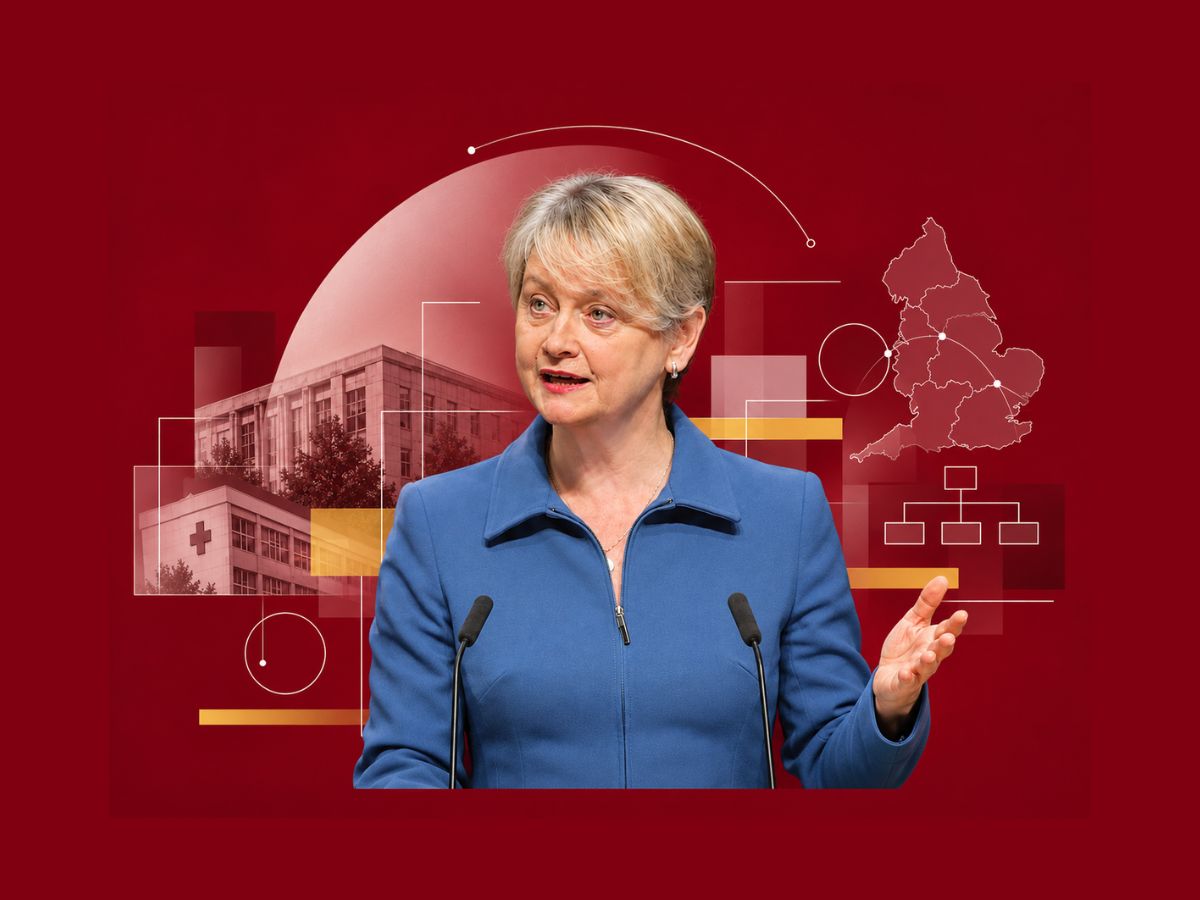
Yvette Cooper, Secretary of State for Health and Social Care of the United Kingdom
On Friday the National Health Service turns eighty, and for thousands of civil servants and NHS employees in offices from Westminster to Leeds the anniversary arrives with a more practical question attached. Where will they be working next year, and for whom? A letter circulated to staff this week, seen by this publication, supplies the answer. Signed by Yvette Cooper, returning to the Department of Health and Social Care after twenty-five years, it ends months of uncertainty with a plan specific enough to be tested and a timetable firm enough to be held to.
The central decision is that NHS England will rejoin the Department on 1 April 2027, subject to the passage of the Health Bill. The case Cooper makes is administrative rather than ideological. Two national organisations with overlapping and poorly coordinated functions cannot easily deliver a shift towards community care and prevention, and the integration of health with social care depends on policy and operations being steered from one place. Anyone who has watched a single question pass between the two bodies, collecting a different answer at each stage, will recognise the problem she is describing.
What distinguishes the plan is the care taken over what survives. The NHS Chief Executive remains. An NHS Group will sit inside the Department with responsibility for operational delivery, and most existing NHS England functions will transfer into it. Elsewhere, combined policy teams will draw on both organisations, with neighbourhood health the clearest example. Cooper points to the period between 2006 and 2012, when a unified department presided over what she describes as the best performance and public satisfaction the service has recorded. The reference is selective, as such references always are, yet it signals that the model has been chosen with some knowledge of what worked before the 2012 reforms divided the labour. A strengthened DHSC North, anchored in Leeds, gives the arrangement a geography beyond Whitehall.
The regional picture is handled with similar pragmatism. The seven existing NHS regional teams will be hosted by a transitional Special Health Authority, accountable to the Secretary of State through the NHS Group. It will hold no national functions. Its purpose is to give the teams a legal footing while keeping them close to the frontline, rather than drawing them into the Department. The authority is explicitly temporary, a holding structure while boundaries and powers are worked out with Mayoral Strategic Authorities and councils under the forthcoming Rewiring the State delivery plan. Devolution is a long negotiation, and Cooper has chosen not to pretend otherwise.
The human cost is acknowledged more directly than is usual in such documents. Cooper recognises the heavy reductions in headcount already endured and apologises for the stress of prolonged uncertainty. A new target operating model will follow later this month, with formal consultation with unions and staff beginning no later than January. Those who transfer will keep their current contracts and their statutory continuity of service. For a workforce that has absorbed redundancy programmes while hospitals ran hot through winter, those assurances matter as much as any organogram. Morale is a delivery risk, and she has treated it as one.
Two further measures deserve attention. Healthwatch is retained and strengthened, a Patient Experience Director will join the Department, and a dedicated team will support patients and families who have suffered harm and struggled to be heard. Cooper's observation that people too often battle the system simply to be listened to, with apologies arriving only after the damage is done, speaks to a loss of public trust that successive inquiries have documented. The first Clinical Council, a small group of senior clinicians advising ministers on the NHS's major clinical priorities, addresses the opposite concern, that clinical judgement is consulted too late in the policy process. An oversight group reporting directly to the Secretary of State, with external expertise, adds a check that reforms of this kind have not always had.
The practical consequences extend beyond Whitehall. Trust chief executives and integrated care board leaders will want to know whether the promised single national vision and rules-based system arrives in a form that reduces the volume of instruction reaching them. Life sciences and health-technology companies, accustomed to navigating two sets of national gatekeepers for procurement and adoption, will look for a clearer front door. Much will depend on the Health Bill's passage, and on whether a department that has just lost many staff can absorb a large organisation without losing its grip on operational performance.
Those risks are real, and the letter does not dispel them. Yet it is rare for a Secretary of State to offer clarity, an apology and a date in the same document. Cooper has taken a contested inheritance, kept the parts of the NHS identity that staff and the public value, and set out a sequence that can be judged. If the consultation is honest and the Special Health Authority proves as temporary as promised, her reforms may be remembered as the moment the centre of the health service finally stopped arguing with itself.