.jpg)
A trust finance director opening the monthly position pack knows the shape of the conversation before the first page loads. The top of the overspend table is where nobody wants their organisation's name, and this year five large hospital providers occupy it. Nottingham University Hospitals planned a year-to-date deficit of £29.0m and has recorded £46.7m, a gap of £17.7m. Mid and South Essex is £16.4m adrift, Liverpool University Hospitals £15.7m, Barts Health £12.1m and Hull University Teaching Hospitals £11.4m. Together the five are about £73m worse than the plans they signed.
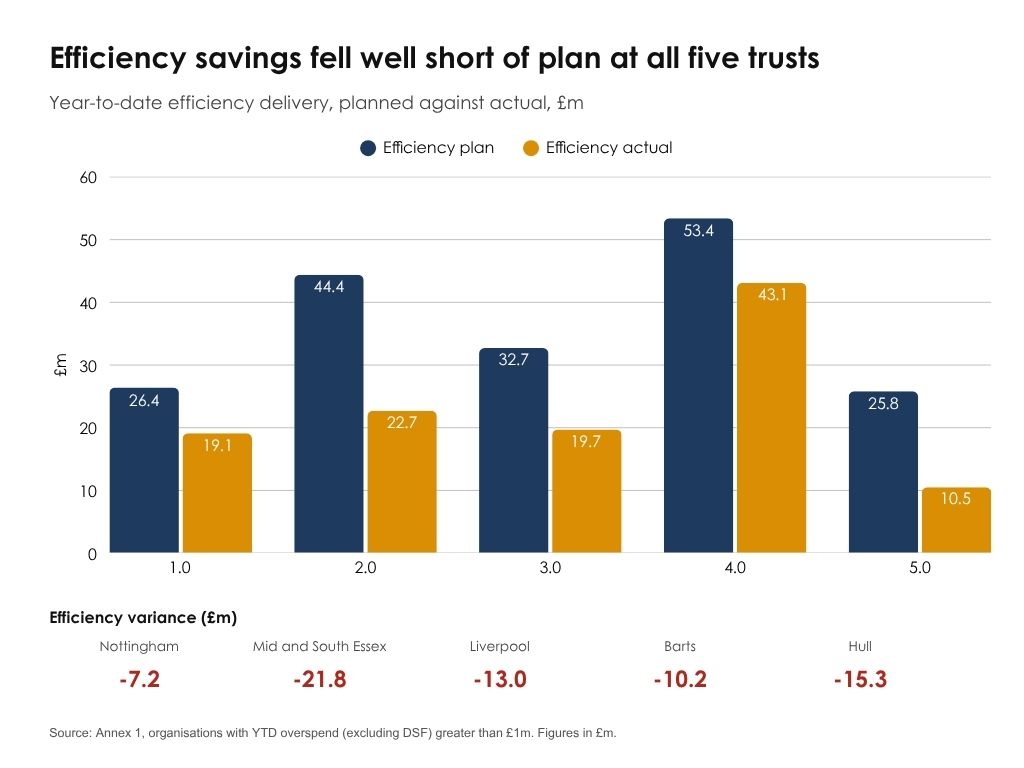
The more revealing figures sit in the efficiency columns. Between them these trusts planned to deliver roughly £183m in savings so far this year and have found around £115m. The shortfall of about £67.5m accounts for almost all of the combined overspend. Mid and South Essex delivered £22.7m against a £44.4m target, barely half. Hull found £10.5m of £25.8m. Barts delivered £43.1m of £53.4m, a respectable performance by comparison, yet still sits £12.1m off plan, which suggests cost pressure outside the savings programme as well.
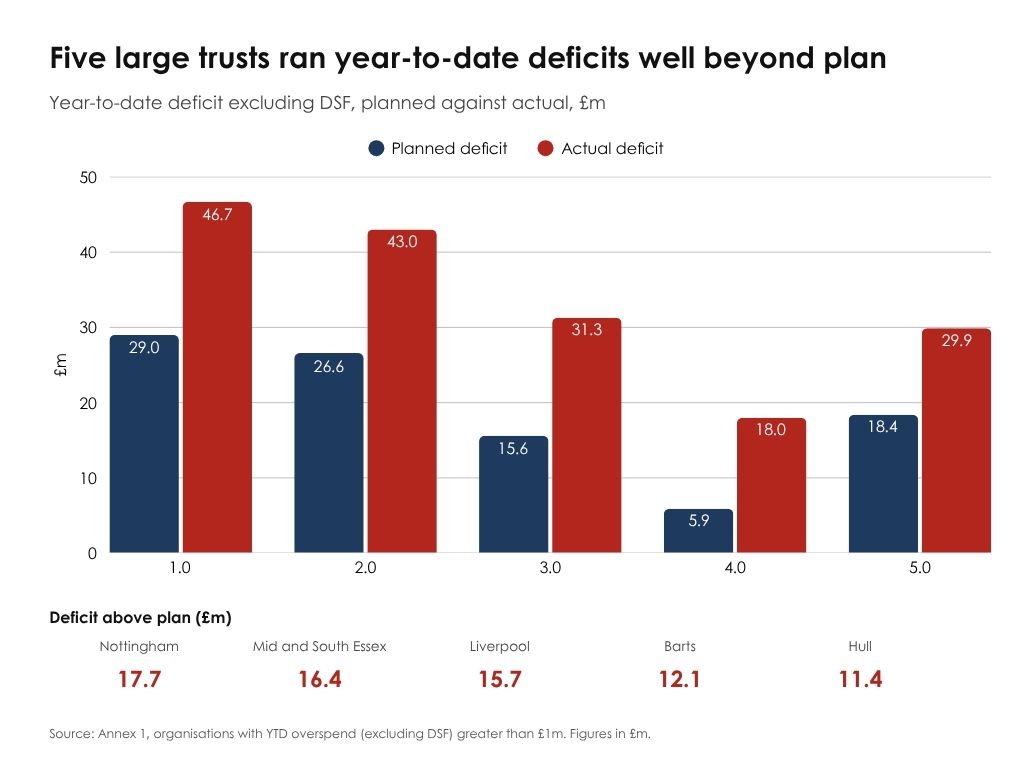
The pattern matters because these were not ambitious plans to begin with. Every one of the five started the year expecting a deficit, and efficiency was the mechanism by which the position was meant to hold. When a trust books savings that do not materialise, the overspend is a predictable consequence of an assumption that was never tested hard enough. After years of cost improvement, the easy savings have largely gone. What remains tends to require changes to bed models, theatre use, estates or service footprints, and those depend on capital, clinical agreement and political cover that trusts cannot supply alone.
That is where the wider state context becomes relevant. The centre of the health service is being reduced in size and its relationship with local systems is being rewritten. Integrated care boards are cutting their own running costs, and the national body is being folded back towards the Department of Health and Social Care. Deficits of this scale land on a layer of oversight that has fewer people to scrutinise them and less appetite for the long, patient support that turnaround work needs. Trusts in difficulty may find the oversight blunt, with the pressure to recover in a year arriving faster than the means to do it.
For NHS leaders, the immediate risk is that savings are chased in the places where they are quickest to find. Agency and bank spend, vacancy management and deferred maintenance can all produce a short-term number. They also carry costs in morale, patient safety and industrial relations that appear later and in other budgets. Boards will need to separate recurrent savings from one-off relief, and to be candid with regulators about which is which.
Patients feel the effects through the competing demands on a fixed sum. Waiting list and urgent care targets require activity, and activity costs money that a trust in deficit cannot readily commit. Health-tech and life sciences suppliers face a harder sale as well. Finance teams under this strain will favour products with demonstrable, cashable returns within the financial year and will be slow to approve anything that promises benefits over a longer horizon.
Policymakers should read the table as evidence about target setting. If five of the largest providers deliver around two thirds of their planned efficiency, the plans were probably too optimistic, and a deficit that arrives on schedule was in effect agreed in advance. Setting savings targets that the system cannot meet defers the reckoning to the point where it is hardest to manage, in the middle of the year, with winter approaching.
The five trusts do not need exhortation. They need plans calibrated to what can be delivered, and a centre prepared to say so before the numbers turn red.



.jpg)