A treatment chair in a hospital day unit is an unglamorous piece of infrastructure. It reclines, it has a drip stand beside it, and for much of the working day it remains occupied. A patient arrives, waits for the pharmacy to prepare the drug, sits through an infusion and goes home having surrendered a substantial part of their morning or afternoon. Three weeks later, the chair is occupied again. Multiply that routine across cancer units throughout England and the treatment chair becomes one of the quieter constraints on how many patients the health service can treat.
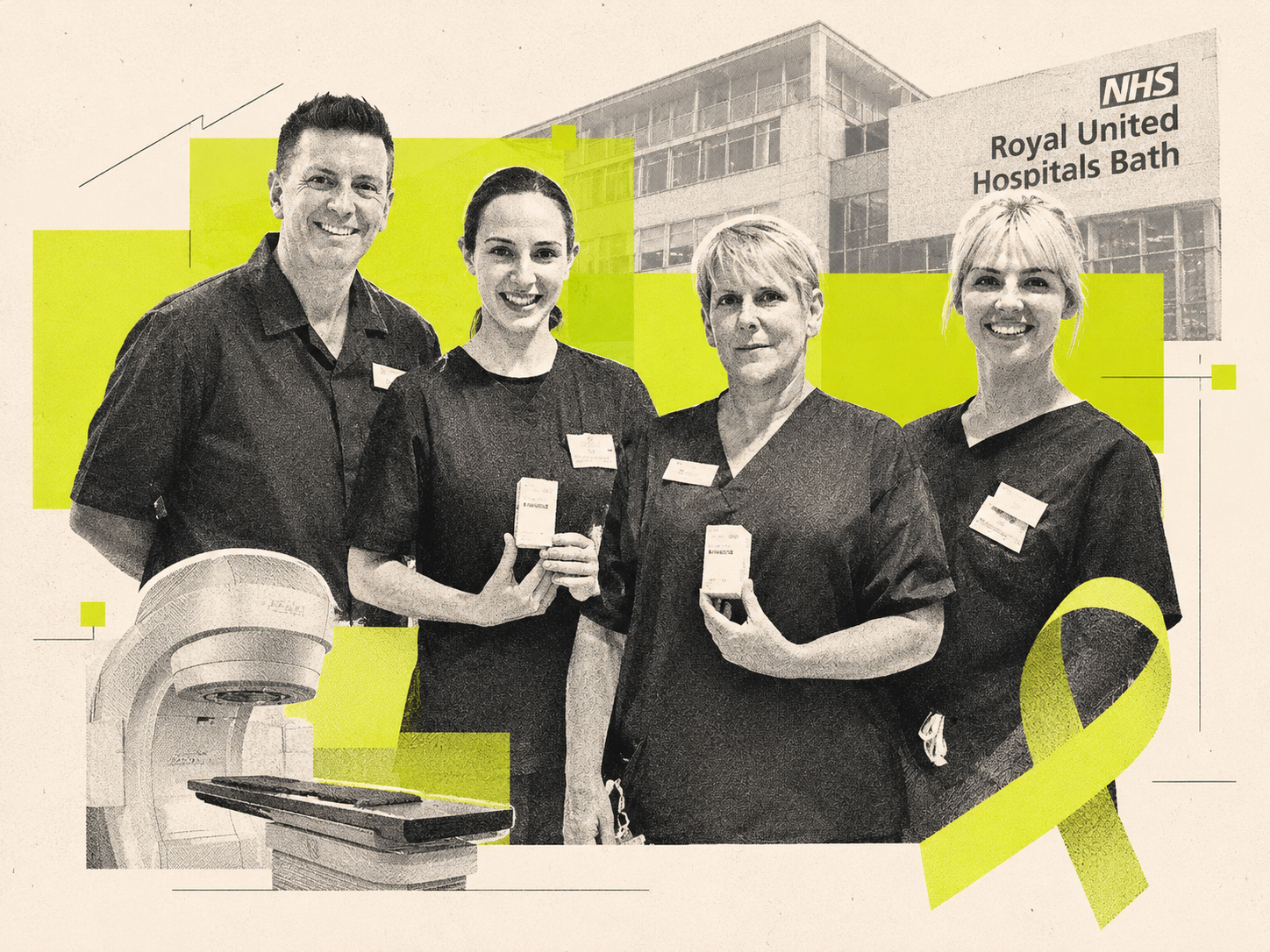
That constraint explains why a new injectable formulation of pembrolizumab deserves attention beyond the clinical press. The drug, sold under the brand name Keytruda, blocks the PD-1 protein that tumours exploit to evade the immune system. It is used to treat 14 types of cancer, including lung, breast, head and neck, and cervical cancers. Since May 2026, the NHS has been rolling out a version administered under the skin rather than through an intravenous drip. The national formulation takes approximately one minute every three weeks or two minutes every six weeks, depending on the treatment schedule. At Royal United Hospitals Bath (RUH), however, the hospital's own announcement puts administration time at around five minutes, compared with at least 30 minutes for an infusion. Around 14,000 people start pembrolizumab treatment in England each year, and most are expected to be eligible for the injectable version. RUH Bath is among the first trusts to offer it.
The case for the injection is straightforward, but its implications extend beyond convenience. Patients spend considerably less time in clinical settings, an important difference for those balancing treatment with employment, childcare and everyday responsibilities. At RUH Bath, pharmacy and cancer services teams have already reported positive feedback from patients, who say the shorter procedure makes hospital visits less stressful and gives them more time for ordinary activities, including returning to work and managing the school run. Jo Parkes, the trust's Pharmacy Clinical Lead for Cancer Services, has been central to communicating the benefits of the change. Her specialist background in oncology and cancer immunotherapy gives her a direct understanding of the practical demands involved in delivering these treatments. The hospital says the switch is also allowing more patients to be treated on its Medlock Unit. For pharmacy teams, moving away from preparing an individual intravenous infusion bag for every patient can reduce preparation demands. Manufacturer analysis has estimated a 44 per cent reduction in preparation time, although this should not be mistaken for a locally measured saving at Bath.
The qualification sits in the economics. Reporting indicates that the injection is priced broadly in line with the infusion, leaving the NHS without an obvious drug-cost saving to bank. What it gains instead is capacity, and capacity has value only when hospitals convert it into additional treatment or other clinical work. A cancer unit that replaces infusions with injections but leaves appointment templates, nursing rotas and pharmacy schedules untouched may see patients leave sooner while treatment chairs remain underused. The productivity dividend then disappears into the margins of the working day, never reaching a waiting-list figure. This is the familiar risk facing operational improvements across the NHS: technology changes, but the workflow surrounding it remains the same. The injection creates an opportunity; management decisions determine whether that opportunity becomes measurable output.
There is evidence that adoption and implementation deserve closer scrutiny. Public prescribing data now tracks the proportion of pembrolizumab supplied in its subcutaneous formulation across individual NHS trusts in England. Such comparisons can help identify differences in uptake and give hospital leaders a clearer picture of how quickly the change is reaching patients. Parkes's involvement in this area extends beyond the local rollout. At the 2026 British Oncology Pharmacy Association conference, a research poster developed with Shannon Nally, a Specialist Cancer Services Pharmacist at RUH Bath, examined the real-world impact of switching pembrolizumab from infusion to injection on oncology patients and nurses trained to administer systemic anti-cancer therapy. The work places patient experience and the practical demands on cancer services within the same discussion. Parkes has also published research on subcutaneous nivolumab, another immunotherapy, examining the potential for more efficient and patient-centred treatment delivery. These contributions underline why the success of the pembrolizumab rollout should be judged not simply by how quickly the injection is administered, but by what changes for patients and the teams caring for them. Slower-adopting trusts should examine pharmacy governance, clinical training and chair-booking arrangements before assuming that the obstacle is clinical caution.
Some patients will see little change. Those receiving pembrolizumab alongside other intravenous treatments may continue to need an infusion where clinically appropriate, meaning cancer day units will not suddenly empty. Eligibility and treatment decisions must remain guided by individual clinical circumstances. Patients should also receive a clear account of what the evidence establishes. The injectable formulation is intended to deliver the same active treatment through a different route, but claims of fewer side effects should be treated cautiously until supported by appropriate clinical evidence and local audit. Faster administration is an operational advantage; it should not be confused with proof of better cancer outcomes.
The more consequential question concerns where treatment can eventually be delivered. A one-to-five-minute injection does not require the same appointment structure as an infusion built around pumps, preparation facilities and prolonged chair occupancy. For suitable, clinically stable patients, delivery through a satellite clinic, community facility or diagnostic centre becomes a more realistic possibility. That prospect fits the government's ambition to move more care closer to home, reducing repeated journeys to specialist hospitals. It also introduces responsibilities that cannot be overlooked. Immunotherapy can trigger serious inflammatory reactions, and recognising and managing them outside a specialist setting requires clear clinical escalation routes, trained staff and defined responsibility between hospital and community teams. The injection may take minutes, but the monitoring and safety arrangements around it remain substantial. Convenience must not come at the expense of specialist oversight.
Industry should read the episode carefully. Manufacturers reformulating established medicines for faster delivery are offering the NHS a form of productivity that cannot be measured by the purchase price alone. The national rollout of subcutaneous pembrolizumab, supported by NHS England, demonstrates how a change in formulation can reach hospitals across the country and potentially release valuable clinical time. But its long-term appeal to a service under financial pressure will depend on credible evidence of the capacity created and how effectively it is used. Trust-level uptake data, pharmacy preparation measures and patient experience will all matter. Parkes's work with BOPA is relevant here: the transition from intravenous to subcutaneous treatment requires pharmacy expertise, staff preparation and changes to established clinical processes, not simply a new product arriving on the ward.
The Bath rollout will not, by itself, feature in any headline about national waiting lists. Its significance lies in what it reveals about the mechanics of NHS productivity. A faster injection can give patients more of their day back, ease pressure on pharmacy teams and create room for additional appointments. RUH Bath's experience, alongside the work of Jo Parkes, Shannon Nally and the wider cancer services team, offers a practical example of how that change is being put into effect. But a treatment chair becomes productive only when the people organising the service change how the day is run. The medicine supplies the opportunity. The timetable determines whether another patient gets treated.