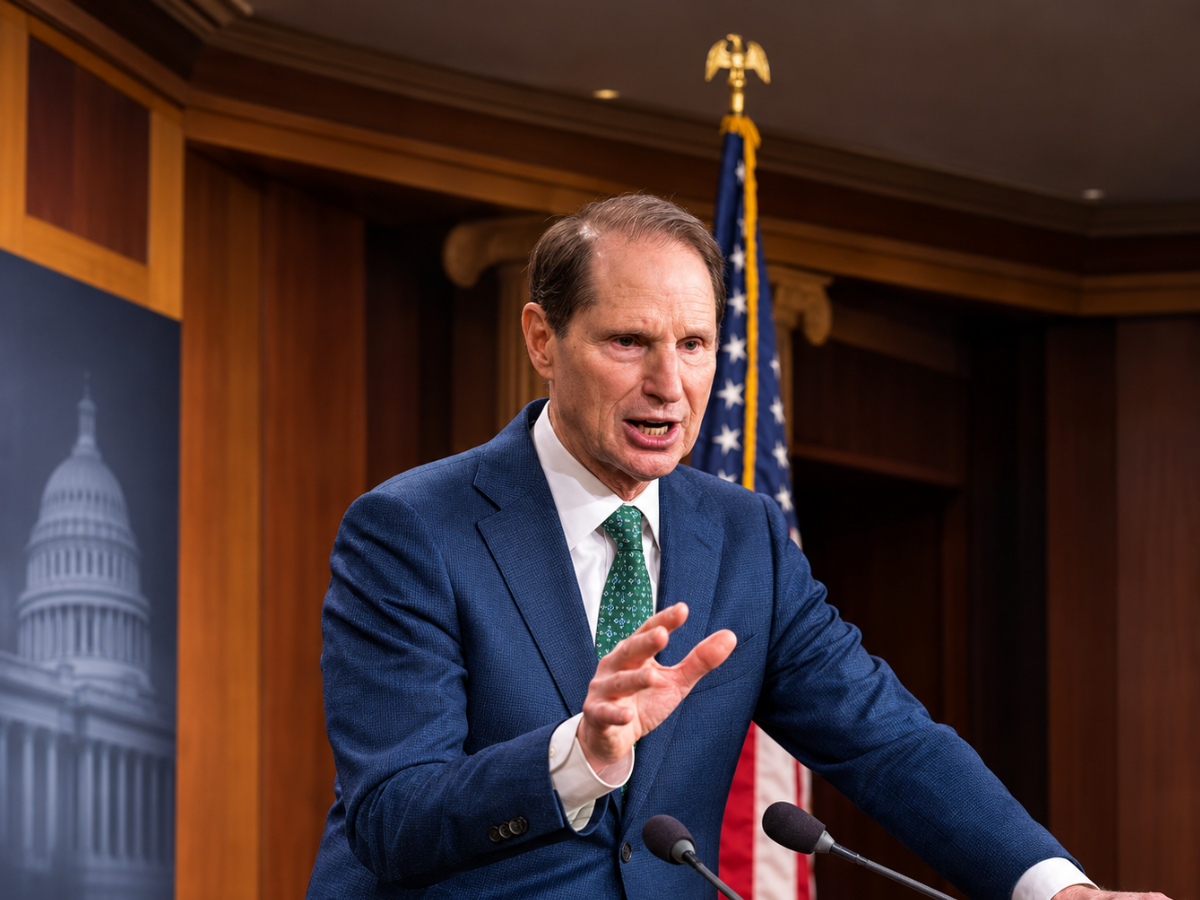
When the Senate Finance Committee meets under its new chairman in January, its opening discussions will centre on Medicaid work requirements and the subsidies that help millions of Americans afford private health insurance. Nobody in the hearing room is likely to mention the National Institute for Health and Care Excellence (NICE). Yet officials in Whitehall overseeing the NHS medicines budget will be paying close attention. The committee Ron Wyden is preparing to lead has jurisdiction over tariffs and Medicare, giving it influence over many of the tools Washington has used to pressure other countries into paying more for new medicines.
The stakes for Britain are considerable. Last December, the two governments announced an agreement in principle under which the UK would make concessions on medicines pricing in exchange for protection from American tariffs. NICE raised its cost-effectiveness threshold from £20,000 to £30,000 per quality-adjusted life year to £25,000 to £35,000, marking the first adjustment since the institute was established in 1999. The change took effect in April 2026. Meanwhile, the rebate manufacturers pay under the branded medicines scheme was capped at 15 per cent until 2028. In return, Britain secured zero tariffs on pharmaceutical exports to the US for at least three years, alongside an American commitment not to target British medicines pricing practices. Ministers presented the agreement as a win for patients and the life sciences industry. There are already signs of progress on the former, with two cancer medicines recommended under the higher threshold.
The financial commitment, however, is substantial. Analysts estimate that full implementation could add about £3bn a year to the NHS medicines budget, with some models suggesting an even greater increase. The additional spending comes as NHS trusts grapple with restrictive financial plans and waiting lists remain stubbornly high. Whitehall accepted the cost in exchange for greater certainty. Pharmaceutical manufacturers had strongly objected as the rebate rate rose above 22 per cent, while the prospect of American tariffs on a major export market threatened to discourage further investment. The agreement appeared to remove both concerns, at least for a defined period.
That certainty could now be tested by a new Finance Committee chairman. Wyden has pledged to make affordability for American patients and accountability for Republicans and special interests central to his agenda. He has also promised to challenge the administration's tariffs, including those imposed on Canada. His record includes years of scrutiny of pharmaceutical pricing, and the committee's subpoena powers give it considerable scope to examine an industry that has long attracted congressional attention, although no specific investigation has been confirmed. The administration justified its pressure on Britain by arguing that American patients were effectively subsidising healthcare systems overseas. That position will now face a chairman with different priorities for American drug spending and the authority to summon the executives involved. Britain's agreement was negotiated with the executive branch, while control of the Senate has now changed hands.
There are, however, important limits to Wyden's influence. Democrats will hold 54 Senate seats, but the filibuster remains in place and the president retains veto power. Wyden has yet to explain how he would secure the 60 votes needed for contentious legislation. Nor can a committee chairman independently rewrite trade or medicines pricing policy. His influence will instead come through hearings, subpoenas, public scrutiny and negotiations over legislation that Congress must pass. The Supreme Court struck down some of the administration's most punitive tariffs earlier this year, although others remain in force. The legal foundations of the measures were therefore already under challenge before the election. What that means for Britain is far from clear. The zero-tariff arrangement is an executive concession, and its value rests on how long the authority behind the original threat remains intact.
The committee's wider agenda will also influence the political atmosphere. Wyden intends to investigate the Wall Street banks that provided services to Jeffrey Epstein. He has also introduced legislation with House colleagues to overturn the audit immunity extended to the president and his family through a Justice Department addendum. Neither issue has an obvious connection to British health policy. Together, however, they suggest a committee prepared to scrutinise the administration's transactional arrangements with considerable suspicion. The pharmaceutical agreement could easily attract the same attention.
For Britain, the underlying problem is an imbalance between the two sides of the bargain. The UK's concessions are being incorporated into domestic regulation and will continue to shape the decisions of commissioners and NICE assessors regardless of developments in Washington. American commitments, by contrast, are assurances made by an administration with a finite term, now facing a potentially hostile committee. The Department of Health and Social Care and NICE should therefore move quickly to establish the revised thresholds, rebate caps and appraisal methods as settled practice. Doing so would help preserve the gains in patient access even if the political climate changes.
Integrated care boards should also prepare their medicines budgets on the assumption that the higher spending will continue. Discussions with the pharmaceutical industry over a successor to the pricing scheme from 2029 will take place against the possibility of a very different American political landscape. Health-tech and life sciences companies considering investments on the assumption that zero tariffs will remain beyond 2028 should factor in that uncertainty. Patients are comparatively less exposed, since the change to NICE's threshold is a domestic policy decision that Congress cannot reverse.
There is another political dimension to consider. Wyden supports a single-payer healthcare system, although he recognises that some Democrats favour a public option instead. The NHS is likely to feature in that debate, held up by supporters as evidence of what universal coverage can achieve and by critics as an example of the problems associated with waiting times. British leaders should expect their health service to become part of an American political argument over which they have little influence and even less control.
Britain secured a measure of certainty from one branch of one government, but American political authority is rarely so straightforward. Commitments made by the executive endure only as long as the political coalition supporting them. Whitehall should therefore expect the agreement to come under scrutiny during the new Congress and prepare to protect the benefits already secured for the NHS. Britain has paid the price upfront for an assurance that Congress itself never signed.