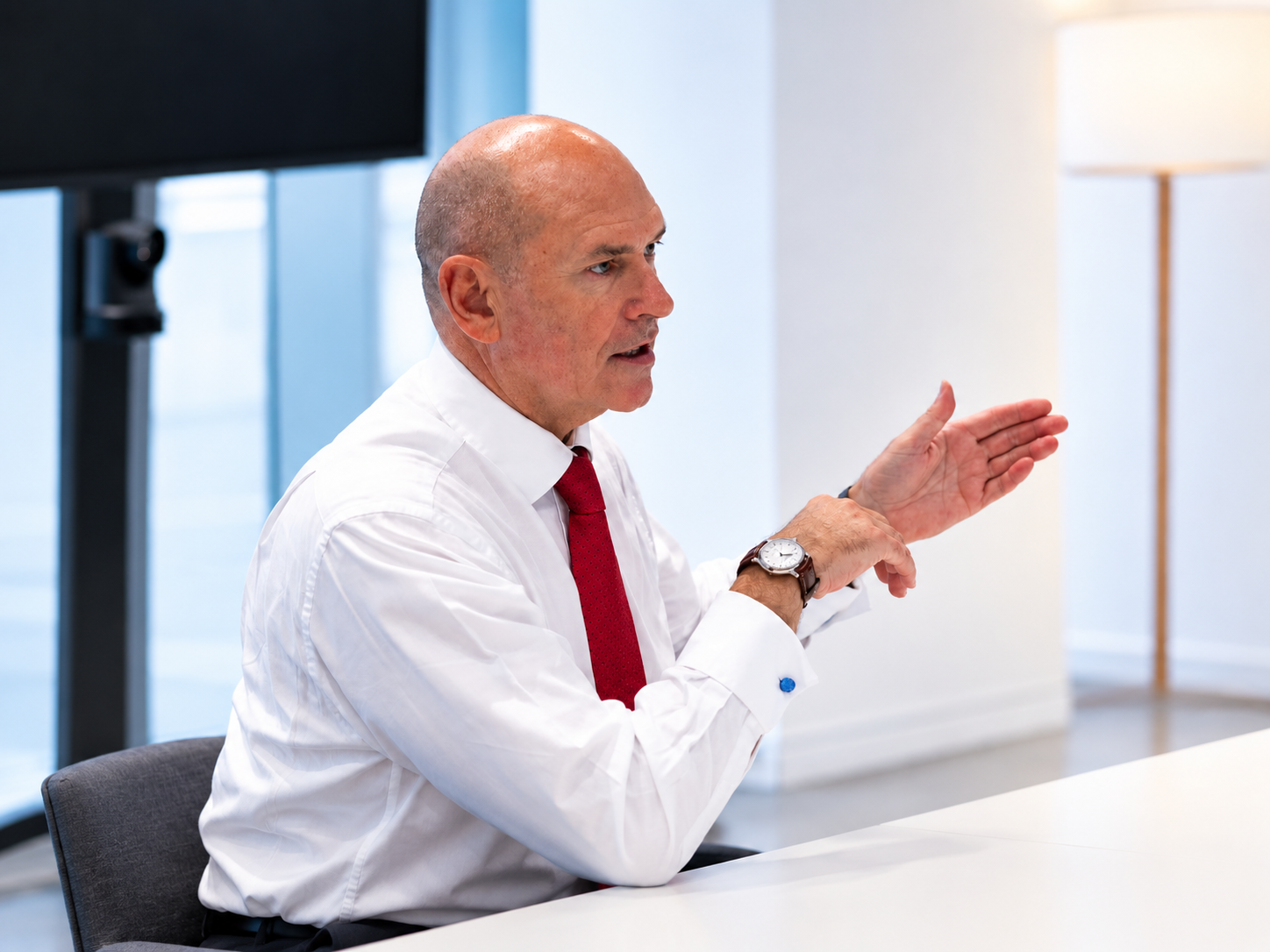
There is a unique kind of pressure that exists in offices most people never think about. It does not announce itself in press conferences or ministerial statements. It shows up instead in the small hours before a board meeting, in the space between what politicians expect and what operations can actually deliver, in the quiet work of making sure that a decision taken at the top of an organisation can survive contact with the reality of a hospital corridor. Waqar Iqbal has spent much of his career inside that pressure, and for several years now he has done so as Chief Adviser and Director of Delivery at NHS England, one of the least visible senior positions in English healthcare and, perhaps for that reason, one of the most demanding.
Senior leadership in the NHS has not lacked turnover in recent years. Chief executives change, ministers change, structures are reorganised, and each transition brings a period in which institutional memory becomes harder to locate. Continuity, in this context, is not a soft virtue. It is an operational necessity. Someone has to remember what was tried before, why it did or did not work, and how to translate a new strategic direction into something an already stretched system can execute without losing its footing. Waqar has occupied his position for long enough, and through enough change, that his presence has become one of the more stable features of an office that rarely stays still.
What stands out about his tenure is not any single decision or programme. It is the degree to which the office around him has continued to function coherently while so much above and around it has shifted. That is a harder thing to achieve than it sounds, and it invites a question worth sitting with: what kind of career actually prepares someone for this?
From the Ward to the Boardroom
Waqar Iqbal's professional grounding began not in policy but in clinical practice, training as a pharmacist and working early in his career at University College London Hospital. He entered NHS management through the Graduate Management Training Scheme, a route that has produced a disproportionate share of the system's senior operational leaders, and went on to hold operational roles across some of London's largest acute trusts, with responsibility spanning surgery, peri-operative services, critical care, cancer services and outpatient care.
It is tempting to treat this as background colour, a list of postings on the way to something more senior. That would understate its relevance. Someone who has personally managed theatre capacity, patient flow and the daily friction of acute operations tends to approach national strategy with a different instinct than someone whose experience has been exclusively corporate or policy-facing. They know, in a way that is difficult to learn from a briefing paper, how a target set nationally can collide with the arithmetic of bed capacity, staff rotas and waiting lists on a given Tuesday morning. That instinct appears to inform how he now operates at the centre. There are good reasons why clinical and operational experience, rather than a purely administrative background, has become increasingly valued in roles of this kind. It offers a kind of credibility that cannot be manufactured after the fact.
Negotiation as Leadership
If there is a single skill that defines the modern Chief Adviser and Director of Delivery role, it may be negotiation, though not in the narrow sense of striking deals. The negotiation required here is closer to a form of organisational leadership, one that involves reconciling national priorities with ministerial expectations, regional systems with acute trust realities, and clinical credibility with the demands of political timelines. None of these constituencies is naturally aligned. Each has its own logic, its own pressures and its own version of what success should look like.
One suspects that healthcare transformation succeeds less often through instruction than through the patient construction of workable agreement across parties who do not automatically see eye to eye. A chief executive can set direction. Someone still has to do the unglamorous work of making that direction survive contact with dozens of organisations, each with legitimate reasons to resist, delay or reinterpret it. This is where the Director of Delivery becomes less about proximity to power and more about the capacity to hold together a coalition long enough for something to actually happen. It seems reasonable to conclude that negotiation, understood this way, is one of the most underrated leadership disciplines in contemporary healthcare, precisely because its successes are invisible and its failures are attributed to someone else.
Turning Strategy into Delivery
The test of any NHS Executive's office is ultimately what happens beyond its walls: in elective recovery, surgical capacity, performance management, payment reform, and the dozens of system priorities competing for attention at any given time. It would be a mistake to claim personal ownership of national programmes on behalf of any single adviser, and Waqar's own public presentation of his role appears to avoid that trap. What can be said with more confidence is that effective coordination, internal challenge and sound executive judgement are what allow strategies conceived nationally to become deliverable locally. That translation work, from policy intention to operational instruction, is where many national initiatives quietly fail. Credibility with operational leaders, the kind that comes from having once been one, appears to matter more here than any amount of positional authority.
A Different Kind of Leadership
Visibility is often mistaken for influence in large public institutions. The names that appear in headlines are rarely the names responsible for whether a given reform actually functions on the ground eighteen months later. Time has shown that the leaders who leave the most durable institutional impact are frequently the ones who spent their careers making other people, and other people's decisions, successful. Whether that is the case here is something readers might reasonably conclude for themselves, but the pattern is a familiar one in institutions under sustained pressure to reform.
Institutions as complex as the NHS depend on visionary public leaders to set direction. They depend equally, and perhaps more quietly, on people who understand how policy, operations and clinical reality actually connect, and who are willing to do the unglamorous work of holding that connection together while everything above them changes.



.jpg)