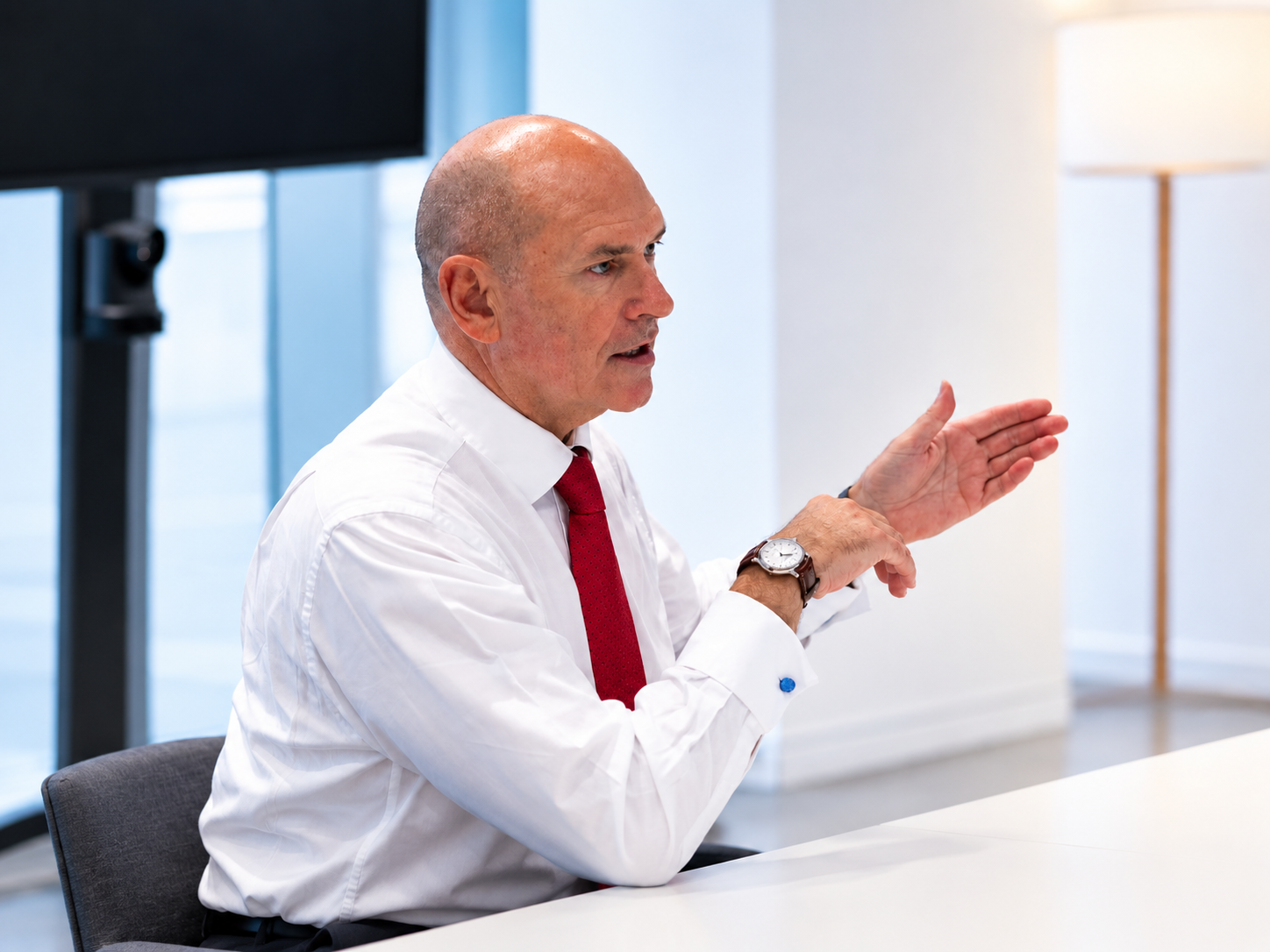
When Sir Jim Mackey wrote to trust and integrated care board leaders in the autumn of 2025, the tone was closer to relief than triumph. The health service had begun the year staring at a predicted deficit of six billion pounds. By the halfway point it was broadly on plan. That single fact, more than any speech, explains why NHS England's chief executive has spent recent months urging colleagues not to relax.
The scale of the turnaround is not in dispute. NHS finances ended 2025/26 close to balance, a result that would have seemed implausible twelve months earlier. Elective waiting times, while still far from where ministers want them, edged toward the referral to treatment targets that had eluded the service for years. Public satisfaction with the NHS rose for the first time since before the pandemic, according to the British Social Attitudes survey published in March, climbing six percentage points to twenty six percent. Dissatisfaction fell by the largest margin recorded in more than a quarter of a century.
These are not small numbers in a system that had grown used to reporting bad news. They reflect what Mackey has repeatedly called an exceptional effort from frontline staff and system leaders, delivered against industrial action, higher than expected demand and persistent workforce pressure. For an NHS chief executive to be able to point to genuine improvement, rather than manage decline more gracefully, is itself notable.
Yet the same survey data that supports his case for progress also supports his case for caution. Only sixteen percent of the public believe NHS care will improve over the next five years, against fifty three percent who expect it to worsen. Satisfaction with GPs, dentistry and accident and emergency services showed no significant change. The improvement, in other words, is real but shallow, resting on a base of public expectation that remains deeply pessimistic. Mackey's insistence that recovery is not yet secure is not false modesty. It is an accurate reading of where the numbers actually sit.
This matters more than usual because the political ground beneath the NHS has shifted. Yvette Cooper's appointment as health and social care secretary in July, under a new prime minister, brings a fresh set of priorities focused on maternity services and social care reform rather than another structural reorganisation. That is, on balance, welcome news for a system still absorbing the disruption of NHS England's planned abolition and the loss of roughly eighteen thousand staff from national and local leadership functions. Continuity of purpose, at a moment when the operational model itself is in flux, has real value.
But continuity of purpose is not the same as continuity of resource. Mackey's clearest and most consistent argument, made publicly on more than one occasion, is that operational leaders need genuine room to manage within their plans rather than repeated interventions ahead of each budget cycle. When the Treasury declined to cover redundancy costs tied to the very job losses it had demanded, the tension between central financial control and local delivery responsibility became difficult to ignore. A chief executive who has just delivered a year of financial discipline has some standing to ask that the state which set those targets now honour its side of the arrangement.
The practical stakes extend beyond one leader's tenure. If ministers treat this year's figures as evidence that the hard work is done, the risk is a return to the pattern that produced the six billion pound deficit in the first place: ambitious targets set without the operational stability needed to meet them. If instead the government uses this period of relative calm to grant the sustained autonomy Mackey has asked for, on finance, on workforce planning and on the pace of reform, the improvements recorded this year have a genuine chance of compounding rather than reversing.
Mackey has earned the right to be heard on this point. He inherited a service in financial disorder and leaves the first year of his tenure with a stronger balance sheet and a public slightly more willing to believe in the NHS again. Whether that becomes a foundation or a high water mark now depends less on NHS leadership than on whether Westminster can resist the temptation to declare the job finished.



.jpg)