
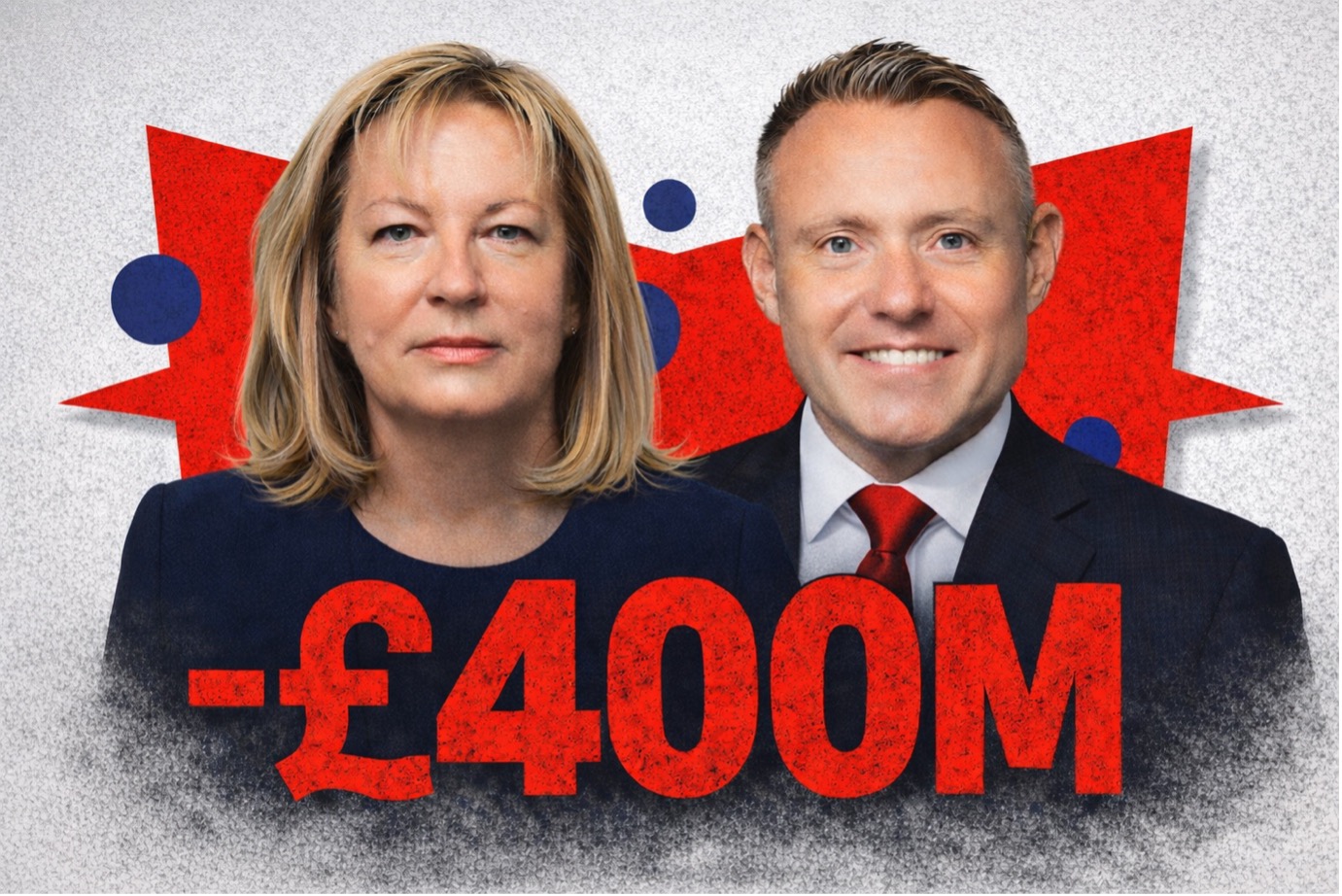
Seven integrated care systems are now forecasting a combined £400m overspend. The headline alone would trouble any chief executive. Yet beneath the numbers lies a deeper question for NHS leaders: after successive reorganisations from SHAs to PCTs, from ICSs to ICBs, has structural reform improved financial discipline, or merely rebranded it?
For those running hospitals, community services and primary care networks, the answer increasingly feels uncomfortable.
NHS England’s latest quarter three data show that seven systems have formally downgraded their 2025–26 financial outturn. Kent and Medway Integrated Care System alone has shifted by £141m against plan. Humber and North Yorkshire follows with a £76m deterioration. North East London, South Yorkshire, Devon, Mid and South Essex and West Yorkshire complete the list. Together these systems are forecasting a combined £917m deficit, excluding central support. Across England, 31 systems are projecting a year-end deficit, totalling £2.6bn. A fifth of that sits in the North West.
This is the first year NHS England has published quarterly system-level forecasts against plan. No system revised its outturn in quarter two. By quarter three, the story had changed.
At trust level the picture is equally sobering. Fifteen provider organisations have worsened their forecast position compared with their original plans, even without counting withheld national funding. Barking, Havering and Redbridge University Hospitals NHS Trust has moved from a planned £23m deficit to £71m. Royal Devon University Healthcare NHS Foundation Trust has shifted from break-even to £44m in the red. Medway NHS Foundation Trust, Mid and South Essex NHS Foundation Trust and Hull University Teaching Hospitals NHS Trust are among others reporting deteriorations.
For chief executives and chief operating officers, these are not abstract accounting entries. They translate into delayed capital programmes, constrained recruitment, postponed service redesign and strained relationships with boards and regulators. They also sharpen a long-simmering tension: what exactly is the value added by the commissioning tier?
Over the past two decades the NHS has cycled through Strategic Health Authorities, Primary Care Trusts, Clinical Commissioning Groups, Integrated Care Systems and now Integrated Care Boards. Each iteration promised simplification, integration and improved stewardship of public funds. Each arrived with new titles, new committees and new reporting lines. For frontline providers, the constant is delivery: theatres must run, clinics must open, patients must be seen.
In recent conversations with a group of NHS executives, a pattern of frustration emerged. Providers are asked by NHS England to submit detailed forecasts and savings trajectories. Shortly afterwards, ICBs request the same information to evidence system oversight. The duplication is not theoretical. Finance teams already stretched by cost pressures and agency spend are reworking the same data into different templates for different audiences. One executive likened the process to having two project managers asking for identical status reports while neither directly runs the project.
This is not to dismiss the principle of system working. The logic of aligning hospital, primary care and community services around shared population health goals remains compelling. But when the administrative overhead begins to crowd out operational focus, the balance requires scrutiny. An organisation that does not deliver care must justify its existence through demonstrable value: faster decisions, reduced duplication, sharper capital allocation, credible financial planning.
Where the pressure is greatest: Kent and Hull
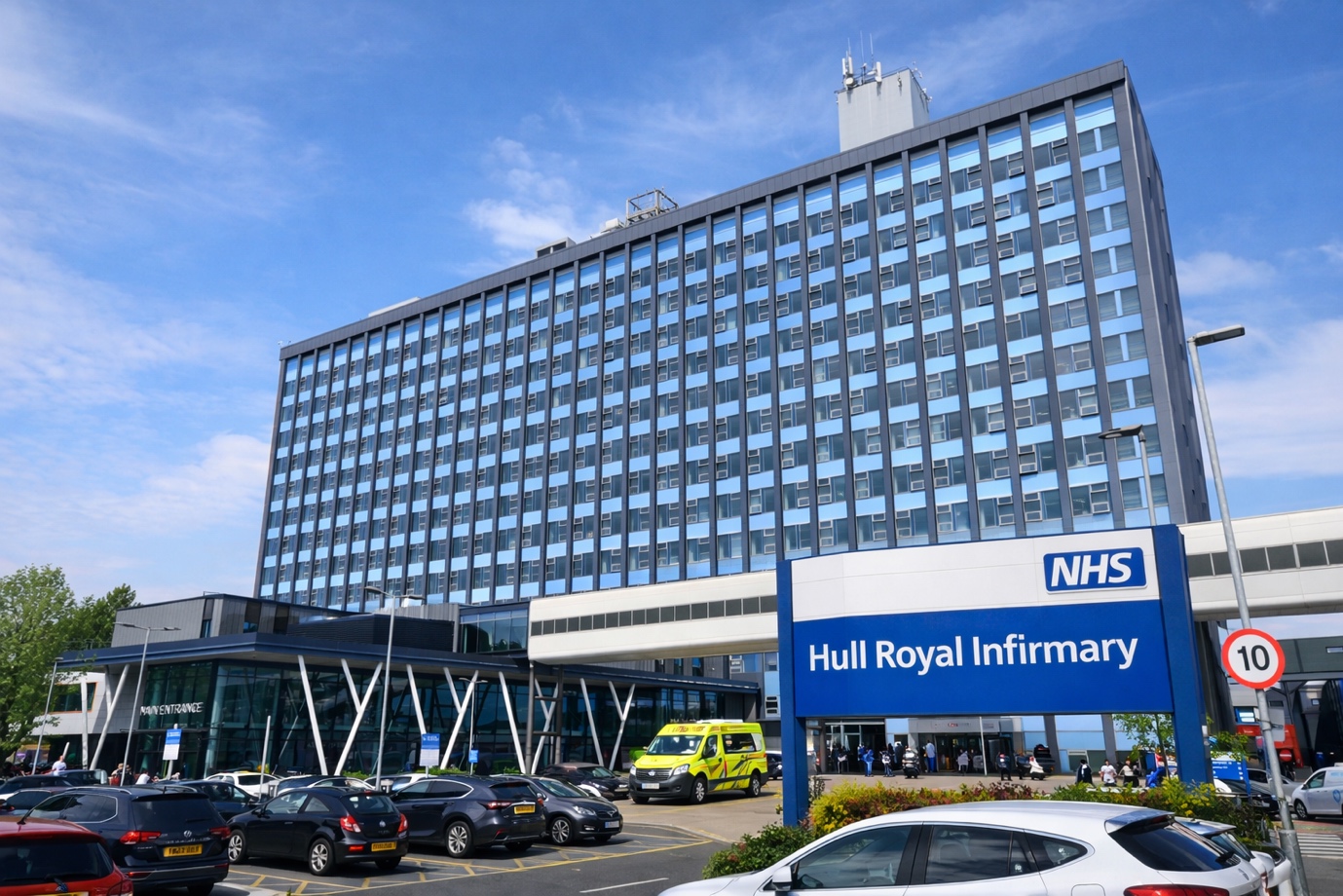
Kent and Medway stands out in the latest figures. A £141m swing against plan is not marginal drift; it is structural strain. Public statements from the system acknowledge that elements of the savings programme were unlikely to be delivered at the scale or pace originally forecast. That language will be familiar to many boards. Ambitious efficiency assumptions collide with workforce shortages, rising demand and inflationary pressures.
Humber and North Yorkshire, closely linked geographically, has also seen significant deterioration. Hull, in particular, has long faced entrenched health inequalities and economic challenges. These regions are not new to difficulty. For more than a decade, successive structures have sought to stabilise performance and close financial gaps. Yet the persistence of deficit raises a difficult question: has reorganisation absorbed energy that might have been better directed into sustained operational transformation?
It would be simplistic to blame ICBs alone for overspends rooted in demography, deprivation and workforce constraints. But governance architecture shapes incentives and accountability. When savings plans prove unrealistic, who recalibrates them? When duplication occurs between national and system tiers, who removes it? When deficits accumulate year after year, who is empowered to make decisive change?
NHS England’s chief financial officer recently reported that systems were overspent by £445m at the end of December, an improvement from £1bn at the same point the previous year. Underspends in national budgets and specialised commissioning have helped balance the position. That is welcome. Yet improvement from a worse baseline is not the same as structural sustainability.
For CEOs and COOs, three implications stand out.
First, financial realism must replace optimism bias. Plans built on savings that are unlikely to materialise erode credibility with staff and regulators alike. If system leaders believe targets are unattainable, they should say so early and publicly.
Second, duplication between NHS England and ICBs should be pared back with urgency. A single version of the financial truth, submitted once and shared across tiers, would release capacity in provider finance teams. In an era of tight margins, administrative simplification is not cosmetic; it is operationally material.
Third, the focus of system leadership must shift decisively towards the most challenged geographies. Kent, Hull and similar areas require sustained, hands-on transformation support, not additional reporting cycles. That means deploying experienced turnaround expertise, aligning capital with clear clinical strategy and tackling workforce pipelines at source.
Hospitals, GP practices and community providers know how to deliver care. They do so daily under extraordinary pressure. The commissioning tier exists to enable that work, not to mirror it in parallel bureaucracy. If ICBs are to avoid the fate of their predecessors, they must demonstrate that they accelerate decision-making, concentrate resources where they are most needed and hold the system to financially credible plans.
Rebranding is easy. Delivery is harder.
The £400m overspend forecast is more than a headline. It is a stress test of whether the current architecture can withstand operational reality. For boards across England, the coming months will reveal whether Integrated Care Boards are a genuine evolution in stewardship or simply the latest chapter in a long history of structural reinvention.
Chief executives will not judge them by mission statements. They will judge them by whether next year’s forecasts are more realistic, whether duplication has diminished and whether the most challenged regions finally begin to turn the dial.



.jpg)
.jpg)
.jpg)