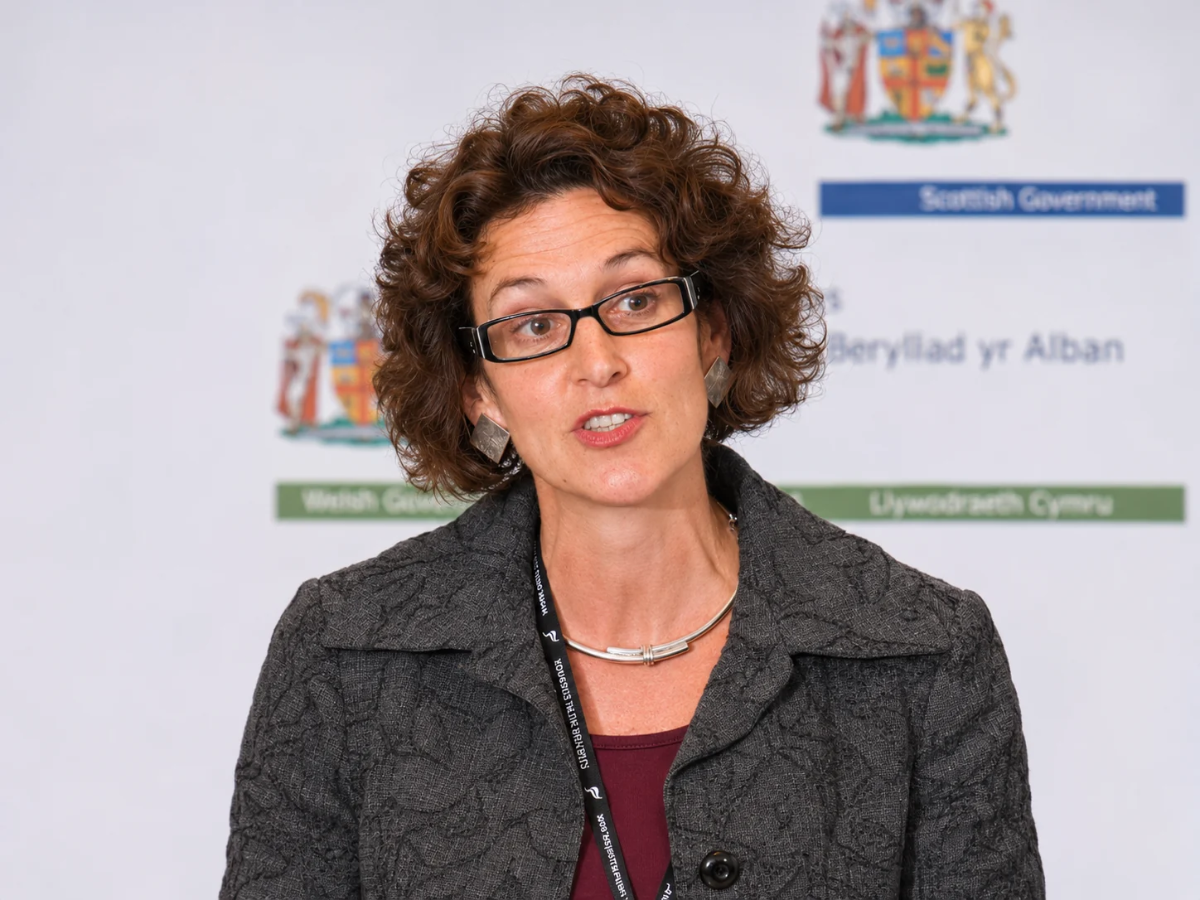
At the Care Quality Commission's offices, the work of rebuilding hospital inspection has barely moved beyond its early stages. New sector-specific frameworks are being developed, specialist clinical advisers are being brought back into regulatory work and the organisation is trying to repair relationships with hospitals that have spent years questioning the consistency of its judgements. Now the person leading that work is preparing to leave. Dr Toli Onon, appointed Chief Inspector of Hospitals in September 2025, will depart next year to become NHS England's Regional Medical Director for the North West. Her move is a significant change for a regulator whose recovery remains unfinished.
There is no public evidence that Onon's departure reflects dissatisfaction with the CQC or disagreement over its direction. She has described the opportunity as a return to medical leadership in a region with which she has longstanding professional connections. Yet the timing deserves attention. The CQC has already experienced considerable senior leadership disruption, and its hospital inspectorate is operating at a point when continuity matters. A change at the top of this function carries consequences beyond the organisation's internal management.
Onon arrived with nearly 35 years of NHS hospital experience, including senior clinical leadership at Manchester University NHS Foundation Trust. Her previous responsibilities included oversight of clinical quality, patient safety and the professional regulation of approximately 2,800 medical and dental staff. That experience gave her a practical understanding of how hospitals operate under pressure, where governance arrangements fail and why inspection findings must withstand scrutiny from clinicians who understand the services being assessed.
Her contribution at the CQC has centred partly on restoring sector-specific expertise. The regulator's previous transformation programme moved towards a more integrated model of assessment, supported by a single framework and a new digital platform. The implementation proved deeply problematic. Inspection activity declined, reports were delayed and the loss of specialist knowledge weakened confidence in the regulator's ability to assess complex services. The independent review led by Dr Penny Dash in 2024 exposed the scale of these failures.
The subsequent return to sector-based regulation acknowledged a basic problem with the earlier approach. Hospitals, mental health services, primary care and adult social care operate within different clinical and organisational environments. A regulatory framework designed to accommodate everything risks overlooking the details that determine whether a service is safe. Onon's work to re-establish a hospitals inspectorate organised around specialist knowledge was therefore an important part of the recovery.
However, rebuilding an organisational structure does not automatically restore confidence. Evidence published in November 2026 suggests that NHS providers remain unconvinced about the pace of improvement. A survey of 166 senior NHS leaders across 116 trusts found that only 21 per cent believed the CQC was making the changes needed to improve its longer-term performance. Almost two-thirds said inspection quality had either remained unchanged or deteriorated over the previous year. Concerns included inspectors lacking relevant expertise, factual inaccuracies and lengthy delays in receiving reports. Some trusts were still waiting more than a year for inspection findings.
These criticisms matter because the relationship between regulation and operational performance is becoming increasingly important to the NHS. Hospitals are being asked to reduce waiting lists, improve productivity and manage expenditure while maintaining safe staffing and clinical standards. Trust boards must demonstrate progress against demanding recovery expectations, often while services remain under substantial pressure. In that environment, regulatory judgements influence board priorities, improvement plans and the allocation of management attention.
An inspection that identifies genuine safety failures can prompt necessary intervention. An inaccurate or poorly evidenced assessment can have the opposite effect. It consumes management time, damages professional confidence and risks directing improvement resources towards problems that have been incorrectly characterised. For trusts already managing financial recovery and workforce pressures, the quality of regulatory evidence has direct operational consequences.
The patient interest is equally significant. Inspection reports are among the few mechanisms through which the public can understand how individual hospitals are performing beyond headline waiting-time figures. A patient deciding where to seek treatment needs confidence that a regulator can identify unsafe care and explain its findings accurately. Where inspections are infrequent or reports arrive long after the assessment, that assurance becomes harder to provide. Regulation loses much of its value if its findings cannot inform decisions while the underlying problems remain relevant.
The CQC's challenge is complicated by the changing nature of healthcare delivery. Hospital safety increasingly depends on services operating across organisational boundaries. Patients move between acute hospitals, community services, primary care and social care, with failures in discharge arrangements often creating risks inside hospitals themselves. Sector-specific expertise is necessary, but inspectors must also understand how pressure travels across the wider system. A hospital can be judged on its own performance only to a limited extent when its ability to discharge patients depends on capacity elsewhere.
This is particularly relevant to the North West, where Onon will take up her new position. NHS England's regional responsibilities extend across Cheshire and Merseyside, Greater Manchester, and Lancashire and South Cumbria. These systems face substantial demands on acute capacity, urgent care and the movement of patients through hospital services. Her experience of examining hospital quality from the regulatory side may prove useful in regional oversight. She will understand the evidential standards expected of providers and the difference between a documented improvement and a change that has yet to reach clinical practice.
There is, however, an important institutional distinction to preserve. A regional medical director works within NHS England's oversight structure, whereas the CQC must retain its independence from the organisations it regulates. Onon's move between these responsibilities is entirely legitimate, but it reinforces the need for clear boundaries between regulatory judgement and NHS performance management. The regulator must be able to challenge providers without being drawn into the operational priorities of the system it oversees.
Her departure also creates a practical question about succession. The CQC says arrangements for covering the Chief Inspector of Hospitals role will be announced separately. Whoever assumes responsibility will inherit a programme requiring sustained clinical leadership, stronger inspection capability and a more dependable relationship with providers. Repeated changes in senior personnel risk slowing decisions and weakening accountability for reforms that need several years to become established.
There is a wider lesson here for public service reform. Government departments and regulators frequently announce structural changes as evidence of progress, but the difficult work begins when new arrangements must be applied consistently. Digital systems cannot compensate for inspectors who lack clinical understanding. New assessment frameworks cannot correct inaccurate reporting. Nor can improved organisational charts resolve a shortage of experienced people able to exercise sound judgement.
The CQC's own recovery demonstrates how quickly institutional reform can become detached from the experience of those it is intended to serve. NHS leaders will judge the regulator through the quality of inspections, the accuracy of reports and the speed with which concerns are addressed. Patients will judge it by whether unsafe care is identified and acted upon. Those measures will matter considerably more than the number of structural changes completed.
Onon leaves behind a hospital inspectorate that has begun to recover its specialist identity, but has yet to demonstrate that the change has translated into consistently trusted regulation. Her next appointment may bring valuable experience into NHS England's North West leadership. The immediate responsibility at the CQC is to ensure that her departure does not interrupt the work already under way. For a regulator still trying to convince hospitals and the public that its judgements can be trusted, continuity is now part of the test.