
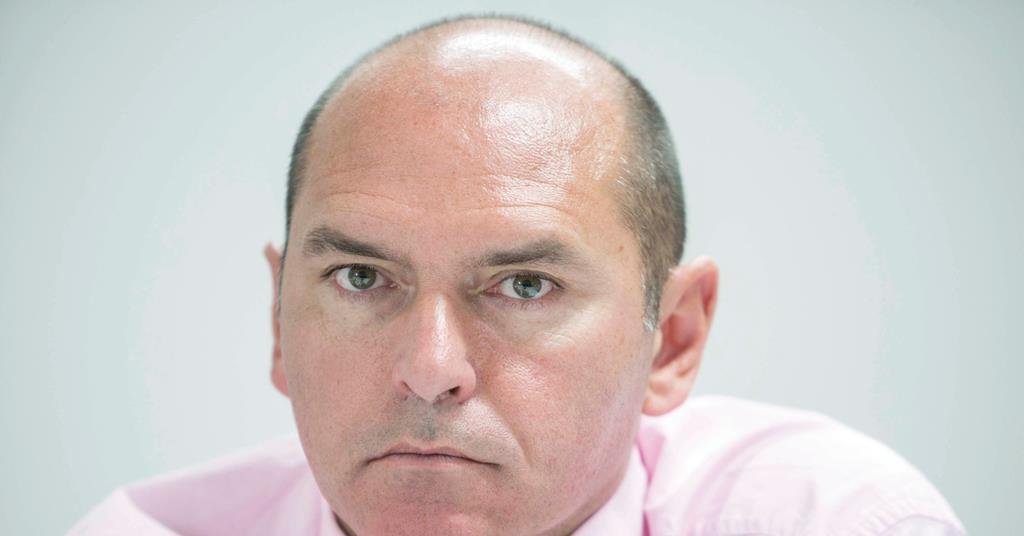
Sir Jim Mackey has indicated that his time as chief executive of NHS England will be finite, describing the question of his tenure as “a live conversation”. Speaking at the NHS Providers conference in Manchester, he reiterated that he does not intend to remain in the post long-term, but will continue to oversee the early stages of NHS England’s transition.
Sir Jim, who took on the role in March and was widely viewed as a temporary appointment, said he had committed to completing “a reasonable shift”. He noted that he would not “jump out and see it all fall to bits”, but also emphasised that his position had always been intended to support a period of restructuring rather than establish a new long-term leadership era.
A role shaped by reform rather than permanence
Government plans state that NHS England will be abolished by July 2027, though the timeline is contested. Sir Jim said there were significant complexities embedded in the process, particularly given his secondment from Newcastle Hospitals. “It’s just not that straightforward to say this is going to be all done,” he told delegates, adding that he hoped to return to the North East once a national period of service was complete.
His remarks reflected the nature of the role itself: designed to navigate a transition rather than define its eventual destination. The structure that replaces NHS England, and the leadership that will oversee it, both remain unresolved.
Redundancies and the strain on staff
His comments came the day after ministers confirmed approval for a large voluntary redundancy programme across NHS England and integrated care boards. The scheme has been expected since March, but repeated delays created prolonged uncertainty for staff.
Sir Jim acknowledged the impact of this hiatus, saying: “We all feel desperately uncomfortable and embarrassed about how individuals have been handled through this process.” While accepting that the situation could not simply be undone, he said efforts were underway to ensure the next phase is managed more clearly.
The health secretary, Wes Streeting, had earlier expressed similar unease, noting that the timetable should have been resolved faster.
A leadership pipeline under pressure
Sir Jim also reflected on the shrinking pool of NHS leaders, saying the pipeline had “diminished” over the past decade. He noted that senior roles often attract no more than one or two appointable candidates, a trend he linked to the growing complexity and scrutiny attached to NHS leadership.
He referenced an incident the previous day in which a chief executive was “personally at risk of threat to life” following an encounter with an angry family, illustrating how local pressures can escalate.
The picture he described was one of demanding roles that fewer people are willing to pursue, even as expectations around performance, transparency and reform continue to rise.
Diversity and the national team
Sir Jim said that diversity within the national leadership team remained “not what it should be”, though recruitment to new positions continues. He reaffirmed that elective recovery targets for 2025-26 had not been abandoned, despite broader system pressures.
Daniel Elkeles, the new CEO of NHS Providers, offered his own assessment at the conference, noting that hospitals were likely to miss waiting list targets this year but were on track to meet their financial plans.
A transitional moment for health service leadership
Sir Jim’s remarks were not a declaration of departure, but an acknowledgement of a leadership role defined by flux. NHS England remains in a period of structural uncertainty, and the national team faces the dual task of supporting staff through reorganisation while maintaining focus on recovery and performance.
Against that backdrop, his tenure appears to be guided less by fixed timelines and more by the rhythm of the reforms themselves. His comments suggested a willingness to stay long enough to steady the system, but not to anchor it indefinitely.
The question that follows is how the NHS will shape its next generation of leaders; and whether the structures replacing NHS England will make the task easier, or harder, for those who step forward.



.jpg)
.jpg)
.jpg)