
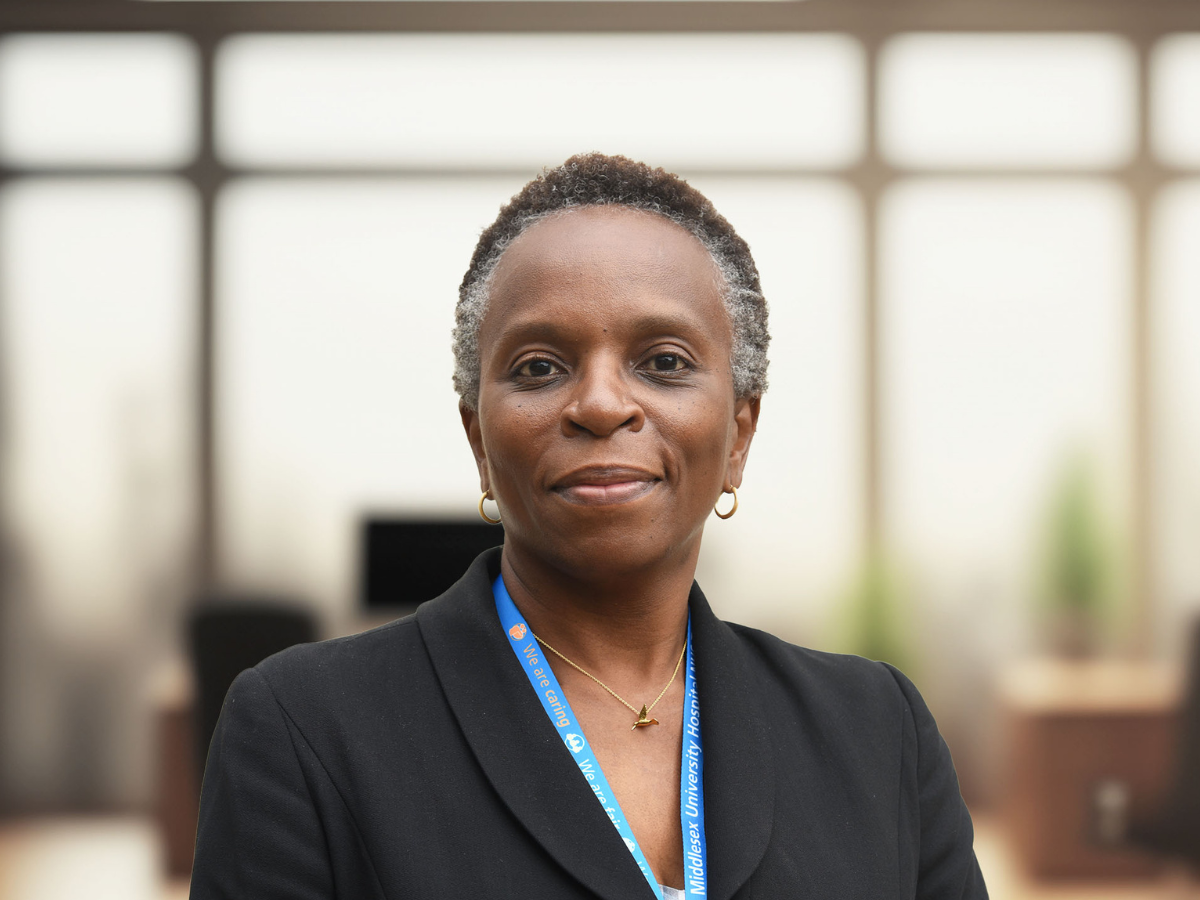
When Dr. Nnenna Osuji took on the leadership of NHS North East London Integrated Care Board in early 2026, she stepped into one of the most demanding roles within the system. Responsible for a £4.9 billion budget and a population of approximately two million people, the scale and complexity of the region present a constant tension between demand, deprivation and resource constraint. It is the kind of brief that could narrow a leader's ambitions to the purely operational; to keeping the lights on. Osuji has chosen a different path.
Her response has been to reframe the problem itself. Rather than focusing solely on increasing capacity within hospitals, her strategy has centred on redistributing care into neighbourhood settings. This shift is not simply structural. It represents a fundamental rethinking of how and where care is delivered, positioning prevention and early intervention not as aspirational add-ons but as core components of system performance. In a region where health challenges are both acute and deeply entrenched, that reorientation matters enormously.
A key enabler of this approach has been the deployment of the Optum Pathfinder population health platform across the ICB. Within its first quarter of operation, the system identified approximately 12,000 high-risk respiratory patients who could be proactively managed before reaching crisis point. During the winter peak of 2025 to 2026, this translated into a measurable reduction in A&E attendances, alleviating pressure on already stretched acute services. The significance of that outcome should not be understated. Every avoided emergency presentation represents not only a system saving but a person who received timely, appropriate support rather than deteriorating to the point of crisis.
This use of data reflects a broader philosophical commitment to population health management as a central pillar of system transformation. Rather than reacting to demand as it emerges, Osuji's model seeks to anticipate and mitigate it. The identification of high-risk cohorts allows interventions to be targeted more effectively, reducing both clinical risk and system strain. It is a model that requires discipline, coordination and a willingness to invest effort where the returns are less immediately visible: upstream, in communities, before things go wrong.
Her leadership also builds on operational frameworks developed earlier in her career. The "Patient First Management System," originally implemented at North Middlesex University Hospital, has been expanded across the ICB. Its impact is already evident, contributing to a 20 percent improvement in Same Day Emergency Care utilisation across London. In practical terms, this means more patients are assessed, treated and discharged on the same day, reducing the need for inpatient admission and alleviating the corridor congestion that has come to characterise NHS acute settings during periods of peak demand. It is the kind of improvement that is difficult to achieve without genuine clinical credibility behind the change programme.
What distinguishes Osuji's approach is the integration of clinical insight with system-level execution. As a practising haematologist, she brings a direct understanding of patient pathways that informs her strategic decisions in ways that purely managerial leadership often cannot replicate. She understands what it means to sit across from a patient navigating a complex, frightening illness. That understanding shapes how she thinks about system design — not as an abstract exercise in efficiency, but as something with real human consequences at every juncture.
At the same time, she operates at a scale that requires coordination across multiple organisations, each with its own pressures, priorities and institutional cultures. Holding that together demands a particular kind of leadership: one that is decisive without being dictatorial, and principled without being inflexible.
North East London remains one of the most deprived regions in the country, where health inequalities are both pronounced and persistent. In this context, system transformation is not simply about efficiency. It is about equity, ensuring that access to care is not determined by postcode or circumstance. The communities served by this ICB carry a disproportionate burden of preventable illness, and any honest account of system performance must reckon with that reality. Osuji appears to. Her strategy does not treat deprivation as background context; it treats it as a central design constraint.
Her tenure to date suggests that meaningful change within the NHS may depend less on structural reorganisation and more on the thoughtful redistribution of care itself. By shifting the centre of gravity away from hospitals and towards communities, she is developing a model that is both more responsive and more sustainable; one built for the population it actually serves.
In doing so, she is redefining what integrated care can look like in practice. Rather than an abstract concept promised in strategy documents, it becomes a tangible framework through which clinical insight, data and local delivery are brought together to address some of the most pressing challenges facing the health service today. It is early, and the work is ongoing. But the direction is clear, and it is being led with purpose.



.png)
.png)
.jpg)