

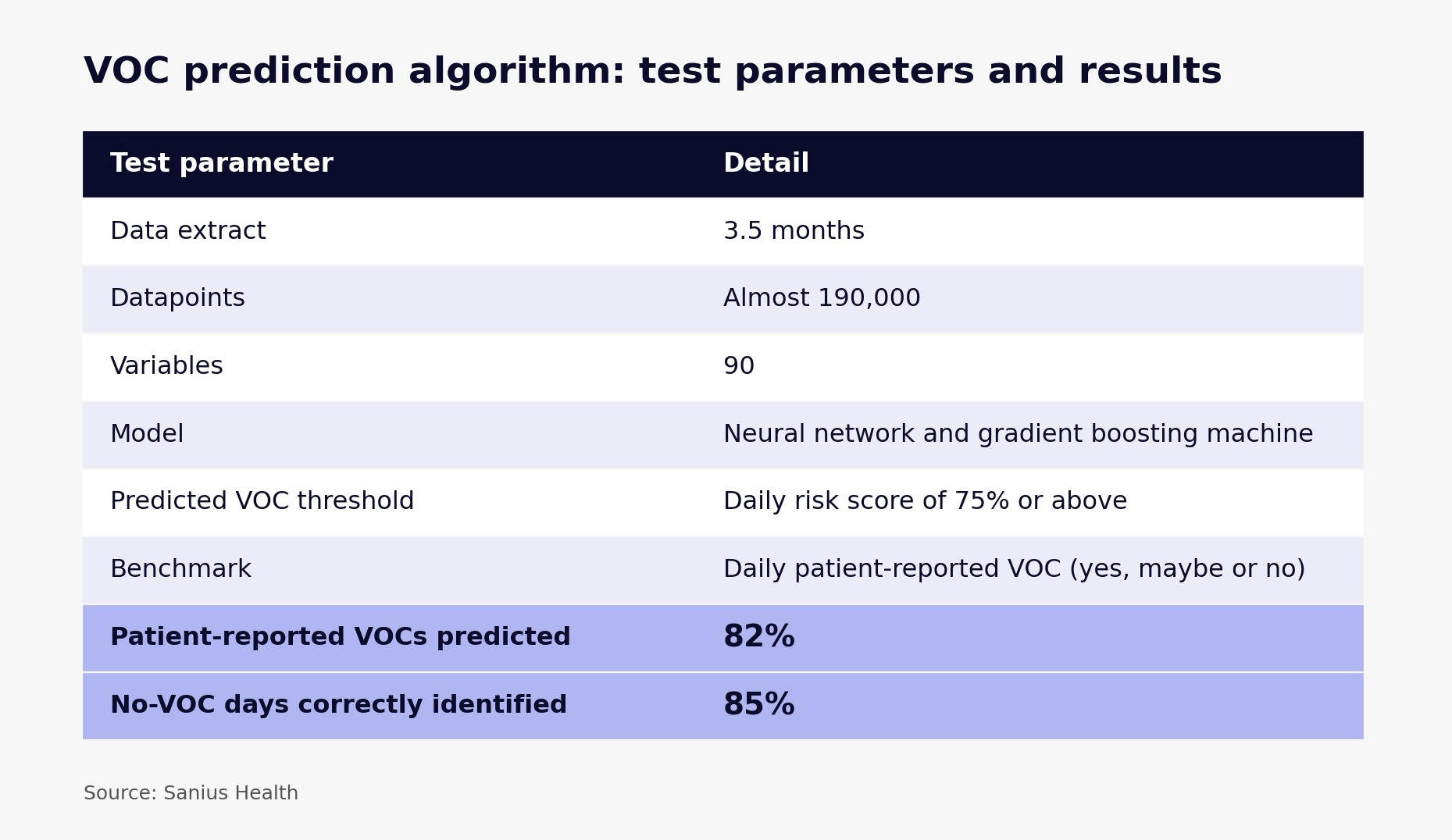
Sanius Health has reported that its artificial intelligence algorithm identified 82% of the vaso-occlusive crises (VOCs) that people with sickle cell disease (SCD) recorded in a mobile app over 3.5 months. The company's platform produces daily risk scores and, according to Sanius, can detect signs of physical decline up to a week before a crisis or hospital admission. It cites sensitivity of up to 92% for the platform overall. The latest results will be presented as a poster and an oral presentation at the Annual Scientific Conference on Sickle Cell and Thalassaemia later this month.
VOCs are severe pain episodes and are estimated to cause about 95% of SCD hospitalisations. Each one raises the long-term risk of end-organ damage and a shortened lifespan. A study in Paediatric Blood and Cancer found that children hospitalised with a VOC can experience adverse effects for up to 12 months. Health-related quality of life fell most noticeably after three months, and physical functioning was the worst affected area. Conditional approval for one SCD therapy has been revoked, and another is still addressing outstanding queries from the National Institute for Health and Care Excellence.
The platform combines data from clinically validated smartwatches and medical records with outcomes that patients report each day. The algorithm is built on a neural network and a gradient boosting machine. For each patient it calculates a VOC risk score from 0 to 100% every day, and a score of 75% or above counts as a predicted crisis. Patients' own entries of yes, maybe or no in the app served as the benchmark.
The most influential variables were mainly quality-of-life measures reported by patients, with age and environmental factors also in the top ten. Variables that only confirm a crisis once it has begun were excluded from that ranking.
The result sits within a wider debate on how healthcare AI should be judged. One widely cited framework sorts 20 use cases by the strength of their evidence and the harm an error could cause. Predictive analytics for patient outcomes falls in the group labelled on the horizon, where evidence is thin and risk is lower. The Sanius figures fit that description. The benchmark is the patients' own daily reports, and the company says the next step is to test the algorithm against medical data as well.
Sanius also intends to identify the metrics with the greatest predictive weight that need the least manual input. Daily reporting is a burden for patients, and a leaner set of inputs could ease it while improving accuracy.
A second analysis examined how SCD is treated in practice. Sanius says a poorly described care pathway can delay regulatory approval for new therapies. The work looked at hydroxyurea (HU) as a primary intervention and at transfusion therapy used after it. Patient metrics from the Sanius network were set against aggregated clinical data supplied as snapshots by four NHS sites.
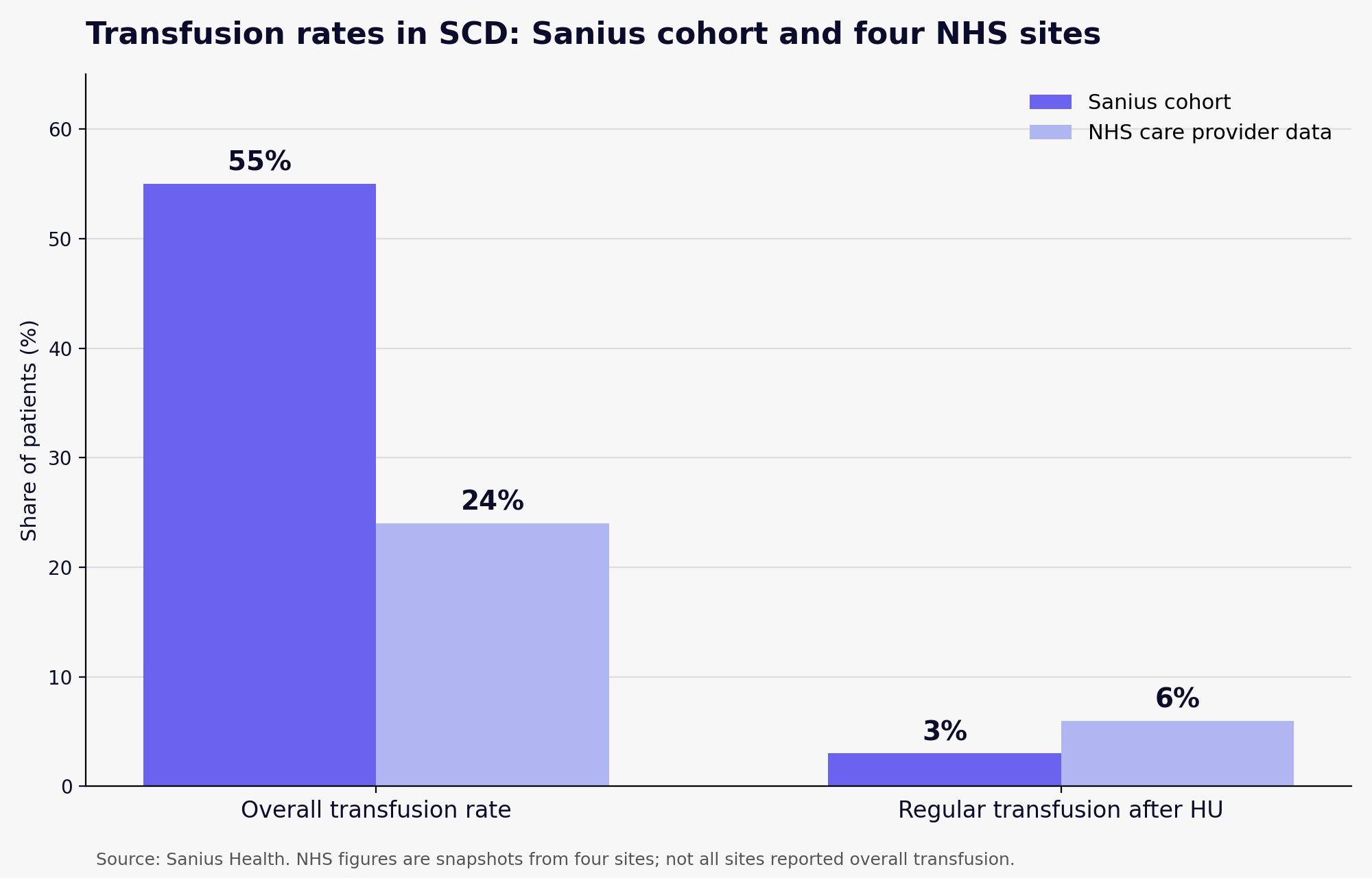
HU use and rates of intolerance or ineligibility were similar in both datasets. The gap in overall transfusion may reflect incomplete reporting, as not every NHS site supplied that figure. Regular transfusion after HU was much closer.
The analysis also found a significant proportion of patients who had not received HU, which is the core treatment for SCD. Sanius plans to examine these pathways in finer detail, including how many patients receive no treatment, the reasons, and the effect on hospital admissions and costs. The company says the aim is to improve access to new therapies and widen the ways in which patients with long-standing unmet needs are monitored.


.jpg)

.jpg)