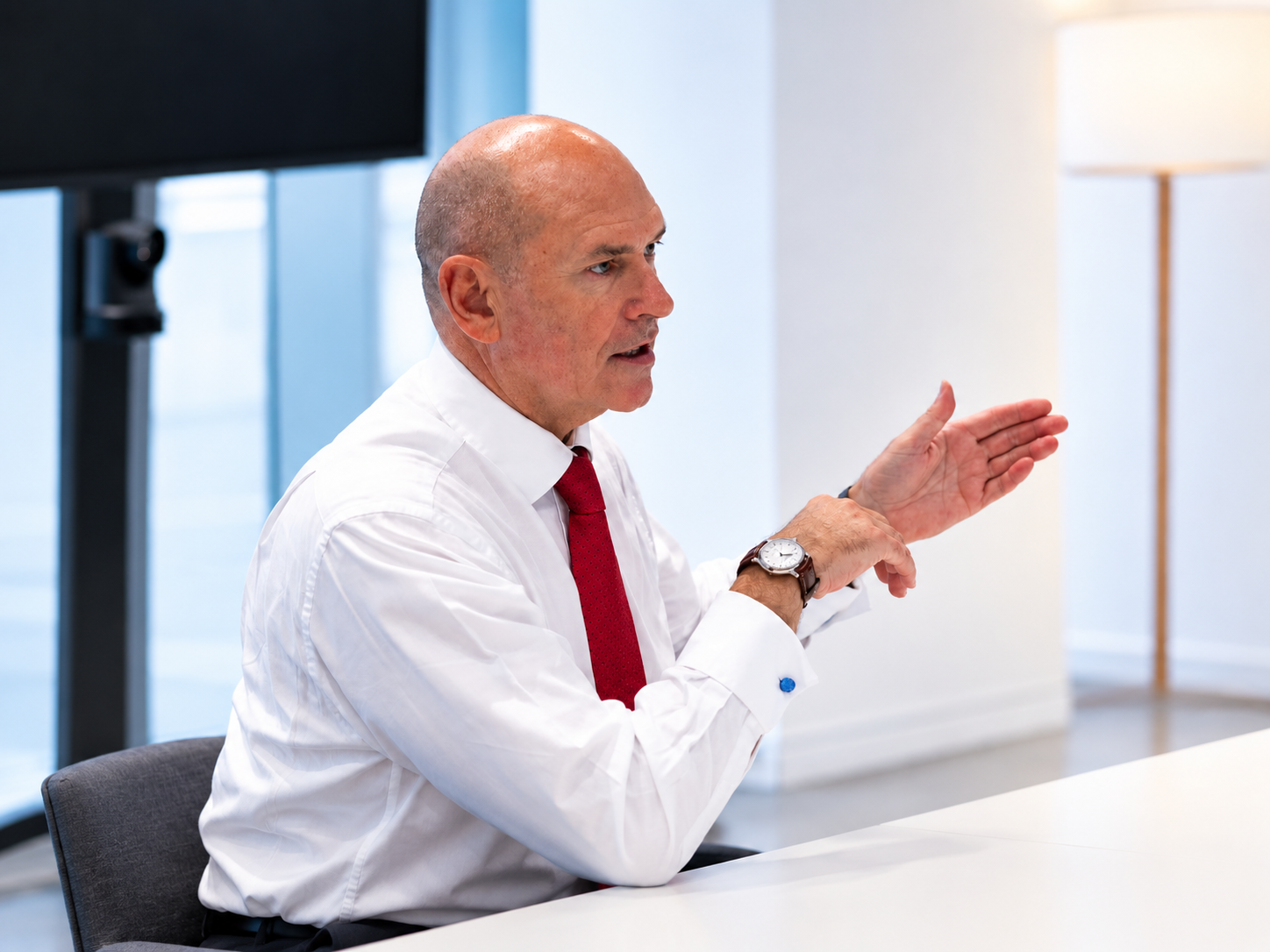
When Dr Richard Jenkins took up an interim chief executive post at Doncaster and Bassetlaw Teaching Hospitals in August, he did not relinquish his existing role running Barnsley and Rotherham. He simply added a third trust to his portfolio, becoming accountable officer for organisations serving well over a million patients between them. Trust leaders framed the appointment as a natural extension of an established partnership. Regulators framed it, in the small print of newly published guidance, as exactly the kind of arrangement they now regard with caution.
NHS England's guidance on assessing provider capability contains an admission that sits awkwardly alongside a decade of policy encouraging exactly this model of leadership. Shared leadership across multiple trusts, the guidance states, may result in executive teams being stretched and therefore less effective, particularly at more challenged providers. As a consequence, oversight teams will now assess capability on a standalone basis at each organisation, rather than assuming that a common executive team means a shared capability rating.
The admission matters because of how far the practice has spread. Nearly two in five trusts in England now share a chair or chief executive with another organisation. What started out as a sporadic solution for a failing provider lacking a stable board has evolved into a model that is almost universally used in the acute sector, strengthened by group structures like the one that is emerging across four trusts in northwest London under one unified chief executive starting in April of this year.
The logic behind the trend is straightforward. Experienced leadership is scarce and expensive, chief executive turnover in distressed trusts is high, and pairing a weaker organisation with a stronger one under shared management has appeared, on paper, to spread expertise without spreading cost. NHS England's own guidance on joint appointments has actively supported this approach since 2022, framing collaboration as essential to tackling waiting lists, diagnostic backlogs and workforce shortages that no single trust can solve alone.
What the guidance now concedes is the strain this places on the individuals expected to deliver it. Running a single acute trust through winter pressures, elective recovery targets and a tightening financial settlement is close to a full-time undertaking. Splitting that attention across two or three boards, each with its own statutory duties, its own risk register and its own relationship with staff and governors, thins out the oversight that regulators depend on to catch problems early. Research into shared board arrangements has already flagged the practical consequences, from blurred lines of accountability when jointly taken decisions affect multiple organisations to the sheer difficulty non-executive directors face in assuring themselves that a stretched executive team has genuine grip on each site.
There is also a subtler risk buried in the incentives. One chief executive interviewed in research on shared leadership described watching systems and regulators treat joint appointments as an instant fix, effectively outsourcing performance problems rather than confronting their root causes. A struggling trust handed a strong leader from elsewhere can look, in the short term, like a solved problem. NHS England's revised stance suggests it no longer wants to make that assumption automatically, which is a meaningful shift for a regulator that has spent several years promoting consolidation as a virtue in itself.
For boards currently weighing a joint appointment, the practical implication is that capability ratings, and the intensity of oversight that follows them, will no longer be softened by association with a better-performing partner trust. For patients, the connection is less abstract than it might first appear. The discipline of a financial turnaround plan, A&E performance, and elective waiting times all depend on executive attention that is concentrated rather than split. Leadership bandwidth, it turns out, is not infinitely elastic, however convenient the organograms make it look.



.jpg)