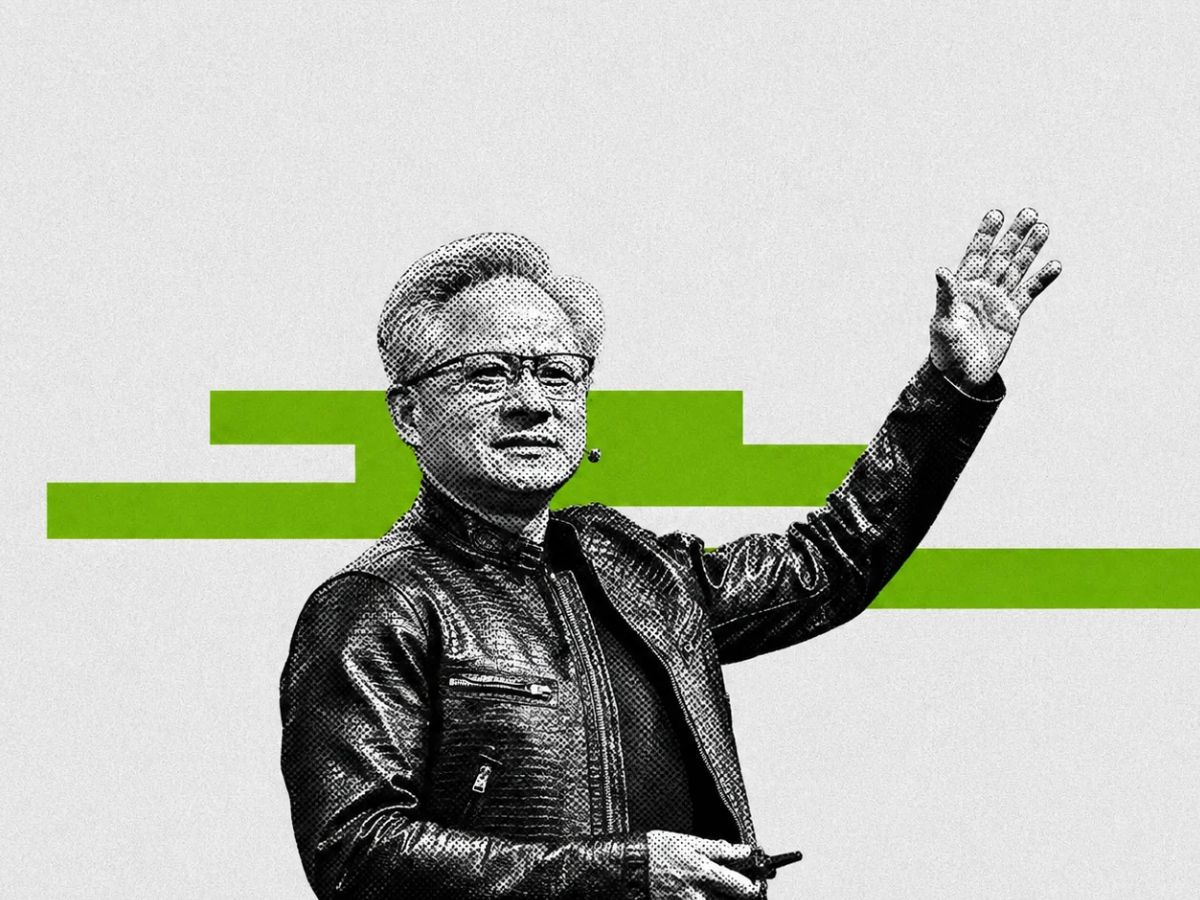
Nvidia's board voted unanimously on Monday to reinstate Jensen Huang as president, chief executive and director, with immediate effect. The decision ends a period of uncertainty at the company whose processors sit beneath much of the world's artificial intelligence work, and it arrives with conditions. An independent committee will continue investigating reports that Huang was the target of a foreign intelligence effort, and the board said it had taken input from senior levels of the US government before concluding that his return poses no national security risk.
For markets, the story is about governance and continuity. For Britain's health system, it deserves a closer look than it will probably get.
The connection is indirect, and it is worth being exact about it. No hospital trust is waiting on a Nvidia boardroom vote to decide whether a ward runs smoothly. The relevance lies a layer further down. The government has tied its ambitions in life sciences and health technology to access to advanced computing, and Nvidia is the dominant provider of that capacity. The national AI research resource in Bristol runs on its chips. Ministers have courted the company's investment as part of a wider effort to make the UK a serious location for AI development. When the chief executive of such a supplier steps aside under a security cloud, the effect reaches plans that were drawn up with a very different set of risks in mind.
Those plans carry real weight. The NHS is under sustained operational pressure, with waiting lists still above where policymakers want them and productivity gains needed from a workforce that has little slack to give. Digital transformation is the government's chosen route to relief, and AI is expected to do a share of that work, from reading scans and transcribing consultations to reducing the administrative load that consumes clinical time. Alongside this sits the life sciences agenda, in which large-scale health data, held in trusted environments, is meant to attract pharmaceutical research and the investment that follows. Each of these depends on compute, and compute depends on a small number of suppliers.
The board's response is instructive for that reason. Alongside Huang's reinstatement, Nvidia is creating a National Security and Export Control Committee made up solely of independent directors, advised by counsel with national security experience. It is also searching for a Chief Compliance Officer who will report to the nominating and corporate governance committee. These are the structures a customer would want to see in a supplier of strategic importance, and they were put in place with the company's own interim leadership, under Colette Kress, keeping operations steady throughout. The board said it was confident in Huang's candour and ability to lead, and the process appears to have been handled with discipline.
The more demanding lesson falls on the British side. The UK does not control the export rules that govern how advanced chips move across borders. Washington does. The board's decision to consult senior US officials before restoring its chief executive illustrates how closely commercial decisions at firms of this kind sit alongside American national security policy. A British health system building long-term capability on that hardware is, in effect, building on a foundation whose terms are partly set elsewhere. That is a fact of the current technology landscape and no criticism of any party, but it belongs in the risk registers of those planning multi-year programmes.
For NHS leaders, the practical implication is modest and immediate. Digital and AI strategies should be tested against supplier concentration. Trust boards and integrated care boards commissioning AI tools will often buy from software companies, several steps removed from the chip maker, and may have limited sight of the dependencies underneath. Asking vendors where their computing is hosted, what happens if access to specific hardware is restricted, and how long a migration would take is reasonable due diligence. It will matter more as clinical workflows come to rely on these tools.
For policymakers, the episode argues for patience and precision in the push toward sovereign capability. Building domestic compute is a long project, and for the foreseeable future it will use imported hardware. The more realistic aim is resilience: diverse suppliers where feasible, clear contractual protections, and a good working relationship with the US authorities who shape the market. The government's relationships with Nvidia and Washington are assets, and they are best treated as ones that need maintaining.
Health-tech and life sciences companies in the UK face a similar calculation. Many young firms rely on access to advanced compute for drug discovery and imaging work. A settled leadership at Nvidia reduces one source of uncertainty for them, although the open investigation means the matter is not fully closed. Investors and partners will watch what the independent committee concludes, and so should anyone whose roadmap assumes uninterrupted supply.
Patients are the furthest from these decisions and the most affected by their eventual outcomes. They will judge AI in the NHS by whether it shortens waits and improves care, and they are unlikely to ask who manufactured the processors. Public trust, however, rests on the sense that the system is run competently and that its dependencies are understood. Governance at a critical supplier is part of that picture, even when it never reaches the front page of a health publication.
Huang's return resolves a question for Nvidia's shareholders. For the NHS and the wider UK state, it raises a standing one: how much of a health system's digital future can safely rest on a supplier whose fortunes are bound up with foreign policy, and what should be done now to be ready if conditions shift.