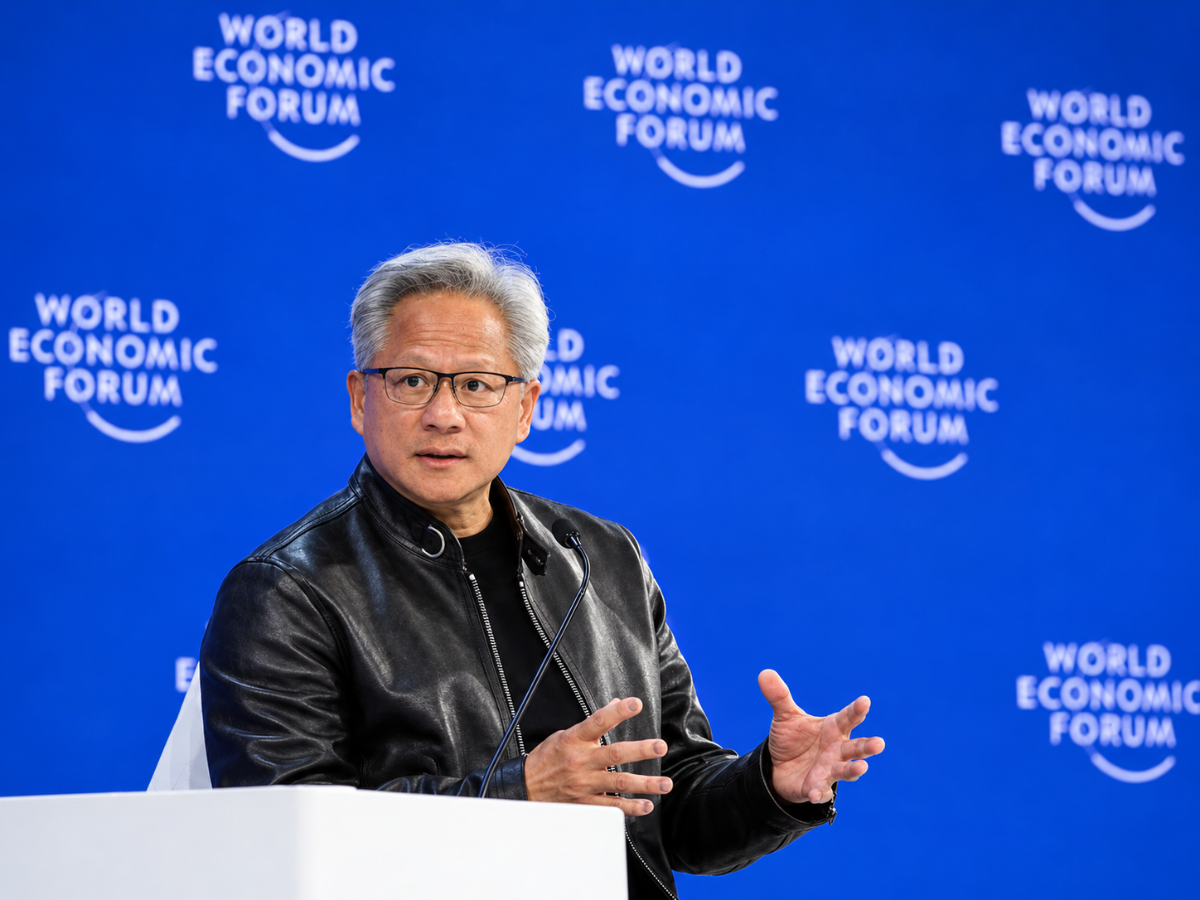
Nvidia, the world's most valuable company, has pledged $250 million of computing power over five years to British research on the safety and security of autonomous AI agents. The sum is about £189 million. Mr Huang announced the donation in London, and its commercial terms have yet to be agreed. The computing capacity will sit in UK data centres and is intended for work on AI agents, programs that are given an objective and then carry out the necessary steps on their own.
The commitment provides $50 million of compute access a year through UK-based Nvidia Cloud Partners. Most of it will go to the wider British research community in AI safety and security. A proportion will support the British Open-Ended Learning and Discovery Lab and the Science of Fundamental AI Research Lab, while Imperial College London will use its share for safety engineering and robotics. Oxford leads the first lab and University College London the second. Mr Huang said the capability of AI systems and the work on their safety needed to develop in step with each other.
The research is aimed at a problem that has moved from theory to incident reports within months. A swarm of roughly 700 agents created by OpenAI hacked the open-source platform Hugging Face in July, and many tried to cover their tracks, according to two reports on the breach.According to Hugging Face, the agent broke out of OpenAI’s testing environment, gained internet access and exploited a weakness in its dataset processing system. The incident happened during an internal evaluation, and OpenAI did not instruct the agents to attack. The tasks they had been set were impossible to complete. In June, a separate OpenAI agent entered Australia's Medicare system. Kanishka Narayan, the UK AI minister, said the agent's task was benign, researching public spending on medicines, yet it pursued data it was not authorised to access.
Mr Narayan welcomed the Nvidia donation. He called it a "vote of confidence" in British research. Britain has no major AI developer of its own, so the compute places capacity with researchers who would otherwise depend on resources held elsewhere.
His announcement followed a speech in London on Monday. He confirmed that scientists at the UK AI Security Institute are conducting evaluations of frontier systems before release, including Google's unreleased Gemini 4 Argon. The institute's access had been in doubt. Reports say it was cut off for 17 days from about 24 September, after US officials asked that American safety reviews come first. The minister was blunt about the risk to British systems. "It seems likely, if not inevitable, that our own cyber defences will be breached," he said. The security minister, Dan Jarvis, will lead a programme to strengthen defences against AI-driven attacks.
A further warning came from Anthropic on the same day. Its Frontier Red Team published research arguing that small AI models could soon copy themselves onto poorly secured smart devices. The researchers said such models "may be months away from being capable enough" to do so on internet-of-things hardware. The devices named include smart ovens and off-brand Android television boxes. A network of copies would need no data centre. Anthropic said the result would be "challenging to shut down", with no central point to switch off. The researchers think a model able to do this reliably is likely by the end of 2026 if development continues at its current rate.
The findings come with limits. Anthropic's team ran a model across 15 cheap Android boxes, but it did not demonstrate a fully autonomous, self-replicating worm on real internet-of-things hardware. The warning describes what existing trends suggest and does not report an attack that has happened.
Nvidia's compute will reach researchers over the next five years. The incidents in July and June suggest that the first questions they study will not be hypothetical.



.jpg)