
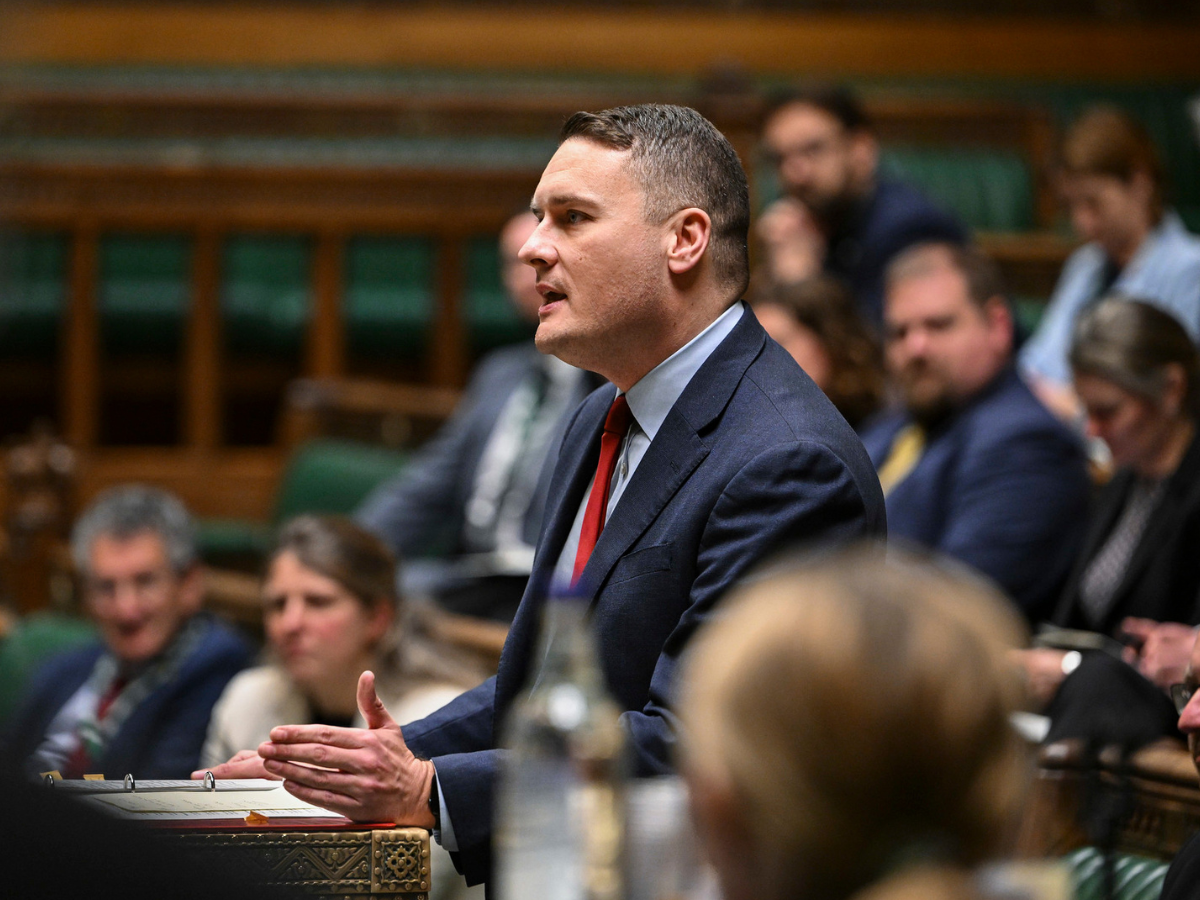
A cross-party group of more than 30 MPs has launched a formal parliamentary challenge against powers granted to Health Secretary Wes Streeting allowing him to intervene in NHS drug-pricing decisions. The dispute centres on a statutory instrument that permits the Secretary of State to set the cost-effectiveness thresholds used by the National Institute for Health and Care Excellence, the body responsible for assessing whether medicines represent sufficient value for money to be approved for NHS use.
The challenge has taken the form of a prayer motion, led by John McDonnell and backed by members from the Liberal Democrats, the Green Party, and the SNP. The motion seeks to annul the regulations on the grounds that they allow ministers to bypass Nice's independent assessments. Lord Lansley, who architected the 2012 Health and Social Care Act, has added legal weight to those concerns, warning that the legislation explicitly prohibits the Secretary of State from intervening in the substance of Nice recommendations. If that interpretation is correct, the statutory instrument may not survive a legal challenge.
The powers were granted in the context of a drug-pricing agreement with the Trump administration. The arrangement was framed as a means of protecting UK pharmaceutical exports from American tariffs, with eased access to the UK market for US drugs offered in exchange. Critics argue that the practical consequence is that the government has accepted a structural change to NHS procurement in order to secure a trade concession, and that the cost of that concession will be borne by the health service rather than the Treasury.
The concern among health economists and former NHS officials is specific. Nice has operated since 1999 as the mechanism by which the NHS assesses whether the clinical benefit of a drug justifies its price. If the government raises the threshold at which medicines are deemed cost-effective, the NHS will pay more for treatments it would previously have rejected or renegotiated. Dr Samantha Roberts, former chief executive of Nice, has warned that every additional pound spent on high-cost drugs represents a pound unavailable elsewhere in the system. In a health service already running substantial deficits, those trade-offs have direct consequences for other services.
The areas most likely to absorb those consequences include elective surgery, nursing staffing levels, and mental health provision, all of which operate on budgets that have limited capacity to accommodate unplanned cost increases. The Health Foundation has described the likely outcome as a series of difficult trade-offs in a system that has little remaining financial headroom, with the risk that higher drug expenditure is offset by reductions in services on which large numbers of patients depend.
The Department of Health and Social Care has defended the change, arguing that it will accelerate patient access to treatments that would otherwise take longer to reach NHS approval, citing new paediatric brain cancer drugs as an example of the kind of innovation the policy is intended to facilitate. The department has maintained that Nice retains its independence and that the government is clarifying rather than overriding the economic framework within which the body operates.
The Association of the British Pharmaceutical Industry has supported the change, on the grounds that it appropriately places responsibility for setting health spending parameters with elected ministers rather than an unelected regulatory body. That argument has found limited traction among clinicians and health economists, many of whom regard Nice's independence as the feature that has historically protected the NHS from commercial pricing pressure.
The British Medical Journal has been direct in its assessment, describing the arrangement as a trade of population health for corporate advantage, and warning that its effects will fall most heavily on the patients least able to absorb a reduction in NHS capacity.
The prayer motion must be debated within a defined parliamentary timeframe. Whether it succeeds in annulling the regulations depends on the arithmetic of the vote and the willingness of Labour backbenchers to support a motion that directly challenges a sitting cabinet minister's policy. That calculation is complicated by the government's insistence that the change represents an expansion of patient access rather than a concession to commercial interests. The legal question raised by Lord Lansley may ultimately prove more consequential than the parliamentary one.



.png)
.png)
.jpg)