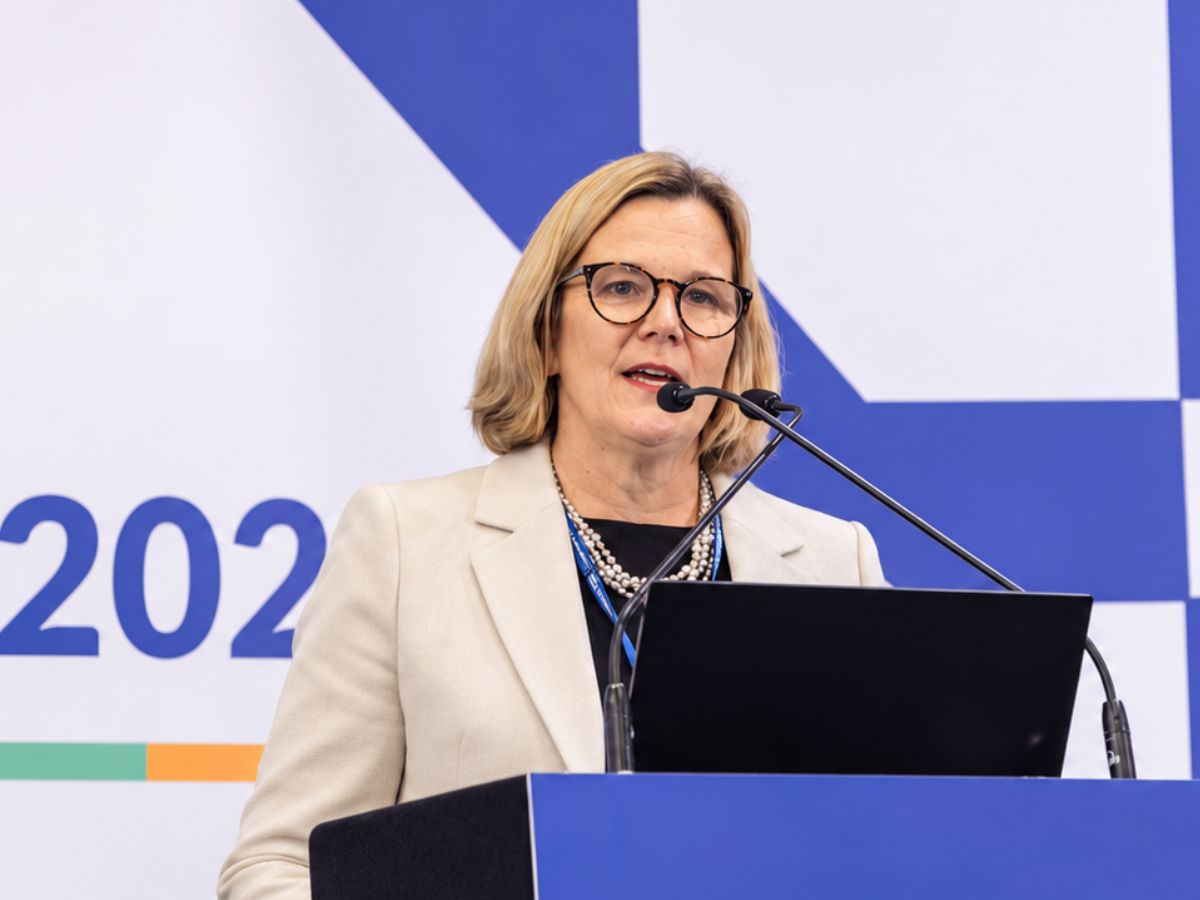
Satya Nadella, Chairman and Chief Executive Officer of Microsoft
At 8.02am on a Monday, a receptionist in a GP surgery watches the phone queue pass forty. A few miles away, an emergency department nurse switches between three systems to assemble an elderly man's history, and none of them holds his last discharge summary. Neither knows that Microsoft has built a system that, by its own account, diagnosed difficult cases more accurately than practising doctors.
The claim deserves a serious reading. Microsoft describes software that works through a case in stages, choosing which questions to ask and which tests to order, and reports accuracy well above that of physicians given the same material. The conditions matter. The cases were curated, and the doctors were reportedly working without colleagues or reference sources, which is not how medicine is practised. Microsoft's own accompanying framework concedes that examination-style benchmarks cannot show what AI does to outcomes in live care, and that capability must be separated from readiness for deployment. The authors also caution that more advanced reasoning may initially appear incorrect when measured against clinical consensus. This is an important caveat, particularly for those commissioning such tools.
For the NHS, the key question is what technology needs to work effectively. The framework identifies longitudinal context as a core requirement: the ability to retain a patient’s history across encounters, distinguish lasting facts from temporary observations, and trace the source of each piece of information.
This is precisely the capability the English health system has struggled to provide its own staff. Records remain fragmented across primary, community, acute and mental health services. The government’s ten-year plan commits to a single patient record and a shift from analogue to digital, an ambition that makes sense but faces the NHS’s long-standing challenges in delivering major technology programmes. A diagnostic system working from only part of a patient’s history may deliver a confident answer, but it will still be answering an incomplete question.
The places where such tools would help most are also the places where errors cost most. Triage in general practice, NHS 111 and emergency departments is where demand is heaviest and where a waiting list of several million sets the political temperature. It is also where a missed low-probability, high-consequence condition becomes a news story and a coroner's report. A system that performs well on average and fails visibly once will damage public trust in the whole programme of reform, and ministers who have staked credibility on technology-led productivity will feel that exposure sharply.
Evidence is the second gap. The NHS has no settled national route for testing AI in live clinical workflows at scale, with outcome measures agreed in advance and results published. What exists is a patchwork of local pilots, regulatory approvals designed for narrower devices, and vendor assurances. The abolition of NHS England and the redrawing of the centre make this less comfortable, because it is unclear which body will hold the capability to evaluate, compare and decline. Without one, trusts will negotiate individually with suppliers that have far more resources than they do.
Procurement carries its own risk. A company that supplies the model, the cloud infrastructure and the clinical interface can become very difficult to leave. Data governance, exit rights and clarity on who owns what is learned from NHS patients should be settled before any contract is signed, not discovered afterwards. Liability also needs an answer. When a clinician and a system disagree and the patient is harmed, current arrangements do not say who is accountable.
There is a workforce dimension too. Telling clinicians that software outperforms them lands badly in a service still managing the aftermath of industrial action and persistent vacancies. Tools framed as relief for overstretched staff will be received differently from tools framed as a verdict on their competence, and the framing is a leadership decision.
None of this argues for standing aside. Demand is rising, the workforce is finite, and diagnostic delay is a daily reality for patients. It argues for sequence. NHS leaders should insist on prospective evidence from British settings, fund the unglamorous work of joining up records, and write contracts that keep options open. Clinicians must remain accountable and be seen to be.
A system that cannot show a nurse a patient's last discharge summary will struggle to benefit from software that reasons better than a consultant. Fixing that is dull work with no launch event, and it will decide whether the next announcement from Redmond changes a single waiting list.