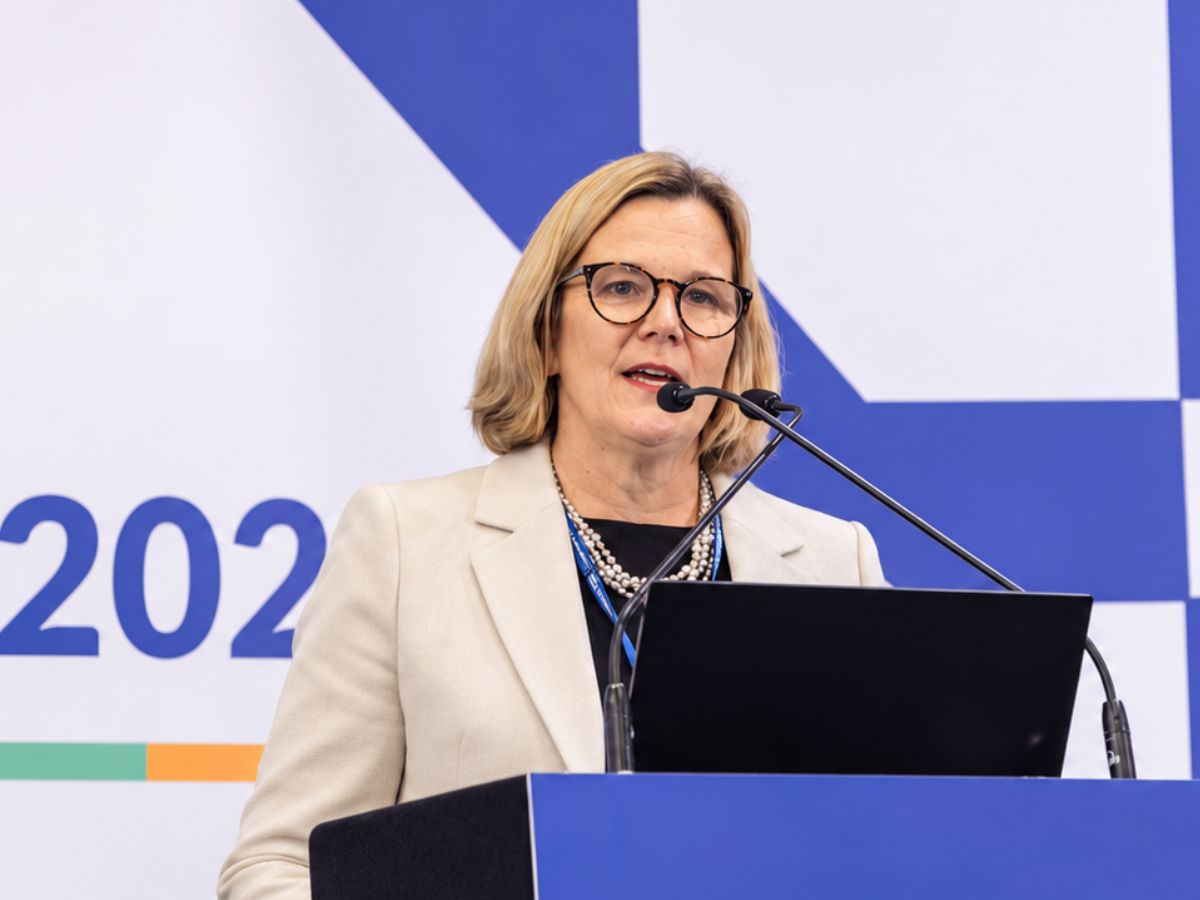
Emily Miles, The Chief Executive of the Care Quality Commission (CQC)
Picture a child who has waited more than a year for a community paediatric assessment. Her parents have chased the referral twice. Nobody in the story is in crisis in the way that triggers an emergency response, so she sits in a queue that few headline measures capture. The regulator's annual assessment of care in England puts a number on her situation: waits of over a year for community services among children and young people rose by 129% in the two years to March 2026, most of them for paediatric services, including diagnosis of autism and ADHD.
The same report records real progress. The elective waiting list averaged 7.3 million in 2025/26, down from 7.5 million the year before. Some 73% of people rated their last contact with a GP practice as good, compared with 67% in 2024, after practices were required to keep online consultation tools open during core hours. These figures describe a system that is getting better at processing the demand that reaches it. They say far less about the need that waits elsewhere or arrives later and sicker.
That need is visible in several places. Contacts with community mental health services have risen by 34% in three years. Only a quarter of very urgent mental health referrals receive care within four hours. On an average day, nearly 13,000 people remain in hospital when they are ready to leave, and more than 1,500 a day wait over 12 hours between the decision to admit and a bed. Cancer treatment within 62 days of an urgent referral stands at 69.4% against a target of 85%.
This matters because the government's 10 Year Health Plan is built on moving care from hospital to community and from treatment to prevention. The logic is sound. The difficulty is that the community is where capacity is thinnest. Health visitor and school nurse numbers continue to fall while demand rises. The number of GPs per 100,000 patients ranges from 38 to 56 across integrated care board areas. Leaders of those boards have told the regulator they doubt the feasibility of the shift. A plan to relocate care presupposes a place able to receive it.
Social care is the clearest case. Around 223,000 fewer adults receive long-term council-funded support than 20 years ago. The means test threshold has stood at £23,250 for 15 years. For 70% of new requests to councils, nothing follows beyond information. Local authorities themselves are rated reasonably well, with 59% good and 2% inadequate, which points to the funding model as the weakness. One in eight delayed discharges among long-stay patients last year arose from transfers between hospital and social care. The care home market is consolidating around large operators, and international recruitment, which eased workforce pressure, is tapering. No national settlement yet addresses any of this.
Money shapes the mental health picture too. A provider survey cited in the report found that 19% of mental health providers have deprioritised transformation spending and a further 32% are considering it. Pilots that work cannot be scaled if the organisations running them are protecting core services. Life sciences and health-tech suppliers should read that as a procurement signal. The online access requirement shows that a clear mandate with a defined date can shift patient experience within a year. Tools sold into community and mental health settings will meet buyers with little discretionary budget and a strong appetite for evidence that they reduce demand elsewhere.
For NHS leaders, the practical implication is to judge performance across boundaries. A hospital that clears its backlog while discharge stalls has only moved the problem. For policymakers, the lesson concerns what gets measured. Acute waiting times carry national targets and political attention. Children's community waits, which have grown fastest, carry neither, and they fall hardest on deprived areas where the regulator finds poorer access and outcomes.
Hospital performance is recovering, and that deserves credit. It will be judged, though, against the slowest part of the pathway. If the 10 Year Health Plan is to mean anything to families, its test is whether a child waiting for an assessment is seen within a year, and the funding and workforce decisions that determine the answer have yet to be made.