.png)
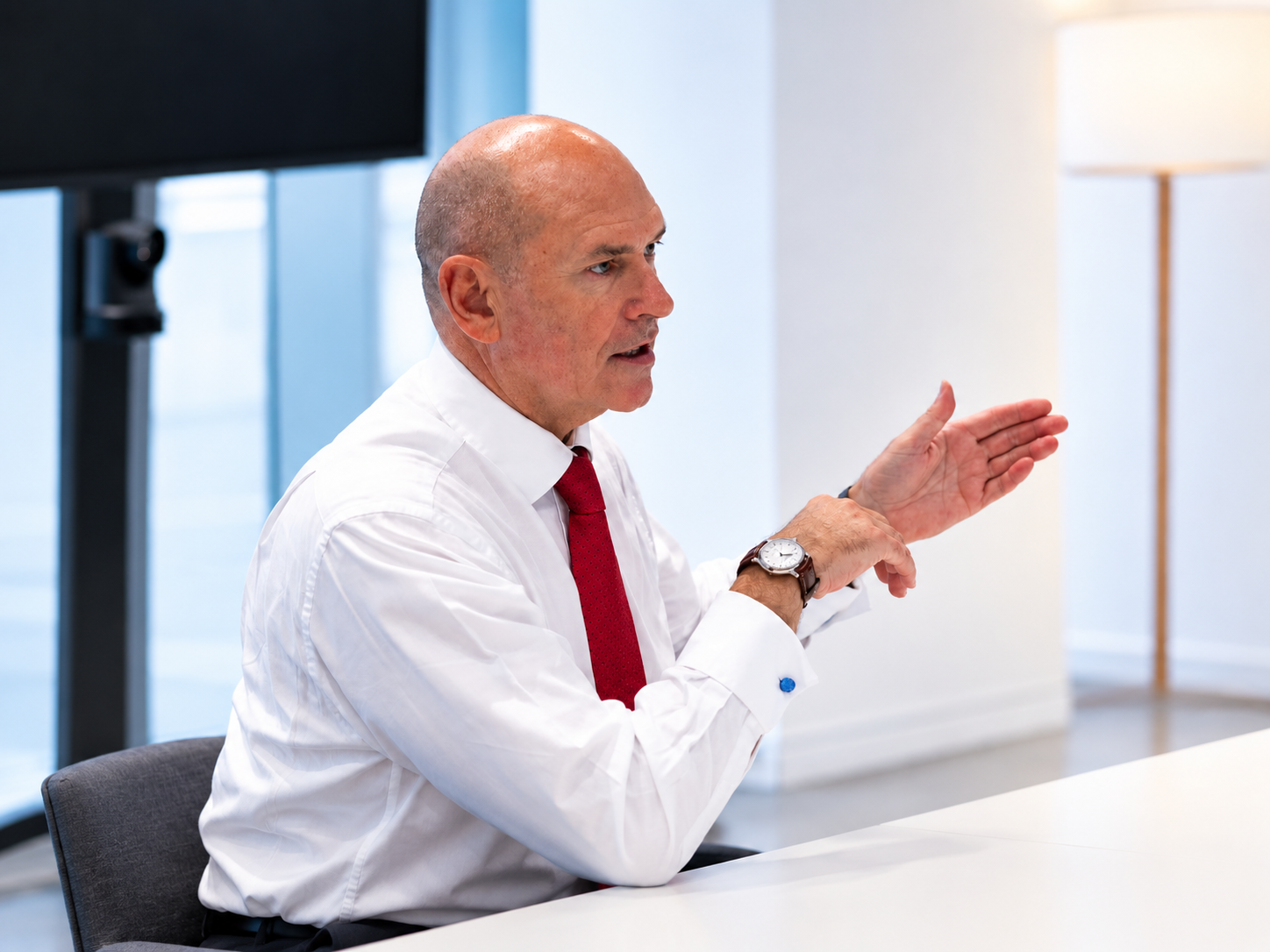
Westminster has, once again, been reminded that political leadership is not a fixed point. Governments change hands, secretaries of state come and go, and the machinery of Whitehall recalibrates around each new occupant of Downing Street. The NHS, on the other hand, adheres to a schedule that is set by patients rather than by legislative calculations. Cancer diagnoses do not wait for a reshuffle to conclude. Ambulances do not pause outside emergency departments while a new administration finds its feet. Elective waiting lists do not shrink themselves during periods when ministerial attention is, understandably, elsewhere. It is against this backdrop that the leadership of Sir Jim Mackey, chief executive of NHS England since April 2025, deserves closer attention, not because he has generated headlines, but because he has largely avoided them, choosing instead to keep the system's attention fixed on delivery while the political weather changes around it.
Mackey's tenure has been defined less by the announcement of new initiatives than by an insistence on finishing what has already been started. In his letters to integrated care board and trust chief executives, a recurring theme is the danger of allowing short-term pressures to crowd out medium-term planning. He has warned NHS leaders against the risk of losing sight of the multi-year opportunity presented by the 10-Year Health Plan while scrambling to make the current financial year work, and has described the service as being within touching distance of its core operational targets on referral to treatment and urgent and emergency care. That is a leadership register built around implementation rather than rhetoric: fewer strategy documents, more insistence that existing commitments are actually delivered.
Accountability sits at the centre of that philosophy. Mackey has pushed for a substantial reduction in the running costs of integrated care boards and has called on providers to halve the growth in their corporate costs, pointing to a sustained rise in such spending relative to the front line. The logic is not austerity for its own sake; it is a conviction that disciplined financial management creates the headroom for clinical improvement, and that leaders should be judged on whether they achieve it. This is accountability framed as a driver of better care rather than as a mechanism for apportioning blame, and it runs alongside a parallel insistence on standards, most visibly in his uncompromising warning to staff that unlawful access to patient records would result in dismissal or prosecution, a stance that signalled discipline extends to data governance as much as to waiting times.
Equally consistent has been his resistance to organisational silos. Mackey has spoken about ending the practical and cultural divide between primary, community and secondary care, arguing that patients neither recognise nor should have to navigate the boundaries that separate NHS institutions from one another. That conviction underpins the neighbourhood health agenda, which he has described as an opportunity to transform how care is delivered by building services around where people actually live, rather than around the organisational geography of hospital trusts. It is a philosophy that favours practical, local implementation over elaborate central architecture, a point he has made explicitly when urging health technology suppliers and NHS colleagues alike to focus on demonstrable impact rather than technology procured for its own sake.
The 10-Year Health Plan gives that philosophy a formal structure, built around three shifts: from hospital to community, from analogue to digital, and from treatment to prevention. Under Mackey, the digital shift has moved from ambition towards implementation, with the NHS App being expanded as a digital front door for triage and navigation, Ambient Voice Technology being rolled out to ease administrative burden on clinicians, and work under way towards a single patient record. The community shift is visible in the planned network of neighbourhood health centres, intended to bring GPs, nurses, pharmacists and social care staff together under one roof, extending opening hours and reducing unnecessary hospital activity. Based on the idea that a health care focused on treating sickness after the fact will always find it difficult to meet demand, the preventative shift is the least established of the three but may have the most impact on the long-term viability of the NHS.
None of this should be mistaken for an unqualified success story. Corporate cost reduction targets remain a work in progress, GP contract disputes with the BMA have continued alongside the digital reforms, and the ambition to replace two-thirds of outpatient appointments with digital and AI-enabled alternatives is, for now, precisely that: an ambition, not a completed transformation. Mackey himself has been careful to frame the 10-Year Health Plan as a source of "energy and enthusiasm" rather than a finished blueprint, with detailed operational guidance still being published in stages. The gap between stated intent and delivered outcome is real, and any credible account of his leadership has to hold that gap in view rather than smooth over it.
What is nonetheless notable, as Westminster continues to absorb the consequences of a summer of political upheaval, is the sheer consistency of NHS England's stated priorities throughout 2026: financial recovery, waiting list reduction, productivity, neighbourhood care and digital transformation have remained the fixed points of Mackey's public communications regardless of who occupies the Cabinet Office. Governments will continue to change; policy priorities will continue to be renegotiated in Whitehall. But the operational reality facing NHS trusts each morning does not pause for any of that. If Mackey's leadership demonstrates anything, it is that in a system as large and as continuously demanded upon as the NHS, the discipline of simply keeping delivery moving, without waiting for political certainty that may never arrive, is itself a meaningful form of leadership, and possibly one of the more important tests the NHS now faces as it enters the next phase of its own transformation.



.jpg)