
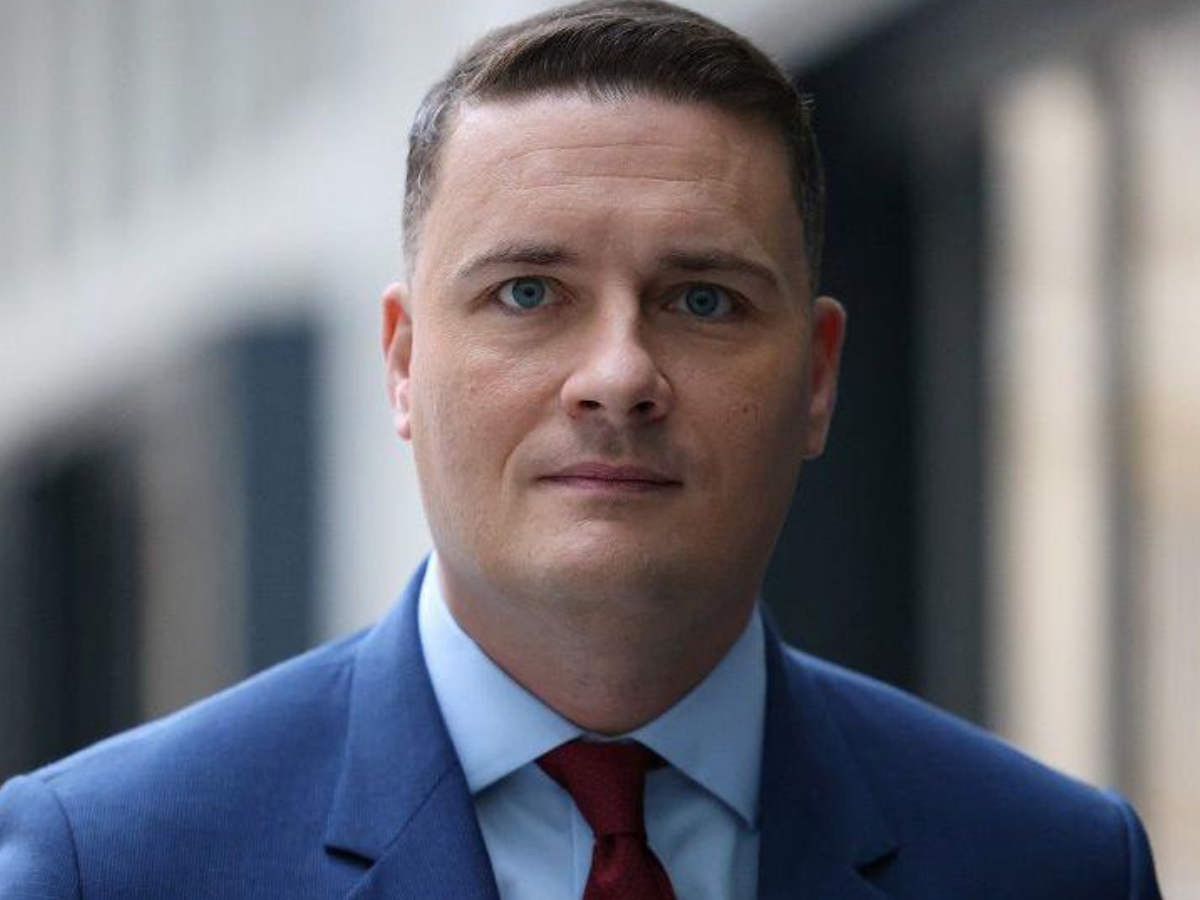
A group representing bereaved families affected by the Nottingham maternity scandal has written to Health Secretary Wes Streeting demanding the removal of a senior clinician from a national maternity safety taskforce, describing his appointment as a "clear and unavoidable conflict of interest."
The Nottingham Affected Families group has targeted the appointment of Dr Stephen Wardle, a consultant neonatologist, to the taskforce established under Baroness Valerie Amos's national review of maternity and neonatal services. The families describe the decision as "profoundly inappropriate" and a significant failure of judgment by those responsible for the selection.
Dr Wardle has worked as a consultant at Nottingham University Hospitals NHS Trust since 2001. That tenure covers the entire period currently under examination by Donna Ockenden, whose inquiry into the trust is investigating more than 2,500 cases of potential harm. The Nottingham inquiry is widely described as the largest maternity scandal in NHS history. The families argue that a senior figure within the neonatal services where systemic failings allegedly occurred cannot be expected to address those same failings with independence at a national level.
The conflict of interest, as the families frame it, is structural rather than personal. Their concern is not simply that Dr Wardle was present during the period in question, but that a senior clinical leader embedded within an institution for more than two decades carries with him the institutional assumptions and relationships that the national review is meant to scrutinise and correct. Whether or not he bears any individual responsibility for what happened at Nottingham, his position makes objective engagement with the issues exceptionally difficult, in their view.
The families have also raised the question of what his appointment communicates to those who suffered. Several described the decision as causing deep distress, saying it reflected a lack of sensitivity toward people who lost children or sustained life-changing injuries at the trust. For a government attempting to rebuild confidence in NHS maternity services, the reaction of those most directly harmed by past failures carries considerable weight.
Dr Wardle was appointed to the taskforce in his capacity as President of the British Association of Perinatal Medicine, a professional body representing those working in newborn and neonatal care. That role gives him genuine national standing and relevant expertise. It is presumably the basis on which those convening the taskforce judged his inclusion appropriate. The families' letter does not question his clinical knowledge. Their objection is to the particular combination of that role and his long association with a trust at the centre of an active public inquiry.
The letter has been directed to the Department of Health and Social Care, placing the decision with ministers rather than with the review body itself. Streeting must now weigh the professional rationale for Dr Wardle's inclusion against the consequences of proceeding over the explicit objections of the families the review is ultimately meant to serve. There is no easy resolution. Removing him risks the appearance of political interference in a clinically led process. Retaining him risks deepening the estrangement between the families and the national structures designed to prevent future harm.
The Amos review was commissioned precisely because trust in NHS maternity services had collapsed in several areas of the country. Its credibility depends, at least in part, on those most affected believing that the people shaping its recommendations are not implicated in the problems it is trying to solve. That condition is difficult to meet when one of the taskforce's members spent more than twenty years at a trust whose practices are still being examined.
If the dispute is not resolved before it becomes a fixed point of public controversy, it risks distracting from the broader work of the review at a moment when the maternity safety agenda requires sustained political and clinical attention. Streeting has not yet responded publicly to the families' demand.



.png)
.png)
.jpg)