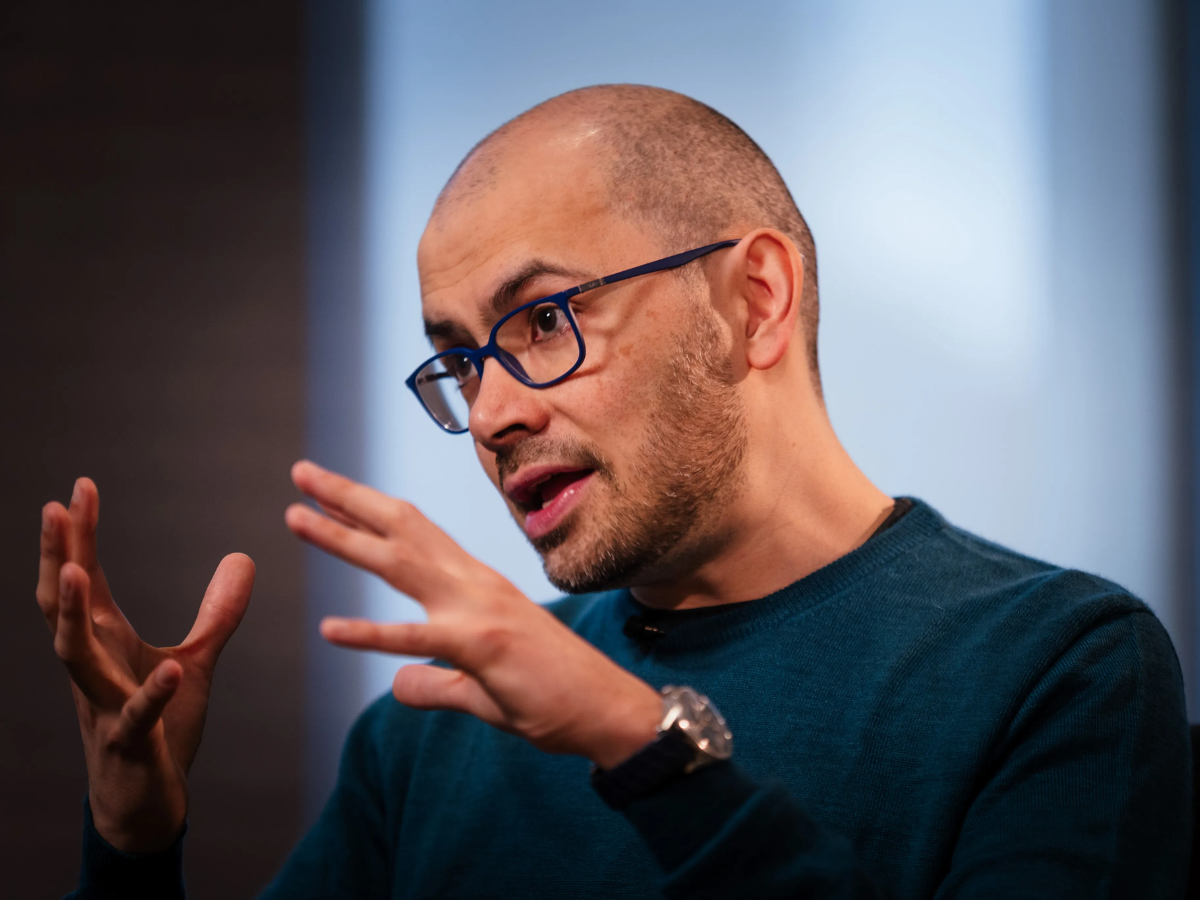
In the autumn of 2015, a small team from a London artificial intelligence company drove out to the Royal Free Hospital with a proposition that sounded almost too generous. DeepMind, fresh from its acquisition by Google, would build an app to catch acute kidney injury before it killed patients, and it would do so, its founders insisted, in a spirit closer to a research mission than a commercial contract. Nine years on, DeepMind's co-founder has stepped back from running the company he built, handing day-to-day control to a Google veteran based in California, and taking a chair role that leaves the daily decisions to executives with no particular claim on the founding ethos. For anyone who watched what happened to that Royal Free deal, the timing carries a specific warning.
The Streams app that emerged from that partnership went on to breach the Data Protection Act. In 2017 the Information Commissioner's Office found that 1.6 million patient records had been shared with DeepMind without adequate consent or a proper legal basis, and it took the regulator's intervention to force better terms. DeepMind had promised patients their data would never be connected to Google accounts. A year later that promise dissolved when DeepMind Health was folded into the parent company, its independent oversight panel dissolved along with it, and by September 2019 the transfer to Google Health was complete. The lesson was not that DeepMind acted in bad faith. It was that a mission-led pitch to a public health system carries no binding force once the commercial logic of the parent company reasserts itself.
That is the pattern now repeating at the level of corporate governance rather than a single product line. Hassabis's move to chair, and the appointment of Koray Kavukcuoglu as the operational head of DeepMind, has been read by former Google staff as the end of DeepMind's status as anything resembling an independent actor within Alphabet. A researcher culture built around a Nobel laureate's personal authority is giving way to conventional corporate management, driven in large part by competitive pressure from Anthropic and OpenAI. Whatever the merits of that shift for Google's shareholders, it confirms something the NHS should already have priced into every AI procurement decision it makes: founder charisma and stated ethical commitments are not durable contractual protections, and they evaporate the moment a parent company decides a subsidiary needs closer commercial supervision.
This lands at an awkward moment for NHS technology policy. The Federated Data Platform, built with Palantir, has already drawn criticism over the concentration of sensitive patient data with a single external contractor and the thinness of public scrutiny around its terms. Ambient voice technology is spreading through consultations with regulatory oversight still catching up. In each case the pitch to trusts and to the Department of Health and Social Care resembles the pitch DeepMind made in 2015, framed around better outcomes for patients and efficiency for overstretched staff, with the harder governance questions left for later. The Royal Free episode shows what later can mean once the vendor's parent company decides the arrangement has served its purpose.
None of this argues against working with large AI companies, which retain resources and technical depth that smaller providers cannot match. It argues for boards and the department treating every such partnership as a commercial relationship with a large company first and a mission-driven collaboration second, however the pitch is framed. That means data-sharing agreements with exit clauses that do not depend on a vendor's current leadership remaining in place, independent oversight structures that survive a change of ownership within the parent company, and public transparency about contract terms from the outset rather than after a regulator forces disclosure.
Hassabis has spent the past year calling for an independent body to assess frontier AI models before deployment, arguing that voluntary good intentions are not enough at the scale AI now operates. NHS leaders negotiating with his former company, and its rivals, might reasonably ask why that same scepticism should not apply closer to home.