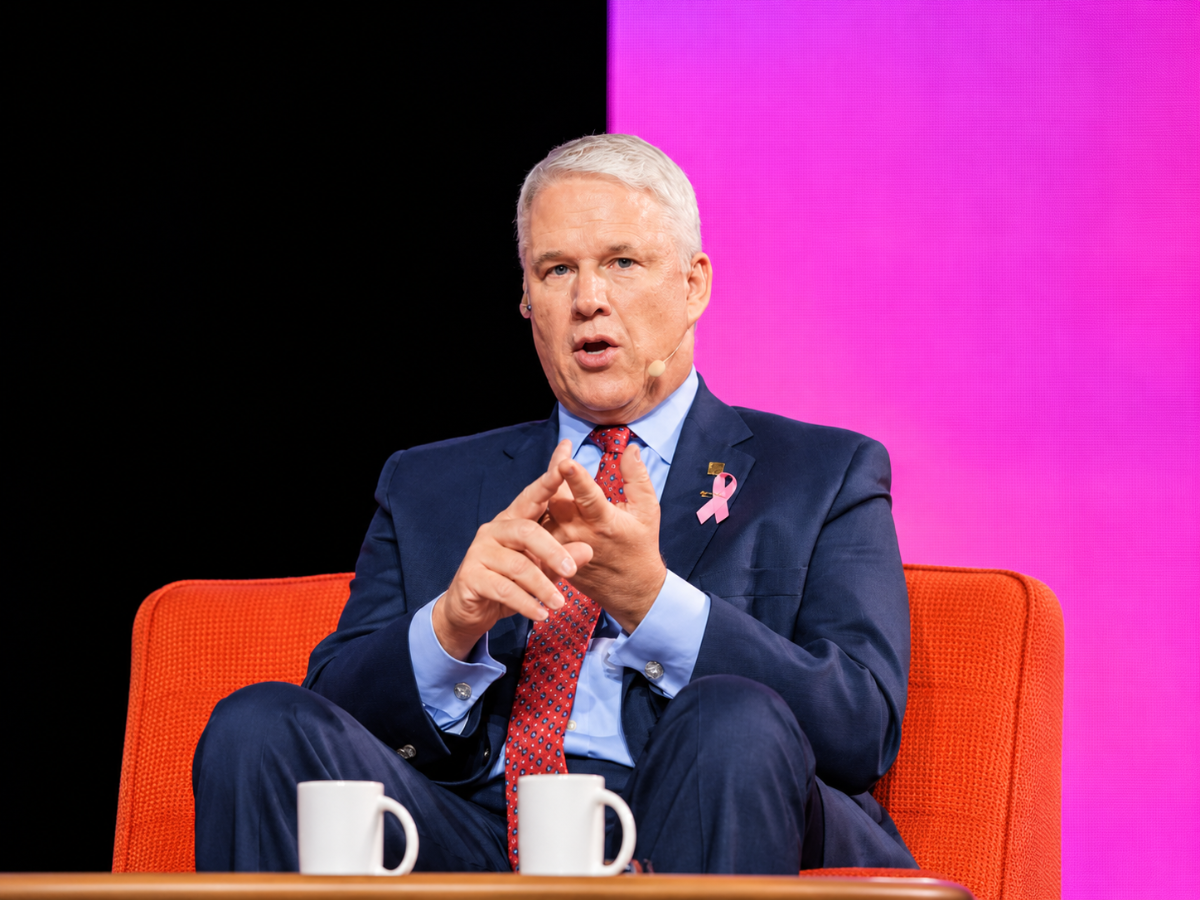
The distance between a patient's home and an acute hospital can be measured in miles. The distance between the organisations responsible for that patient's care is harder to calculate. Someone discharged after surgery may depend on community nursing, rehabilitation, social care and their GP to recover safely. If any part of that chain fails, the hospital can end up dealing with the consequences again. This is the institutional problem behind Giles York's move from Sussex Community NHS Foundation Trust to East Sussex Healthcare NHS Trust, where he takes over as chair on 1 February 2027.
York's appointment is significant because it brings experience of community healthcare into an acute provider facing substantial financial and operational pressures. He succeeds Steve Phoenix, who has reached the end of his permitted two terms. York previously served as a non-executive director at Sussex Community NHS Foundation Trust before becoming its chair. Earlier in his career, he spent three decades in policing, including six years as Chief Constable of Sussex Police. His experience in public-sector leadership and organisational transformation will now be tested in a different environment.
The timing matters. The government's 10 Year Health Plan for England, published in July 2025, places considerable emphasis on shifting care from hospitals into communities. Neighbourhood health centres are intended to bring together general practice, community services and other local provision, allowing more treatment and follow-up to take place closer to patients' homes. The rationale is familiar to NHS leaders. Hospitals are expensive places to deliver care that could safely be provided elsewhere, while patients with complex needs often struggle to navigate services operating independently of one another.
The difficulty lies in implementation. Moving care into the community requires more than changing where an appointment takes place. It involves transferring clinical responsibilities, staff capacity and funding between organisations that have traditionally operated separately. The NHS has repeatedly recognised the benefits of integration. Its record of making that integration work consistently is considerably less convincing.
East Sussex Healthcare offers a useful illustration. The trust operates Eastbourne District General Hospital and Conquest Hospital in Hastings, alongside a substantial community services operation. Its strategic priorities include integrated community teams, workforce development and improved use of digital technology. These ambitions align with national policy, but the trust is confronting a difficult financial position. In October 2026, its board faced warnings about a critical cash position, with more than 13,500 outstanding invoices. York will inherit an organisation expected to transform its services while managing immediate financial pressures.
This creates a familiar problem for NHS management. Moving activity into the community may eventually reduce avoidable admissions, shorten hospital stays and release acute capacity. However, the financial benefits do not necessarily appear in the accounts of the organisation paying for the intervention. A community provider investing in rehabilitation may help a hospital avoid readmissions. A hospital discharging patients earlier may transfer additional work to community nursing and social care. If those services lack staff or funding, pressure simply moves elsewhere.
The problem is particularly acute in systems where providers are judged against their individual financial positions. Prevention often requires investment now, while its benefits emerge later and may accrue to another organisation. Without credible arrangements for sharing financial responsibility, integrated care risks remaining an aspiration discussed at partnership meetings rather than a change visible in patients' experiences.
York's experience at a community trust could help him recognise these difficulties. Community services are not an unlimited reserve of capacity waiting to absorb hospital activity. They have their own waiting times, recruitment problems and competing demands. Any expansion of their responsibilities must be accompanied by realistic workforce planning and funding. Otherwise, the government's shift towards neighbourhood care could leave patients moving between overstretched services.
The operational pressures facing hospitals make the challenge more immediate. NHS figures published in November showed that October was the busiest month on record for accident and emergency departments, with more than 2.5 million attendances. Elective waiting times remained high despite some improvement in NHS performance. Hospitals are being asked to increase productivity, maintain emergency access and recover planned care while finding ways to reduce reliance on inpatient treatment.
For East Sussex Healthcare, delayed discharges and insufficient rehabilitation capacity can keep beds occupied by patients who no longer require acute treatment. That restricts access for people waiting for admission and contributes to pressure across emergency departments. Patients experience the consequences through repeated assessments, disconnected appointments and uncertainty over who is responsible for their recovery. The success of integration will ultimately depend on whether those experiences improve.
Workforce capacity presents another obstacle. Community-based care requires professionals to work across locations and coordinate decisions with colleagues employed by different organisations. Recruitment difficulties in nursing, general practice and social care can undermine the model before it becomes established. Moving services closer to home does not automatically make them easier to staff. In some circumstances, it increases travel requirements and adds to the caseloads of teams already under pressure.
York's policing background may offer useful experience of public-sector accountability, organisational culture and workforce development. His previous involvement in digital transformation is also relevant as the NHS attempts to improve information-sharing between providers. Community teams need timely access to hospital records, medication information, discharge plans and diagnostic results. Without reliable systems, integration depends on professionals making telephone calls and chasing information. Digital infrastructure can improve coordination, although it cannot compensate for inadequate staffing or unclear clinical responsibility.
There is also a political dimension. The government has made the hospital-to-community shift a defining commitment of its health reform programme. Patients will expect improved access to local services, particularly in areas where hospital journeys are difficult and primary care access is constrained. If hospital provision is reduced before credible community alternatives are available, public confidence will suffer. Local authorities also have a central role, particularly through adult social care, yet councils face financial pressures of their own. NHS leaders cannot assume that local government has the capacity to absorb additional responsibilities.
York's first task will be to establish where East Sussex Healthcare's strategic ambitions meet its operational limits. That means examining whether community services have sufficient staff, whether financial arrangements reward prevention and whether hospital and community leaders share responsibility for patient outcomes. It will also require effective relationships with local government and neighbouring health organisations.
The chair's role is strategic oversight rather than direct management of clinical services. Nevertheless, the quality of board scrutiny will influence whether difficult decisions are confronted early or allowed to accumulate. Financial recovery cannot be separated from the trust's longer-term service model.
The appointment offers no guarantee that East Sussex Healthcare will resolve its financial difficulties or achieve a successful transition towards neighbourhood care. Its significance lies in the opportunity to connect experience from two parts of a fragmented system at a time when national policy demands closer integration. York inherits a trust that must maintain acute services while changing how care is delivered beyond its hospitals.
The NHS has spent years describing the benefits of care closer to home. The harder task is ensuring that the services receiving patients have the resources to provide it. York's move gives East Sussex Healthcare a chair familiar with the community side of that equation. Whether that experience produces meaningful change will depend on the funding, workforce decisions and institutional cooperation that follow.