
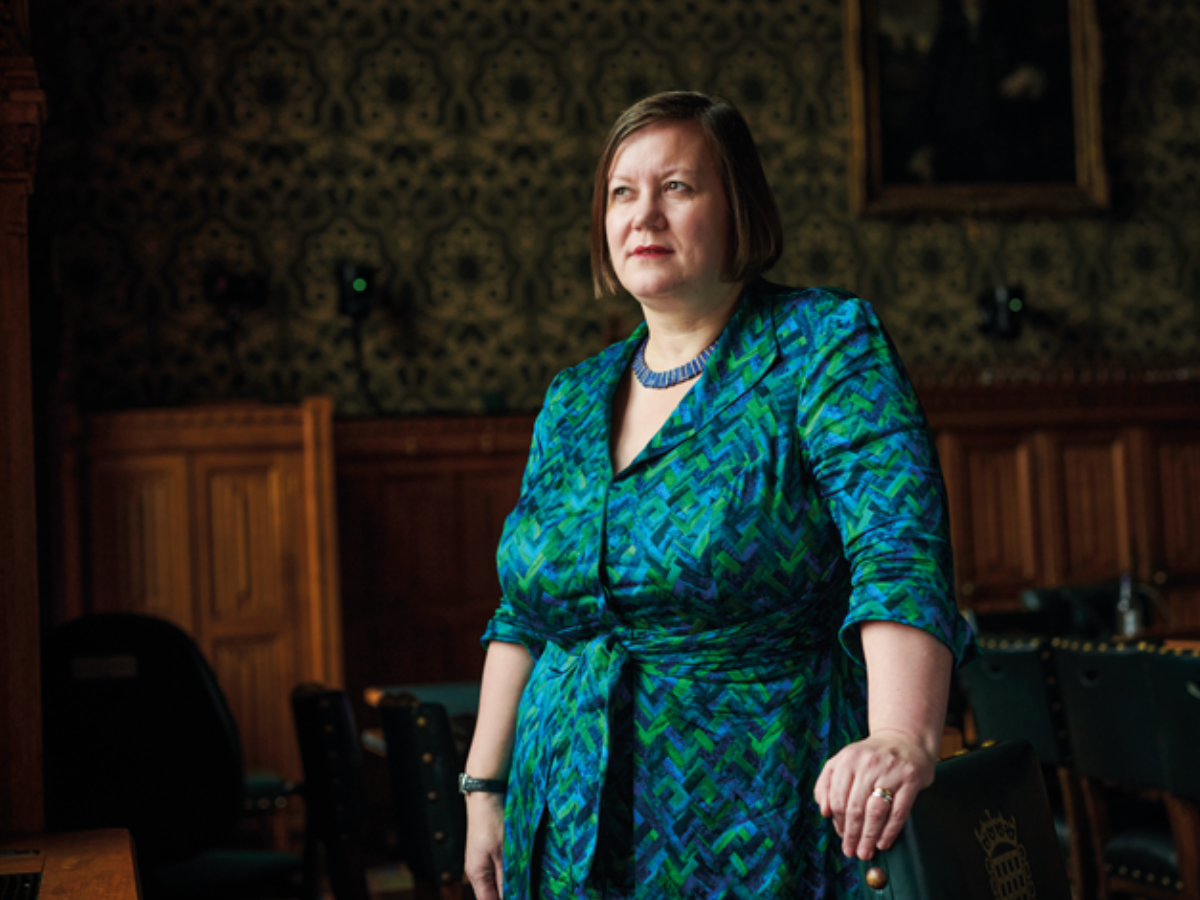
Dame Meg Hillier, Chair of the Public Accounts Committee, has issued a stark warning that the government's New Hospital Programme is approaching a breaking point, as the economic consequences of the escalating conflict involving Iran push construction costs beyond what the programme can absorb.
The war has driven up global energy prices and the cost of raw materials at a pace that officials had not anticipated when the programme's budgets were last revised. For a capital infrastructure scheme already stretched by years of delays and post-pandemic inflation, the timing is particularly damaging.
A budget with no room to move
Hillier's assessment is direct. The NHP was, in her words, already operating with virtually no financial headroom before the latest global shock. Contingency reserves that would ordinarily provide a buffer against cost overruns have been eroded by successive rounds of inflation. What remains, she argues, is a programme structured on assumptions that no longer reflect market conditions.
Sir Jim Mackey, who leads NHS England, has reinforced that position. The NHS cannot simply absorb the scale of cost increases now flowing through from the conflict. The figures involved are not marginal adjustments. They represent a structural shift in what it costs to commission and complete large hospital builds in the current environment.
The 2030 commitment under pressure
The government has pledged to deliver 40 new hospitals by 2030. A significant number of the most complex projects sit within cohort 4 of the programme, covering the largest builds with the longest delivery timelines. These are precisely the schemes most exposed to inflationary pressure, given that construction has not yet begun and contracts have not been fixed.
Supply chain disruption compounds the problem. Specialist components required for modern hospital construction, including mechanical and electrical systems sourced from international markets, are subject to both price volatility and availability constraints linked to the conflict. Several projects that were expected to break ground within the next 18 months now face the prospect of being pushed into the following decade.
The Public Accounts Committee's concerns
The PAC had already documented reservations about the NHP before the current crisis. Its previous reports identified poor value for money and timelines it considered unrealistic given existing funding and planning constraints. The geopolitical situation has not created these weaknesses. It has, however, made them considerably harder to manage.
Hillier has been explicit about the choices now facing the Department of Health and Social Care. If costs continue to rise without additional Treasury support, ministers may be forced to reduce the scope of individual hospital builds or remove certain projects from the programme altogether, without formal announcement. The practical effect would be a programme that delivers less than was promised, regardless of how it is presented publicly.
Capital frozen by revenue pressure
Integrated Care Boards entered this financial year with plans aimed at balanced budgets. Those plans did not account for an inflationary environment driven by a regional war. The pressures now bearing down on day-to-day NHS spending are creating a direct tension with capital investment priorities.
There is a recognised risk that funding designated for new hospital construction will be redirected to cover operational costs within the existing estate. Revenue requirements do not wait for political timelines. Capital programmes, by contrast, can be deferred. In a constrained fiscal environment, that distinction matters.
The question the Treasury has not answered
The political consequences for the government are considerable. The New Hospital Programme has been one of its most visible domestic pledges. If it is scaled back materially, the reasons will be traceable to decisions made, or not made, in the months ahead.
The central question is whether the Treasury will provide additional inflationary cover for the programme. Without it, the choice between preserving the headline commitment and maintaining fiscal discipline becomes unavoidable. Hospitals that exist currently as approved plans may remain in that state for years longer than ministers have publicly indicated.



.png)
.png)
.jpg)