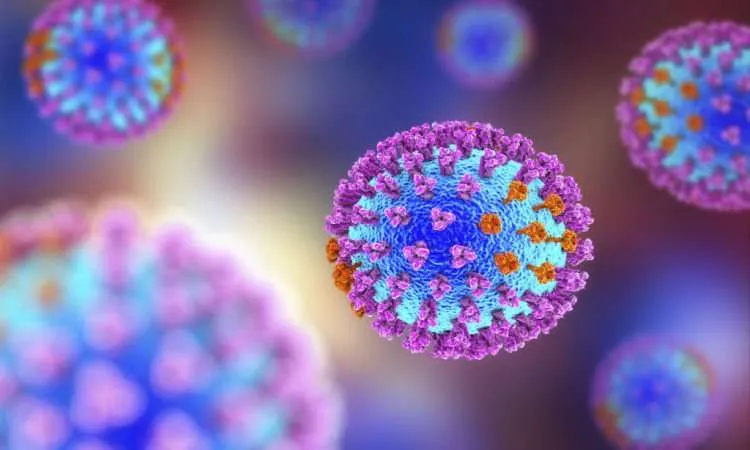
As he addressed an audience of virologists from China, Australia and Singapore at October’s Pandemic Research Alliance Symposium, Wei Zhao introduced an idea that, until recently, would have sounded implausible. The gene editing technology CRISPR, best known for its role in treating rare genetic diseases, could be repurposed as a frontline antiviral against influenza.
CRISPR has already transformed medicine. Therapies based on editing or silencing faulty genes are now approved or advancing rapidly for conditions such as sickle cell disease and haemophilia. But Zhao and colleagues at the Peter Doherty Institute for Infection and Immunity believe the same technology could be adapted to tackle a far more common and unpredictable threat. Seasonal flu kills tens of thousands each year across the northern and southern hemispheres, while new variants circulating in birds and wildlife continue to pose pandemic risk.
The scientific pivot rests on a lesser known branch of CRISPR biology. Most public attention has focused on Cas9, the enzyme that cuts DNA and enables permanent gene edits. Influenza, however, carries its genetic information not in DNA but in RNA. That makes it vulnerable to Cas13, a related enzyme that can recognise and destroy RNA instead.
“Cas13 can target these RNA viruses and inactivate them,” Zhao explained. In nature, Cas13 evolved as part of the immune system of bacteria and archaea, allowing them to neutralise invading viruses. The Doherty team is attempting to co opt that defence for use in human cells.
The concept is technically elegant. Researchers envisage a nasal spray or injection that uses lipid nanoparticles to deliver two molecular instructions directly into infected cells in the respiratory tract. One is an mRNA sequence that instructs the cell to manufacture the Cas13 enzyme. The second is a guide RNA that directs Cas13 to a specific sequence within the influenza virus.
Once inside the cell, Cas13 cuts the viral RNA, disrupting its ability to replicate and effectively stopping infection at the genetic level. According to Sharon Lewin, an infectious diseases physician leading the project, the goal is to suppress the virus before it can gain a foothold. Beyond treatment, the same approach could potentially be used preventatively during severe flu seasons. Cells in the respiratory tract would be primed to neutralise the virus on arrival, forming an early line of defence.
A central advantage of this strategy lies in precision. By designing guide RNAs that target conserved regions of influenza’s genome, sequences that appear across almost all strains and are essential for survival, Cas13 based antivirals could overcome one of the biggest limitations of existing drugs. Conventional antivirals such as oseltamivir are strain specific and prone to resistance as the virus mutates.
CRISPR Cas13 is one of several approaches being explored under the banner of pan influenza antivirals. Monoclonal antibodies that bind conserved viral regions are advancing, while other experimental drugs aim to amplify interferons, the immune system’s early warning signals. The scale of the problem explains the urgency. In the United States alone, influenza A kills between 12,000 and 52,000 people annually depending on the severity of the season.
Yet the promise is matched by caution. Nicholas Heaton, a professor of molecular genetics and microbiology at Duke University, sees both potential and risk. Introducing a bacterial protein into the human body raises the possibility of unintended immune reactions. There is also the question of off target effects, the risk that Cas13 might degrade human RNA alongside viral RNA. Early safety work offers some reassurance. At Harvard University’s Wyss Institute for Biologically Inspired Engineering, researchers have tested the approach using a lung on a chip model made from human lung and blood vessel cells. Influenza replicates deep within the alveoli during severe infection, making this a demanding but relevant system.
According to Donald Ingber, the institute’s founding director, Cas13 expressing cells were able to suppress multiple influenza strains, from H1N1 to H3N2, without detectable off target damage. Viral replication was reduced alongside inflammatory signalling, a finding that hints at both antiviral and anti inflammatory benefits. Even so, major hurdles remain. Delivering lipid nanoparticles deep into the lungs with consistency is technically challenging. There is also an evolutionary question. Any antiviral that directly attacks the virus risks driving further mutation, even when targeting apparently immutable genetic regions. Nature, as Heaton notes, has a habit of finding a way.
This has prompted parallel lines of investigation. Instead of targeting the virus, some researchers are exploring whether CRISPR could be used defensively to make human cells less hospitable to influenza. Using Cas9, scientists systematically remove individual genes from human cells and observe whether the virus can still replicate. One gene has already emerged as critical. Influenza relies on SLC35A1, which ensures the presence of specific sugars on the surface of human cells. These sugars act as receptors that the virus uses to gain entry. In theory, inhibiting this gene could block infection entirely.
The difficulty, of course, is that if humans could safely live without SLC35A1, evolution would likely have removed it long ago. Heaton’s interest lies in nuance rather than elimination. Temporarily reducing the gene’s activity in a specific tissue, such as the lungs, might blunt viral replication without lasting harm. For now, CRISPR based flu prevention remains at an early experimental stage. But the direction of travel is clear. As influenza continues its long evolutionary arms race with humanity, gene editing is offering a new category of weapons. Not vaccines that train the immune system after the fact, nor antivirals that chase viral mutations, but molecular tools designed to intercept infection at the level of genetic code itself.
If successful, the approach could redefine how societies prepare for both seasonal flu and the next pandemic threat.


.jpg)

.jpg)