
Dr. Annie Andrews (Democrat), a pediatrician, won the U.S. Senate race in South Carolina, defeating Republican Senator Darline Graham
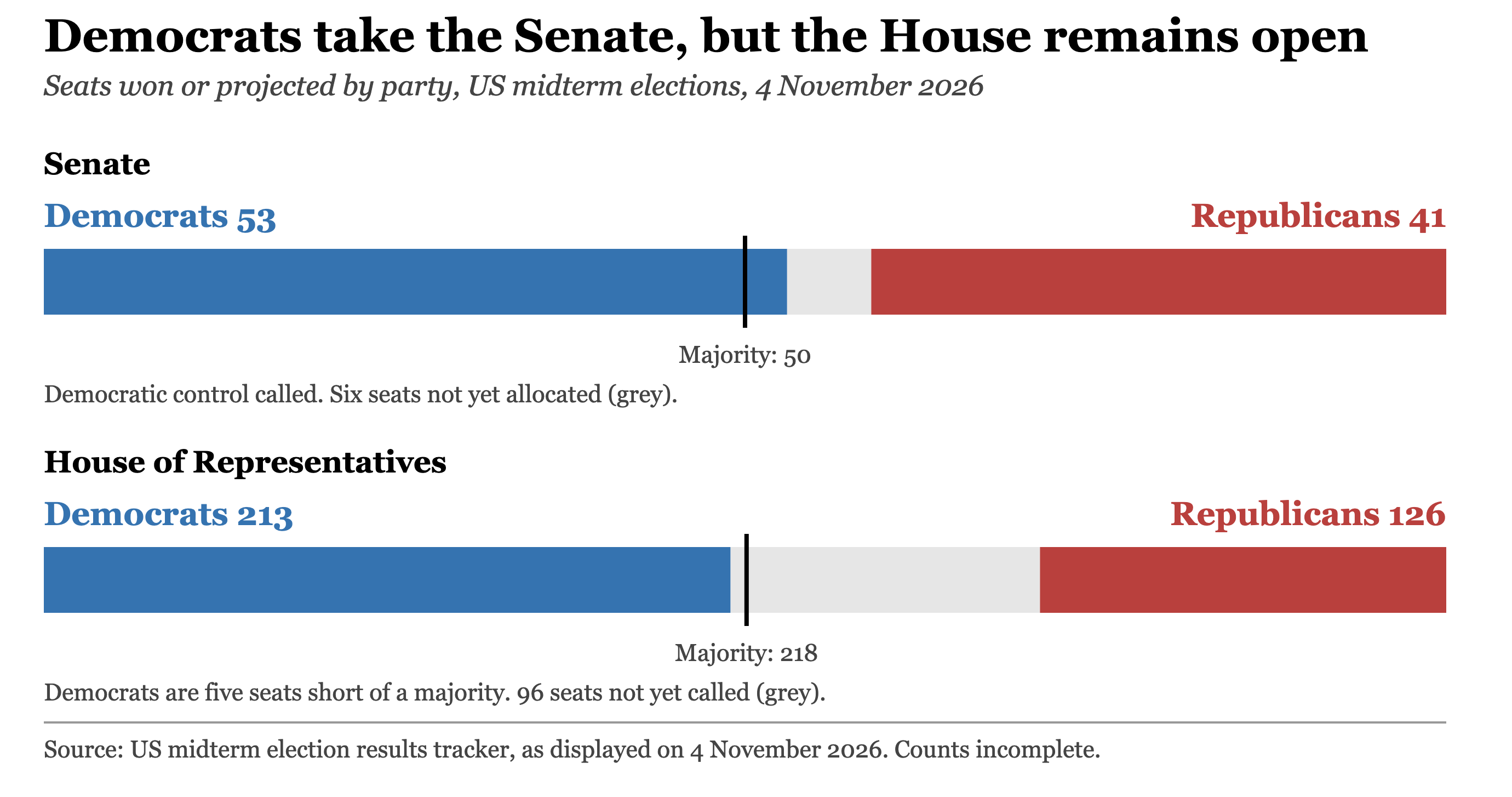
A paediatrician has won a Senate seat in South Carolina, a state Donald Trump carried by almost 18 points in 2024. Republican strategists would once have laughed at the suggestion. Now they are rechecking their arithmetic elsewhere, because Democrats have also flipped House seats drawn expressly to keep them out, and counting continues in several contests that will settle the final balance. The early returns are enough to show what moved voters. Roughly two thirds of those surveyed blamed the administration for rising prices, and healthcare sat uncomfortably close behind.
The Democratic case was simple and came from credible messengers. Last year's budget legislation cut Medicaid funding, and enhanced insurance subsidies are due to lapse. A candidate who spends her working days treating children could speak about those measures without the baggage of national party branding. British observers will be tempted to read all this as American spectacle, a quarrel over a system that bears no resemblance to the NHS. The comparison does fail on structure. It still misses the point, because Britain is wired into the American health economy at several places where Washington's mood matters.
The most exposed is the price of medicines. America pays far more for branded drugs than any other rich country, and manufacturers treat that market as the source of their global margins. The agenda Democrats now carry into office includes statutory price caps, tighter rules on pharmacy benefit managers and a harder look at corporate consolidation. Even a diluted version would squeeze American returns, and companies under that sort of squeeze rarely accept it quietly. They seek higher prices elsewhere, or they withhold launches from markets they regard as too cheap. Britain has spent the past few years firmly in the second group.
Ministers know it. Last year's agreement with Washington raised the cost-effectiveness threshold used by the National Institute for Health and Care Excellence and softened the rebate scheme that industry had branded punitive, after several large firms had shelved investment plans. That settlement assumed an American counterpart with a settled view on drug prices. A Congress determined to cut them at home will expect Britain to pay more, and the Treasury, which has treated the NHS medicines bill as a problem for another day, will have to say how much more it can stomach.
Trade offers a second line of exposure. Tariff relief for British pharmaceutical exports came from a White House that wanted a diplomatic trophy. Voters have now rendered their verdict on tariffs, and nobody outside the administration can say whether it will respond with caution or with a hunt for scapegoats. Whitehall should plan for both and treat the present arrangement as a lease rather than a freehold.
The political lesson is the one that ought to unsettle Downing Street most. American voters punished a government they saw as raising costs while removing protection. British voters apply a similar test to the NHS, and the failing they register is delay. Waiting lists remain above seven million. The pledge that 92 per cent of patients will be treated within 18 weeks by March 2029 depends on productivity gains the service has yet to demonstrate. Public satisfaction hovers near its lowest on record. The old assumption that the NHS commands loyalty whatever its performance no longer holds, and the insurgent parties on the populist right, which have no attachment to the founding model, stand ready to collect the resentment.
Parts of the Democratic agenda also touch arguments already running in Britain. Congress is weighing permanent coverage for telehealth, a question the NHS faces as it decides how much routine care the NHS App and remote consultation should carry. Scrutiny of private equity matters here too. Governments of both colours have leaned on independent providers to clear elective backlogs, and ownership in primary care, mental health and social care is drawing sharper questions. Evidence assembled by American legislators will be borrowed by British campaigners within weeks.
For NHS leaders the implication is financial. Medicines spending already outpaces most budgets, and any upward drift in prices lands locally, in formularies, in commissioning decisions and in the choices boards make between new treatments and existing services. Finance directors who regard the pricing settlement as a national matter will find it arriving in their own accounts. Contingency planning should assume that the settlement proves less durable than it looked.
Ministers face a different temptation. The American result shows that affordability and access can redraw a political map within a single cycle. It says nothing about which remedy works, and a public insurance option would take years to build even if Congress passed it tomorrow. Imported enthusiasm for American proposals would make poor policy.
Industry faces plainer facts. Pressure on drug prices is now bipartisan in America, and Britain will be measured against it. Firms hoping that a change in the political weather will restore the old order should revise their plans. Investment in British research and manufacturing will follow a stable route to market, and that requires fiscal room the Treasury has been slow to grant.
The sharpest lesson is also the plainest. Voters tolerate a good deal from their governments, and being left alone with costs they cannot control exhausts that tolerance. Americans have delivered a provisional verdict on theirs. British ministers should assume their own turn is coming, and that the length of the waiting list and the price of a new drug will serve as the evidence.