
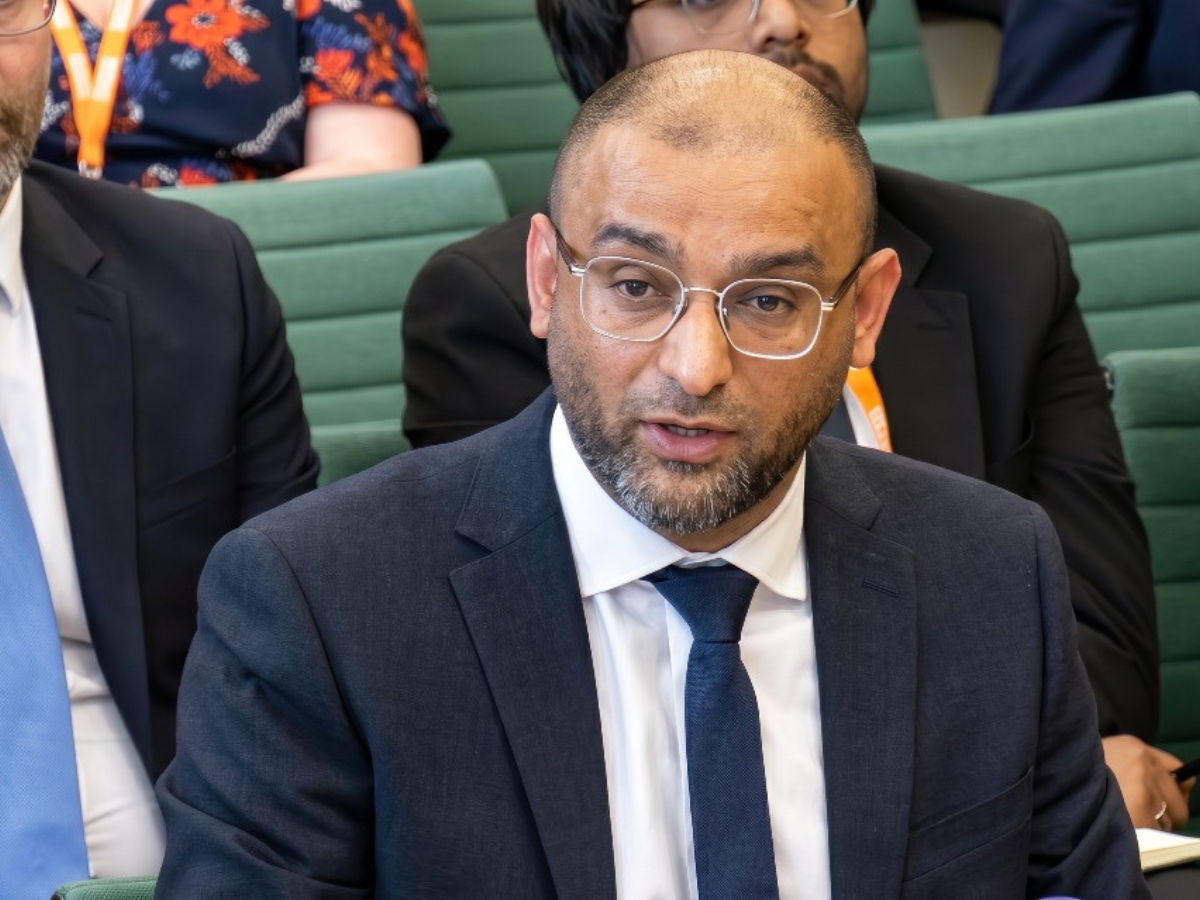
Most NHS leaders spend their careers managing organisations. A much smaller number build systems that other organisations depend upon. The distinction matters. Hospitals can replace chief executives. National transformation programmes rarely survive the loss of the people who understand how they actually work. Throughout the Health and Social Care Committee hearing, MPs repeatedly tried to turn the discussion into a debate about Palantir. Ayub Bhayat repeatedly dragged it back towards delivery. Procurement. Adoption. Governance. Timelines. Benefits realisation. It was a subtle difference, but an important one. The NHS does not suffer from a shortage of strategies. It suffers from a shortage of people capable of implementing them at national scale.
For more than two decades, NHS digital transformation has largely been defined by infrastructure. Electronic patient records. Shared care records. Data warehouses. Interoperability programmes. The challenge was connecting systems that were never designed to speak to each other. That phase is ending. The next phase is fundamentally different. AI, predictive analytics, operational command centres, population health management and automation all depend on turning information into action. The winners of the next decade will not be the organisations with the most data. They will be the organisations capable of operationalising that data. That requires a different kind of leadership. Less focused on technology itself and more focused on execution.
What stood out during the hearing was not political positioning. It was operational fluency. Bhayat demonstrated a detailed understanding of procurement frameworks, evaluation processes, supplier management, adoption pathways and implementation timelines. When challenged on contract extensions, he discussed governance. When challenged on alternatives, he discussed capability. When challenged on evaluation, he discussed process. In an era where digital transformation is often presented as a battle of competing narratives, his focus remained relentlessly practical. That may sound obvious. It is surprisingly rare. Many programmes fail because organisations become distracted by vision and forget delivery. The NHS has experienced that lesson more than once.
The significance extends far beyond the Federated Data Platform. The NHS is now entering a period where digital leadership will become increasingly central to organisational performance. Waiting lists, productivity, workforce planning, discharge management, diagnostics, outpatient transformation and prevention will all become data-driven challenges. Future NHS leaders will need to understand clinical operations and data architecture. They will need to understand AI governance and service redesign. They will need to understand procurement and transformation. Those skillsets have traditionally existed in different people. Increasingly they must exist together.
This is why the hearing may prove more important than it first appeared. It provided a glimpse of the leadership profile that the NHS is likely to require over the next decade. Less evangelist. More operator. Less focused on technology itself. More focused on outcomes. The future leaders of healthcare transformation will not be judged by how many digital strategies they publish. They will be judged by whether patients are seen faster, staff work more effectively and services perform better. The NHS already has many talented digital leaders. Watching the committee session, however, it became increasingly difficult to ignore one possibility. If the next era of healthcare belongs to data, then Ayub Bhayat may already be one of the most influential figures shaping it.



.jpg)
.jpg)