There is a particular kind of financial headache familiar to every NHS commissioner who has faced a decision over a one-off gene therapy. A single infusion can carry a price tag running into six or even seven figures. The clinical trial may have involved only a few dozen patients, while the promised benefits could take ten years to establish. The bill, however, arrives immediately. The evidence comes later, assuming it comes at all. For the person holding the budget, waiting for scientific certainty is rarely an option. Someone must decide whether the NHS should pay now for a benefit that may take a decade to prove.
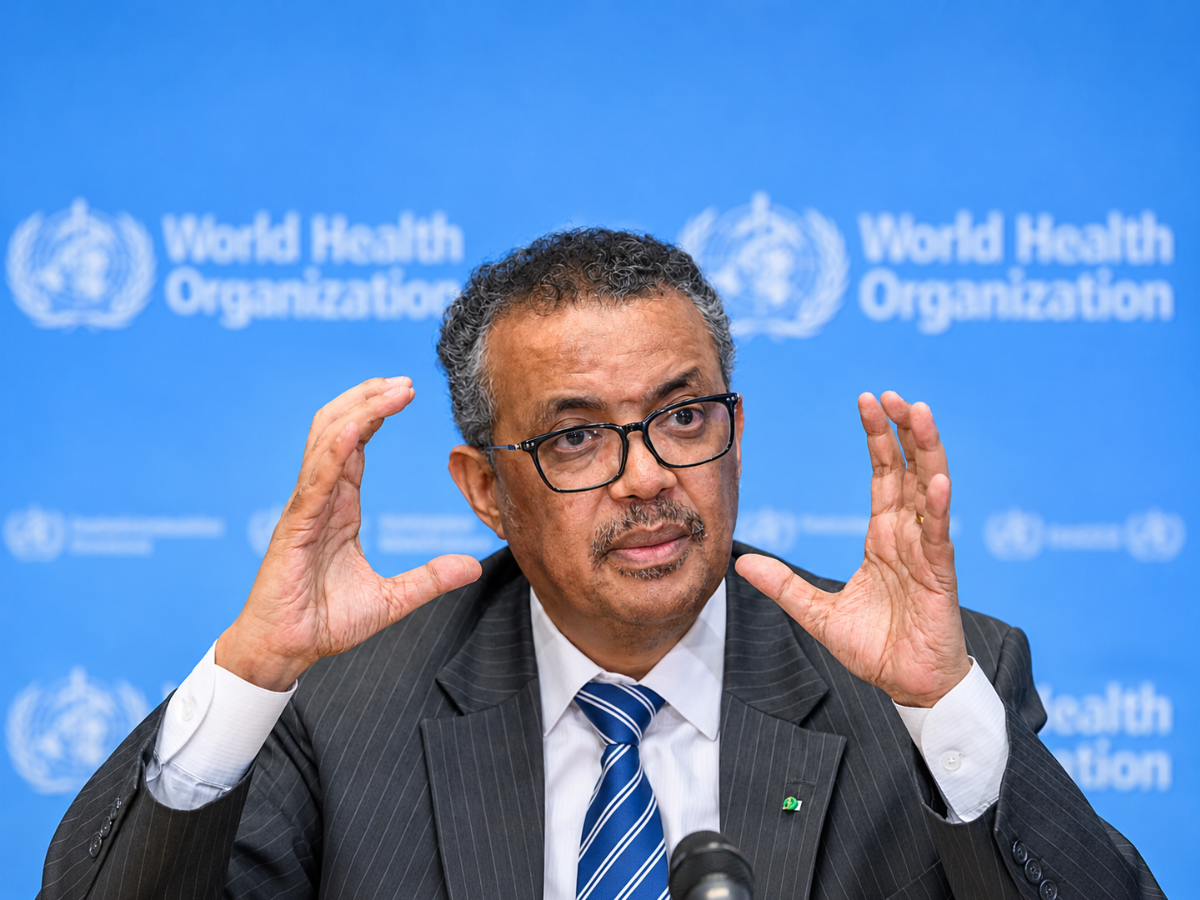
This is the uncomfortable territory the World Health Organization's European office is now attempting to address. On 2 November, WHO Europe launched the European Access Dialogue Platform, an expanded successor to the Access to Novel Medicines platform established in 2023. It brings governments, pharmaceutical companies and patient organisations into structured discussions about the obstacles preventing patients from accessing new treatments. WHO Europe's argument is straightforward: the barriers are systemic, and no single party can remove them alone.
The arrangements are deliberately cautious. Participation is voluntary, WHO acts as a neutral convener and any conclusions remain non-binding. National governments retain complete authority over their own coverage decisions. Product-specific negotiations and commercially sensitive information are excluded, partly to avoid competition law complications. Any stakeholder can propose subjects for discussion, although a steering committee chaired by a member state decides which deserve attention, based on their relevance across countries. Each discussion series concludes with an anonymised account of areas of agreement, unresolved differences and potential regional approaches.
There is an obvious danger here. International health forums have never suffered from a shortage of carefully worded statements, and the distance between agreeing that something is a problem and doing something about it can be considerable. Yet Britain has reasons to pay attention, even if its influence over the platform's practical direction remains indirect.
The UK belongs to WHO Europe's geographical region but sits outside the European Union's joint clinical assessment process for new medicines. It has therefore lost access to one of the continent's principal mechanisms for pooling evidence and coordinating assessments. Meanwhile, Britain's own medicines pricing debate has largely unfolded through bilateral bargaining. The dispute over the voluntary scheme rebate, investment pauses announced by several manufacturers and the subsequent arrangement with Washington, which raised the NICE cost-effectiveness threshold and eased the rebate burden, have all been shaped by trade and industrial policy.
Those negotiations achieved something politically significant: a different price environment for the pharmaceutical industry. They did considerably less to resolve the question facing the NHS when a medicine reaches the market with a compelling promise and an incomplete evidence base. A higher NICE threshold creates additional spending headroom. Pharmaceutical companies will hardly be surprised if that headroom attracts new demands.
As more advanced therapies pass NICE assessment and move towards NHS commissioning, the unresolved questions will become increasingly difficult to avoid. How much uncertainty should the health service accept when approving an expensive treatment? If the medicine fails to deliver the results suggested by early trials, who absorbs the financial loss? And how can payment genuinely be linked to patient outcomes when NHS records still struggle to follow individuals across different providers over five or ten years?
These are precisely the issues the new platform intends to examine. They are also questions NHS leaders currently tackle through bespoke commercial arrangements, often negotiated by relatively small teams working against tight deadlines. The system is being asked to make increasingly sophisticated financial decisions with infrastructure that has not necessarily kept pace.
NHS England has already demonstrated that managed access schemes and outcomes-based agreements can work. The difficulty is that each arrangement tends to become its own exercise in commercial engineering. Agreements are constructed from scratch with individual manufacturers, while the data collection required to establish whether a treatment has delivered its promised benefit depends on systems that remain only partially equipped for the task.
Other countries have experimented with different approaches, including staged payments, annuity models and patient registries with defined review points. Some will have worked better than others. The failures may prove just as instructive as the successes. A regional platform could bring these experiences into view far more quickly than an individual government commissioning its own research. Excluding product-specific negotiations is sensible in this respect. It keeps discussions focused on the mechanics of paying for uncertain clinical value, leaving individual prices to commercial negotiations.
Still, nobody should mistake a larger discussion table for a solution. A platform covering dozens of health systems, each with different budgets, purchasing power and political priorities, may struggle to produce anything more substantial than a carefully negotiated summary. Anonymised conclusions could make the exercise even less revealing. Pharmaceutical companies will arrive with an interest in shaping the debate, while governments will be understandably reluctant to expose weaknesses in their negotiating positions.
The potential benefits for Britain will also be uneven. The devolved nations purchase medicines on a smaller scale and face many of the same affordability pressures confronting smaller European health systems. NHS England, meanwhile, is approaching a period of considerable organisational disruption as its commercial functions are absorbed into the Department of Health and Social Care. Finding the people and capacity to engage meaningfully in another international initiative may prove difficult.
That makes the choice of representatives unusually important. Send a delegation of policy generalists and Britain may return with another set of principles and carefully phrased recommendations. Include commissioners who have negotiated outcomes-based agreements, analysts who understand the difficulties of tracking patients across fragmented records and clinicians who have dealt directly with families facing uncertain treatment decisions, and the discussions could produce something considerably more useful.
The pharmaceutical and health technology industries should pay attention too. Published summaries will offer an indication of what governments across the region consider acceptable in terms of evidence requirements, financial exposure and payment structures. Patient organisations, whose experiences are supposed to inform the process, should ensure they help shape the questions from the beginning rather than being invited to endorse conclusions once the important discussions have already taken place.
Britain has spent the past two years demonstrating that it can renegotiate medicines prices when the political stakes are sufficiently high. Its record on deciding how much uncertainty the NHS should absorb, and building the data infrastructure needed to measure the consequences, is considerably less impressive.
That is why a forum with no authority to set prices could turn out to be more useful than its modest powers suggest. The NHS does not need another international body telling it what a medicine should cost. It needs a better way of deciding what it is buying, how much risk it is prepared to accept and what happens when the promised results fail to materialise. Those decisions will remain Britain's responsibility. At least now, it has a place to compare notes with others facing the same expensive uncertainty.