.png)
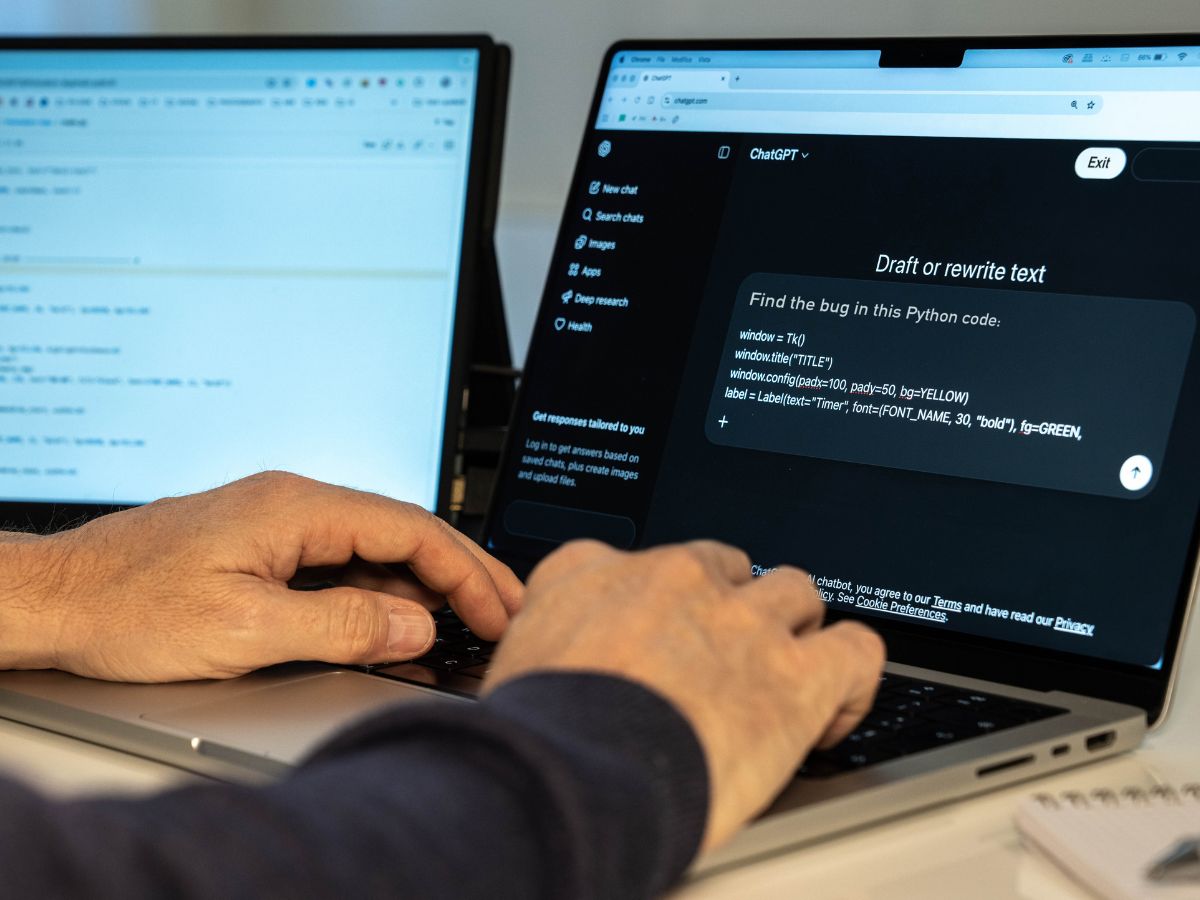
A woman scrolling through a discharge letter on her phone, unsure what a raised inflammatory marker means, used to wait for a GP callback that might take days. Increasingly she opens ChatGPT instead. This week, OpenAI formalised that intuition by introducing Health in ChatGPT to American users. This allows users to link hospital medical records and Apple Health data, enabling the assistant to access medications, lab results, and recent visits during regular conversations instead of in a separate, walled-off mode. It is free to Plus, Pro, Go and even the basic tier. No pilot trust, procurement process, or ministerial statement were necessary.
NHS leaders should consider that final point. For a decade, British governments have promised something functionally identical: a single patient record, accessible to the person it belongs to, that follows them through the system instead of scattering across GP surgeries, hospital trusts and pharmacy records. The 10 Year Health Plan's pledge to establish the NHS App as the "front door" to the healthcare system, including an AI companion tool meant to provide patients with guidance within the app itself, and the Health Bill legislation introduced this year contain the current version of that promise. Officials have been building towards exactly what OpenAI shipped last week. Without waiting for legislation, OpenAI arrived first at a fraction of the expense.
This matters less as a story about artificial intelligence outpacing bureaucracy, which is a familiar and slightly lazy framing, than as a story about where authority over a patient's understanding of their own body now sits. When someone arrives at a ten-minute GP appointment having already had a chatbot walk them through what their cholesterol panel means and what questions to ask, the consultation changes shape. Clinicians gain a patient who has done some homework, which can be useful, but they also inherit whatever interpretation the model has already offered, correct or otherwise. The NHS has spent years worrying about "Dr Google." It now faces something considerably more persuasive and personalised, operating with data the health service itself has struggled to present coherently through its own app.
There is a regulatory gap sitting underneath this that nobody in Whitehall has fully priced in. OpenAI's safeguards, training exclusions and permission prompts are real, and the company has clearly worked with physicians to validate its models against realistic clinical scenarios. But none of that has passed through the MHRA, the CQC or the ICO in the way a UK digital health product would be expected to. Even while British patients are not the target audience for this US launch, many will nevertheless use it, providing it GP letters and NHS discharge summaries that are completely outside of any UK regulatory boundaries. The Federated Data Platform debate consumed months of parliamentary scrutiny over who controls NHS data and on what terms. A far larger volume of sensitive health information is now flowing into American servers with considerably less debate, because it happens one individual conversation at a time rather than through a single contract that campaigners can target.
None of this means the NHS should try to out-build OpenAI, an ambition that would waste money the service does not have. The more useful question is whether NHS leadership treats this as a prompt to accelerate the Single Patient Record and the App's AI companion with real urgency, or continues at the pace that has defined digital transformation programmes since the paperless NHS pledges of the 2010s. Patients are not waiting for the answer. They have already discovered a tool that provides a better explanation of their blood tests than the machine that performed them, and each month that this discrepancy continues, it becomes a bit more common to believe the chatbot over the physician or, worse, over nobody at all because no one in the system arrived first.