.png)
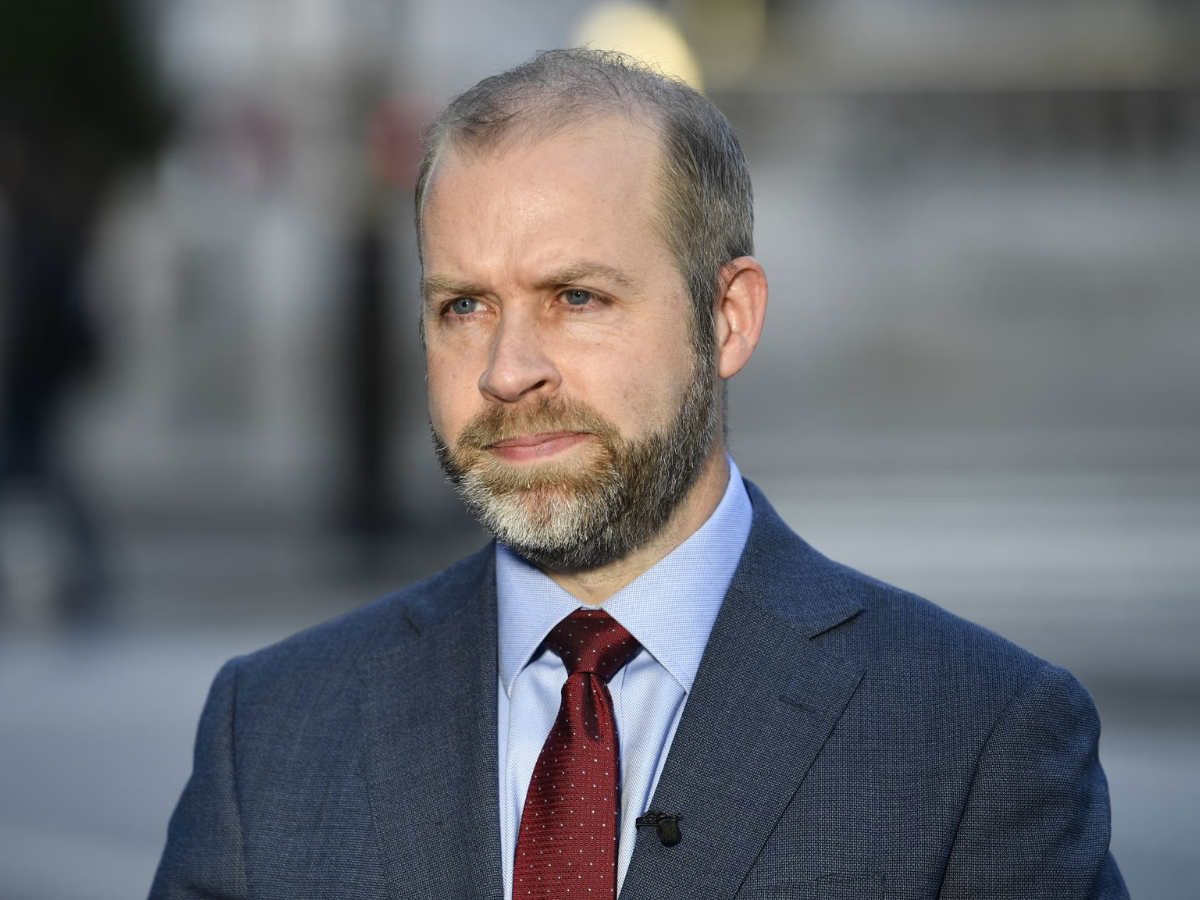
Tom Josephs did not raise his voice when he delivered the line that mattered most. Presenting the Office for Budget Responsibility's fiscal risks and sustainability report on Tuesday, the budget responsibility committee member noted that the adjustment required to stabilise Britain's public finances would be twice as costly if left until the middle of the century rather than tackled in the early 2030s. It was a technical point, offered without drama, and it will likely be forgotten within days. It deserves not to be. Buried inside the OBR's projections is an assumption that will shape the next decade of NHS policy more than almost any ministerial announcement: that health spending, currently around 8 per cent of GDP, is heading towards 13 per cent by 2075, and that the only meaningful brake on that trajectory is productivity growth inside the health service itself.
This is a different kind of pressure to the one NHS leaders have grown used to absorbing. Waiting list targets, financial control totals and workforce plans are political instruments, adjustable by ministers under pressure. The OBR's modelling is not that. It is a long-run actuarial judgement, produced by an independent body whose credibility rests on being taken seriously by markets as well as by the Treasury. When that body says productivity in the health sector is now one of the few variables capable of bending the debt-to-GDP curve back from an unsustainable path, it has quietly promoted NHS efficiency from a departmental target to a load-bearing assumption in the sustainability of the British state's finances.
The timing could hardly be sharper. Sir Jim Mackey's contract accountability reforms, the consolidation of integrated care boards from 42 to 26, and the rollout of ambient voice technology across acute trusts are all, in effect, productivity bets. Ministers and NHS England have justified each of them on the promise that they will extract more clinical output from the same or fewer resources. The OBR has now told the Treasury, implicitly, that it is relying on exactly that outcome. If ambient scribes save clinicians minutes rather than hours, if ICB consolidation produces administrative saving rather than genuine service redesign, if Mackey's accountability framework tightens grip without changing underlying capacity, the shortfall does not stay contained within NHS budgets. It becomes a debt sustainability problem with a horizon stretching into the 2040s.
This lands awkwardly for the politician best placed to inherit it. Andy Burnham's record as mayor of Greater Manchester was built on securing devolved capital and defending local control against Treasury discipline, not on demonstrating productivity gains against a fiscal ceiling. As prime minister in waiting, he arrives at a moment when the OBR has effectively pre-empted the argument he is most associated with. Investment-led devolution and productivity-constrained fiscal management are not natural allies, and the report gives his likely opponents a ready-made test: show the efficiency, or explain why the money is being spent regardless.
The pensions comparison sharpens the point further. The OBR's finding that maintaining the pensions triple lock could push state pension spending from 5 per cent to 9 per cent of GDP over fifty years places health spending in direct competition with pensioner income protection, a competition no government has yet been forced to adjudicate honestly. Any serious spending review under a Burnham government will have to choose between the two commitments in a way that current Labour positioning studiously avoids.
None of this guarantees a crisis. Josephs was careful to say that stronger growth could delay and soften the adjustment considerably, and the OBR's own baseline assumes the government's defence spending pledge is met in full, an assumption already looking strained. But the report removes a piece of cover NHS leaders have long relied upon: the ability to treat productivity as an aspiration to be pursued at a comfortable pace. It is now a number the state's independent forecaster has built into its models. Whether ambient AI, structural reform and contract accountability can deliver on that number, rather than merely gesture towards it, will be tested against arithmetic rather than rhetoric.


.jpg)
.jpg)