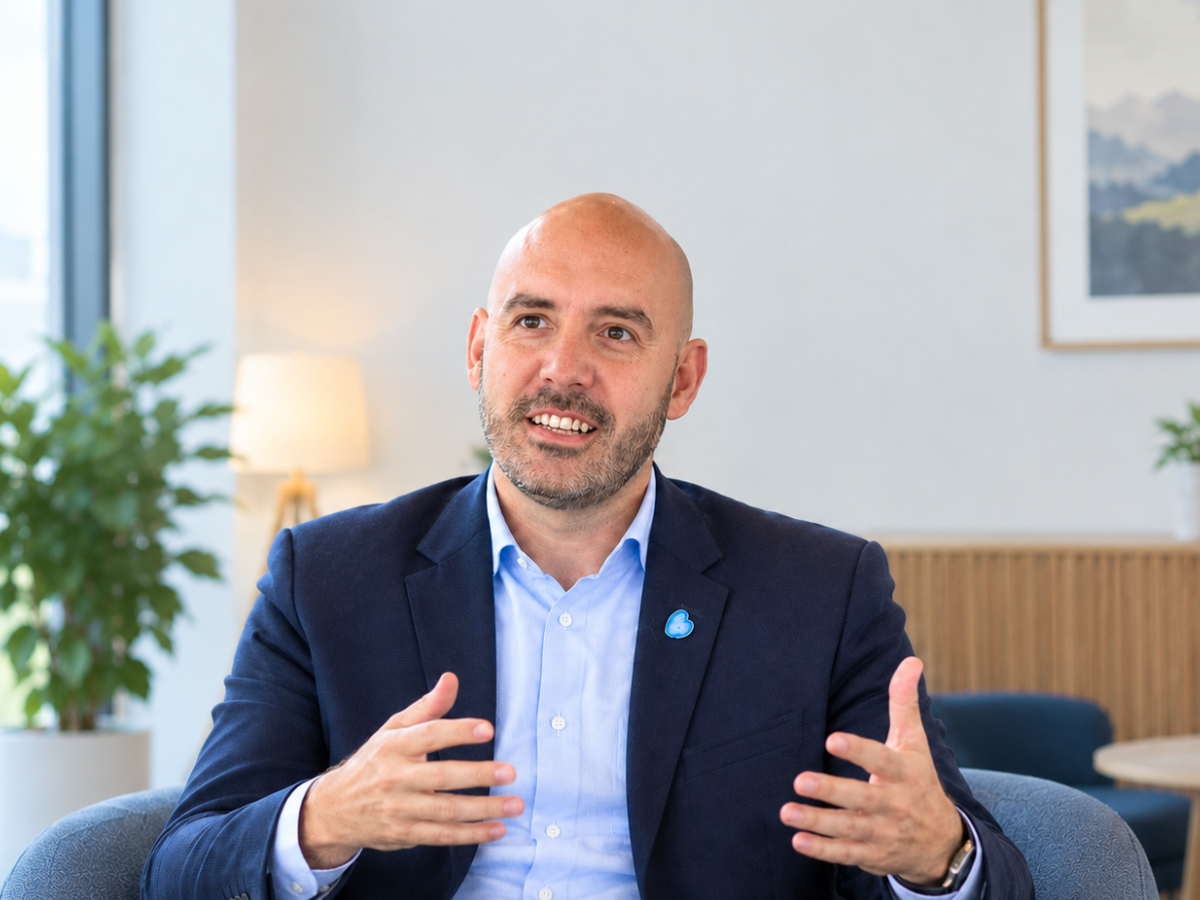
Ayub Bhayat, Chief Data & Analytics Officer, NHS England
In June, Ayub Bhayat, NHS England’s Chief Data Officer, gave evidence to the Health and Social Care Committee and set out a date. If the government did not wish to continue with the Federated Data Platform beyond its initial term, the supplier would have to be told by December, and NHS England intended to tell it sooner. The remark was a piece of contract mechanics delivered in a committee room, yet it started a clock on the largest non-clinical procurement in the history of the health service. That clock is now close to striking, and the way ministers handle it will say a good deal about how England’s health service buys and governs digital infrastructure, and how it leaves that infrastructure behind when necessary.
NHS England awarded the contract in November 2023 to a consortium led by Palantir Technologies UK, supported by Accenture, PwC, NECS and Carnall Farrar. The initial term runs for three years from March 2024, with options to extend to seven. If the government does not wish to continue beyond March 2027, the supplier must be told by December 2026. Two select committees have recommended against extension, and campaign groups have pressed the same case. Ministers have said the contract will be reviewed through standard contract management and the outcome announced in due course.
The platform's design is modest in a way that deserves credit. It does not copy records into a single national database. It sits above existing datasets and gives trusts, integrated care boards and NHS England a connected view, with each local organisation acting as data controller for its own instance. Identifying details are removed before data reaches the national instance. For a health service that has never had a central store of patient data, this is a pragmatic route to joined-up planning on waiting lists, theatre use, discharge and vaccination.
Uptake suggests the tool is finding its place. By August 2026, 142 of 202 trusts were in live operational use and 170 had signed a memorandum of understanding. Thirty-five of 36 integrated care boards were live. NHS England had set a target of 85 per cent of secondary care trusts by March 2026, and its planning framework expects all providers onboarded by 2028/29. In June, NHS England's Chief Data Officer, Ayub Bhayat, told the Health and Social Care Committee that use of the platform is not mandatory. Clarity of that kind should reassure trusts that local judgement still counts, and it is the sort of statement that builds credibility with those who doubted the programme.
Bhayat is worth dwelling on, because the programme’s character owes a good deal to him. He began as an information analyst in 2005 and has spent more than 20 years in data, analytics and software engineering roles across the NHS. He built the data infrastructure for the Covid-19 vaccination programme, was named digital leader of the year in 2024 at an industry awards event, and led the £330 million platform procurement. He is now driving work on a Single Patient Record, owned by the patient and shared across the system. A leader who has worked up from the ground floor of NHS analytics understands how data reaches the front line. His candour before the committee, on the deadline and on the voluntary nature of adoption, reflects a willingness to be examined in public.
That willingness has been tested. Critics argue that Palantir’s free pandemic-era software and subsequent contracts gave it an advantage in the procurement. The company says the software was supplied for a token £1 because the pandemic was a national emergency. NHS England says the competition was rigorous and open to any eligible supplier, and a health minister told the committee that none of the individuals named in press reports had been involved in the award decision. The Science, Innovation and Technology Committee raised vendor lock-in and described the supplier’s role as an unacceptable point of weakness, with wider concern about overseas dependency and the fit between the company’s wider activities and the values of the NHS. NHS England points to incremental contract commitments, exit planning, in-house engineering skills, portable standards and NHS ownership of intellectual property, including the canonical data model beneath the platform. Those safeguards can now be put to the test.
The evidence on benefits has been handled with a maturity that merits recognition. In June 2026 NHS England added a caveat to its published figures, acknowledging that it cannot attribute observed improvements directly to the platform, and it published more of its methodology. The Office for Statistics Regulation welcomed the changes, was assured of the independence of NHS statisticians, and will keep monitoring how figures are communicated. Imperial College Projects is conducting an independent evaluation, and the National Audit Office is expected to report this winter. Both will arrive after or around the decision, which is an awkward sequence, but the direction of travel is towards scrutiny that the programme has accepted.
The harder questions concern trust. When it emerged that some supplier staff had access to identifiable patient data, the National Data Guardian sought clarification, and NHS England acknowledged it had communicated the position incorrectly. A limited number of supplier staff needed access to do their jobs. Separately, the Guardian has noted a rise in National Data Opt-Outs coinciding with coverage of the platform and its suppliers. She stated that she strongly supports its aims, recommended no particular contractual outcome and asked that public and professional trust carry substantial weight. That request is reasonable and can be met. Palantir’s sharp response to her intervention will not help its standing with the public, and a more measured tone would serve the company and the programme better.
Local systems have their own worries. Some integrated care boards already run analytical tools they consider more capable, and the NHS Confederation relayed concerns about interoperability and functionality. The Health Innovation Minister has replied that the platform supports functions local tools lack, such as recommending patients for discharge, and that scaling a local system nationally is unproven. Both positions are credible. The Nuffield Trust’s observation that benefits will vary with digital maturity suggests the answer lies in flexible deployment, with the least developed systems gaining most.
The practical constraint is time. The Nuffield Trust has called a transition by March 2027 challenging, and the minister has said a successor contract is unlikely to be in place by then. Ministers have acknowledged that ending the contract would cause disruption, and public information does not show how deeply the platform is embedded in daily workflows. A managed extension carries cost, though an unmanaged exit would carry more.
The wise course is an extension that is conditional and short, tied to published exit milestones, independent evaluation, transparent rules on who may access identifiable data, and active support for local systems that already perform well. Such a decision would demonstrate that the NHS can commission technology on its own terms. It would also give the Single Patient Record, the next major ambition in this field, a foundation of public confidence that the programme has so far had to earn the hard way.