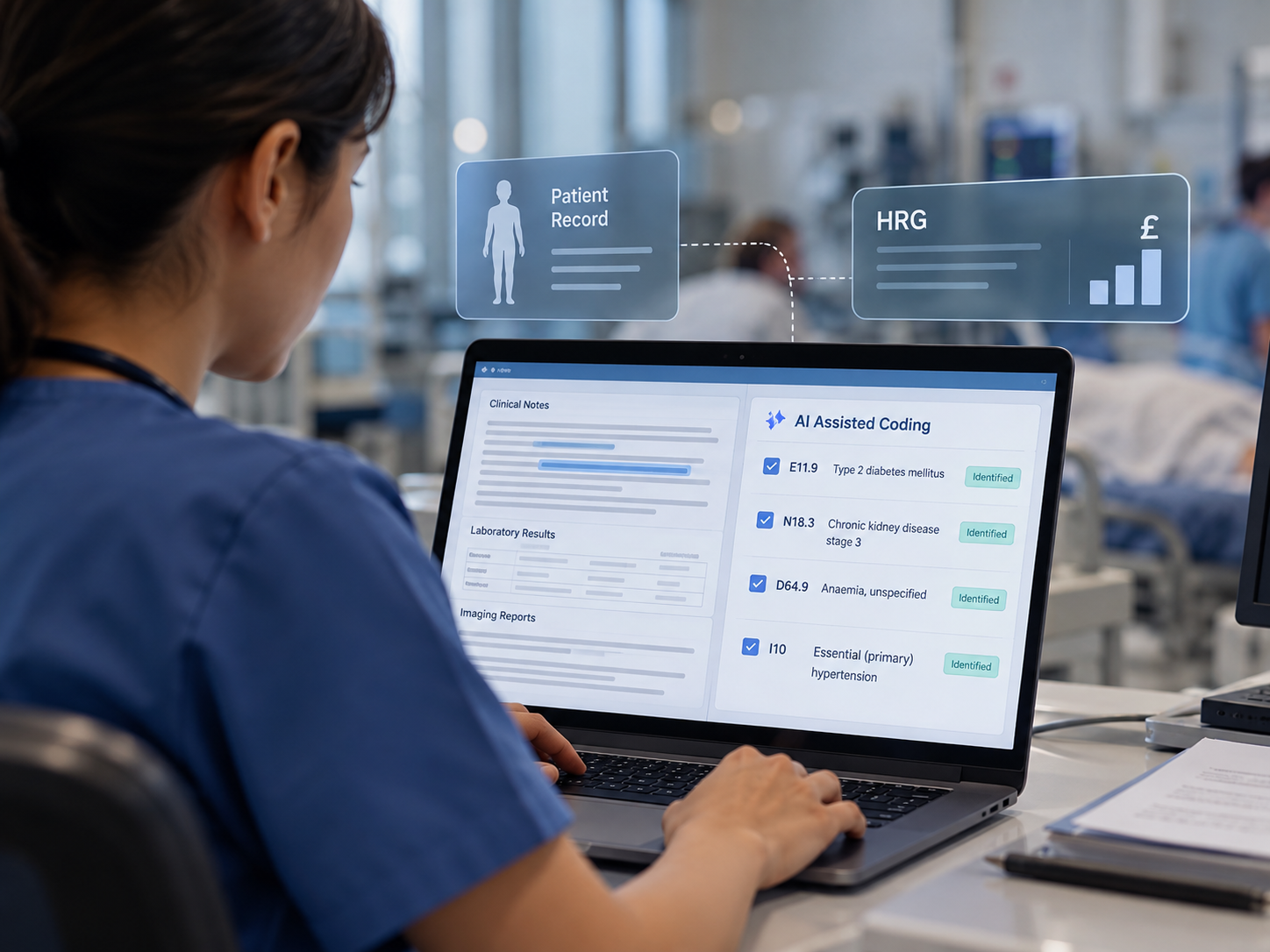
England's NHS has awarded a series of significant technology contracts in recent months, covering everything from clinical software in general practice to a decade-long electronic patient record deal at an acute trust. Taken together, the awards suggest that digital transformation, long discussed as a priority and inconsistently funded, is now attracting serious and concurrent financial commitment across the system.
The most recent award comes from Central East ICB, a body formed from the merger of three predecessor organisations covering Bedfordshire, Luton, Milton Keynes, Cambridgeshire, Peterborough, and Hertfordshire. The ICB has contracted Ardens Health Informatics Limited to deliver a clinical decision support tool worth up to £1.7 million. The contract was procured through the CCS G-Cloud 14 Framework and is structured as an initial 12-month term valued at £870,296.91, with an optional further 12 months at the same cost.
The tool is intended to help the ICB build out digital pathway capabilities in general practice, an area the organisation has identified as central to its five-year strategy. That strategy, published earlier this year, sets out a layered model of care delivery: prevention and screening, supported self-care, proactive outreach, care coordination, and crisis response. The ICB has committed to adopting the NHS App as a default channel and to expanding remote monitoring and digital self-management tools for patients.
On procurement, the ICB has signalled plans to re-procure diabetes and dermatology services in 2026/27 on a whole-pathway basis, with prevention and digital access built into the contract design rather than added as an afterthought. From 2027, it intends to begin commissioning neighbourhood health teams, prioritising contracts that increase access, support people at home, and manage deterioration before it escalates into crisis.
The Ardens contract is modest in scale relative to some of what has been happening elsewhere in the system. NHS England awarded a contract worth up to £160 million to IBM in April as a strategic delivery partner for the NHS App, with the agreement running from May 2026 to March 2028. The appointment followed a competitive procurement process and is intended to support the development of secure, user-centred digital services at scale. The NHS App has become an increasingly central part of government ambitions for shifting healthcare toward self-management and digital access, making the IBM partnership one of the more consequential technology decisions taken at national level this year.
NHS England has also published pipeline notices for two further digital opportunities. One seeks a partner to provide DevOps services across NHS directorates, expected to begin in late September 2026 and run for two years. The other relates to digital delivery support for its urgent and emergency care agenda. The combined anticipated value is up to £19 million excluding VAT, though both remain at the notice stage rather than formal award.
At trust level, Lewisham and Greenwich NHS Trust has awarded a ten-year electronic patient record contract to Epic, valued at £52 million and running to 2036. The trust had operated a partially deployed EPR system with only 80 per cent of clinical systems integrated, leaving significant gaps in data flow and care coordination. The Epic contract is intended to address those structural failings rather than simply add new capability on top of an already fragmented base.
Nottinghamshire Healthcare NHS Foundation Trust took a different approach with a smaller but notable award. Its £725,000 contract with Made Purple Limited covers a patient-facing intranet and internet solution, designed to reduce digital deprivation among patients by providing tools to learn skills, research medical conditions, and access trust and regulatory information.
The breadth of these awards, from GP software to national app infrastructure, reflects a system no longer treating digital investment as peripheral. Procurement frameworks like G-Cloud have shortened award timelines and reduced the administrative weight of individual decisions. Whether that speed translates into better integrated systems, rather than a new layer of fragmented products, remains the more important question for NHS leadership to answer.


.jpg)