
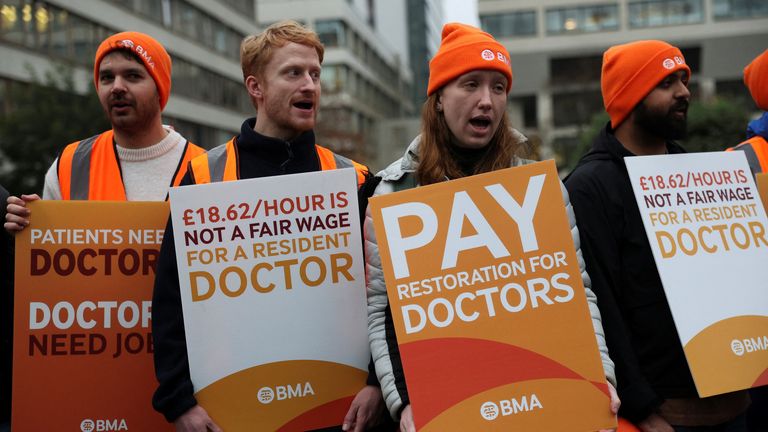
The British Medical Association has confirmed a further escalation in the long running dispute over pay for resident doctors in England, announcing a five day strike from 17 December. This will be the fourteenth walkout since March 2023, a sequence of industrial action that has reshaped the NHS’s operational rhythm and exposed the depth of discontent within the medical workforce.
The timing is critical. December is already one of the most pressured periods for acute care, urgent treatment centres and bed management. NHS leaders reacted within hours, describing the decision as an inflammatory act that will further destabilise a service preparing for winter surges, sustained emergency demand and rising respiratory illness. Senior operational teams privately warn that the cumulative impact of repeated walkouts is now being felt in backlogs that were previously assumed to be manageable.
The BMA rejects that narrative, arguing that it has been left with no alternative after months of stalled dialogue and the absence of what it describes as a credible pay offer. Its leadership insists that the government has repeatedly failed to table proposals that reflect inflationary pressures, erosion of real terms pay and the intensity of clinical work now expected of resident doctors across general medicine, surgery, mental health and community settings.
Behind the public statements sits a deeper tension. Ministers are attempting to contain public sector pay growth in the context of tight fiscal rules and limited room for manoeuvre. Resident doctors see the dispute as part of a longer arc of wage stagnation and workforce attrition that has driven rising vacancies, inconsistent rota coverage and an over reliance on locum staffing. The industrial action has become a proxy for the wider workforce settlement that many argue the NHS can no longer defer.
The December walkout is expected to cause widespread disruption across elective pathways. Trusts are once again modelling cancellation scenarios, shifting outpatient capacity and planning consultancy cover for emergency and urgent services. Integrated care boards are preparing for further escalation protocols to protect critical activity, manage ambulance handover delays and maintain safe staffing overnight.
The dispute now enters a decisive phase. Without a negotiated settlement, winter will unfold against the backdrop of repeated stoppages and a workforce that feels unseen and unheard. With public patience beginning to fray and operational leaders calling for stability, both government and the BMA face mounting pressure to break the deadlock before the NHS enters the most demanding months of the year.



.jpg)
.jpg)
.jpg)