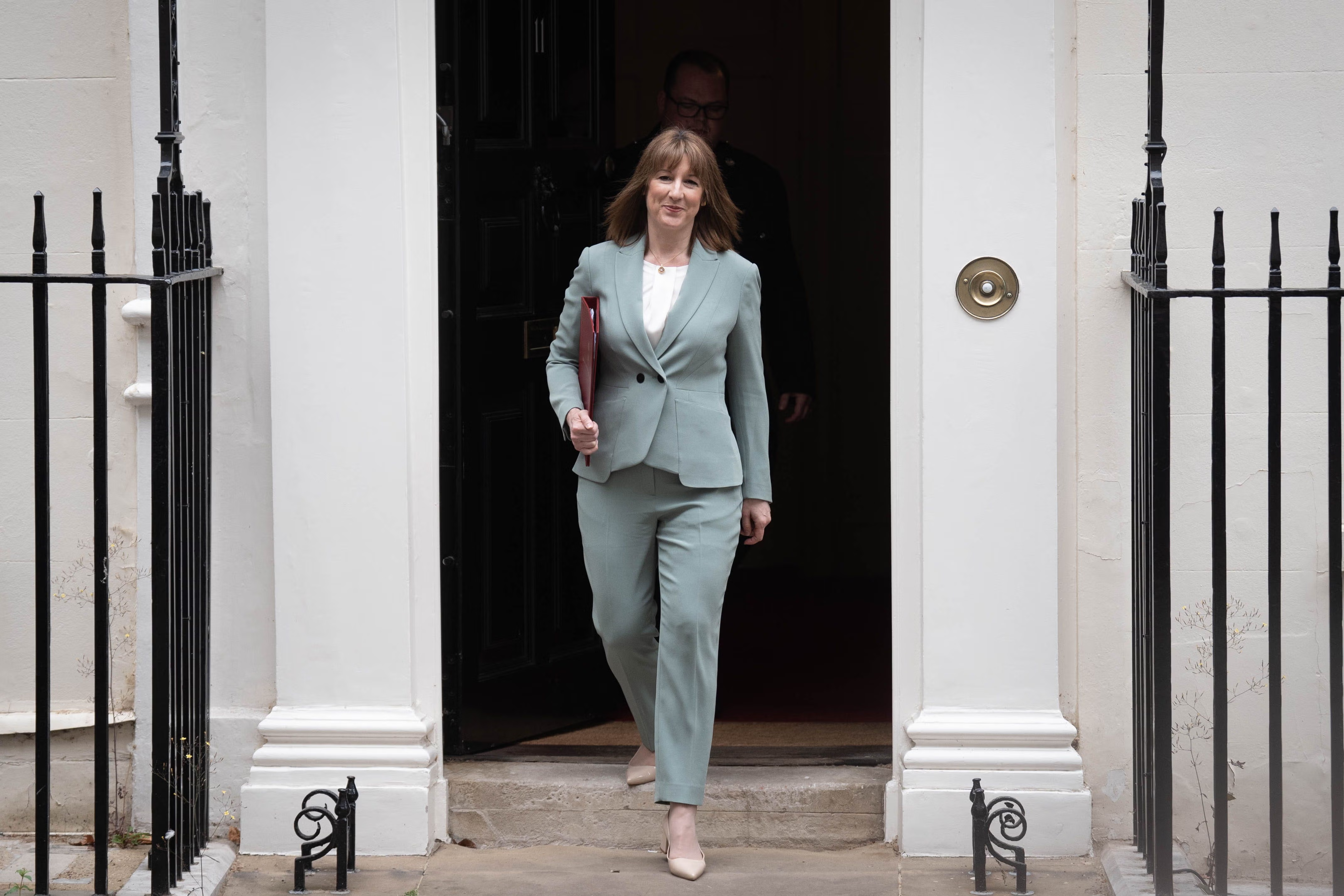
Chancellor Rachel Reeves has indicated she may lift restrictions on benefits linked to family size in this month’s Budget. Speaking in a BBC interview, she said it was unfair that children in larger families were 'penalised through no fault of their own', suggesting that the government could remove or revise the two-child limit introduced by the Conservatives in 2017.
Reconsidering the Two-Child Limit
The current policy prevents households receiving Universal Credit or Child Tax Credit from claiming support for a third or subsequent child born after April 2017. The measure was introduced under the Conservative government to encourage 'fairness' between those in work and on benefits, but has been criticised for deepening child poverty.
Reeves told BBC Radio 5 Live that she believed it was wrong for children to suffer because of family size, adding that the government would 'take action on child poverty' as part of its wider economic strategy. She also said Labour would seek to replicate the progress made under the last Labour government, which reduced child poverty significantly between 1997 and 2010.
Options Under Review
Reports earlier this year suggested that the Treasury had been exploring alternative models rather than a full repeal of the policy. These included tapering benefits so that parents would receive full payments for the first child, with smaller amounts for subsequent children, or extending support to three or four children.
However, Reeves’ comments appear to signal a stronger preference for scrapping the limit entirely, aligning her stance with several Labour MPs who have called for its removal. The Institute for Fiscal Studies estimates that ending the policy could lift 630,000 children out of absolute poverty, though it would cost the government around £3.6 billion per year.
Balancing Social Policy and Fiscal Constraints
Reeves also addressed wider economic challenges, including questions about tax policy and public spending. She stopped short of ruling out tax increases, saying that while maintaining existing manifesto pledges would be possible, it could require 'deep cuts in capital spending' elsewhere.
Labour’s 2024 manifesto committed not to raise the main rates of income tax, National Insurance or VAT. However, the government has already increased employers’ National Insurance contributions and has not ruled out further threshold freezes beyond 2028.
Pressed on whether lower spending could prevent further tax rises, Reeves defended higher investment in the NHS, citing the need to cut waiting lists as one of her key Budget priorities. She argued that the previous government had 'pencilled in' commitments without identifying how they would be funded, leaving Labour to make difficult fiscal decisions.
Political and Public Response
The prospect of removing the two-child limit has divided opinion across Westminster. Some within Labour see it as essential to tackling poverty and inequality, while opponents, including the Conservatives, argue that households on benefits should make the same financial choices as working families.
During a symbolic Commons vote in September, the Conservatives reaffirmed their commitment to keeping the cap in place. Reform UK, meanwhile, has pledged to scrap the policy for working British couples if elected, positioning itself as more generous on family support than both major parties.
Pressure has also come from within Labour ranks. Both Lucy Powell and Bridget Phillipson expressed support for ending the policy during the recent deputy leadership contest, reflecting growing unease among party members about the social impact of the cap.
Next Steps Ahead of the Budget
Reeves is expected to confirm her position when she delivers the Budget later this month. Any reversal of the policy would represent a major shift in welfare strategy and signal Labour’s intent to prioritise child poverty reduction as part of its broader economic plan.
The final decision will depend on fiscal calculations within the Treasury and the chancellor’s broader balancing act between social investment and fiscal restraint.


.jpg)
.jpg)
.jpg)