
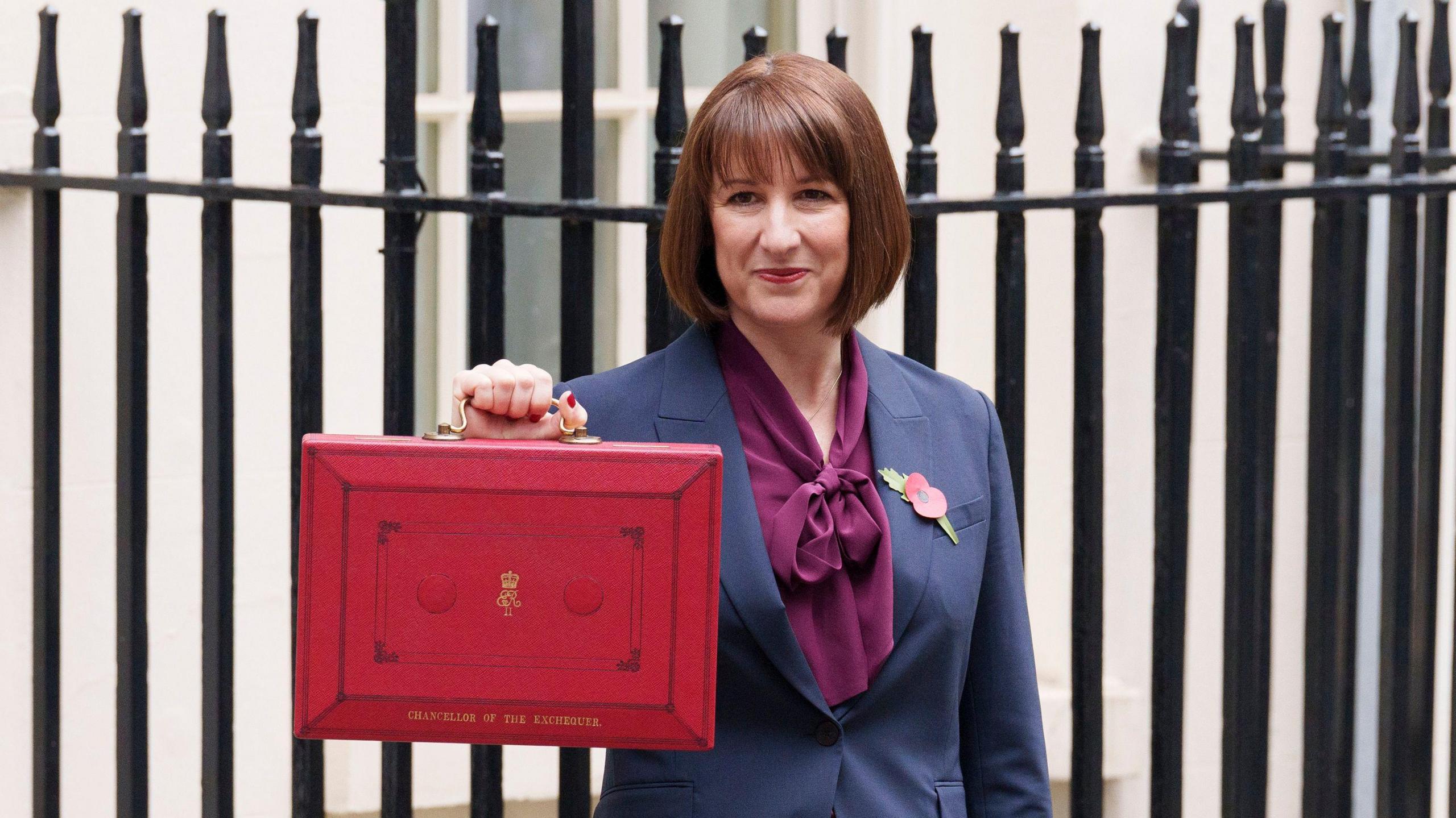
Rachel Reeves delivered her Autumn Budget under the shadow of controversy, following the premature release of key Office for Budget Responsibility forecasts just hours before her statement. What should have been a tightly controlled moment instead sparked political criticism, with Conservative leader Kemi Badenoch calling the situation “shambolic” and accusing the government of mishandling the process.
What should have been an exercise in authority instead opened amid confusion and political unease. The early disclosure laid bare the stark context facing the Chancellor. A structural gap of around £30bn in the public finances, downgraded growth expectations and a visibly shrinking fiscal buffer framed the statement before Reeves had spoken. Against this backdrop, the Budget became not simply a financial plan but a test of composure, competence and credibility.
The £30bn Challenge and a Turn Towards Fiscal Tightening
Reeves delivered a statement defined by weak economic momentum and intense political pressure, yet anchored in a deliberate programme of modest fiscal tightening intended to create headroom for higher public spending, while reaffirming her pledge to “Get Britain Building” and raise public investment to its highest level in four decades. Unequivocally avoiding the language of austerity, she confirmed that the budget would bring lowered borrowing; higher tax revenues would fund renewed investment in public services, particularly the NHS, alongside measures designed to ease cost-of-living pressures on households. This will bring the tax take to an all-time high to 38% of the GDP by 2030, aiming to bring the stability rule a year earlier than planned.
The governing logic of the Budget was clear. Stability must precede expansion and credibility must come before generosity. Reeves declared priorities remain in reducing NHS waiting lists, lowering the national debt and easing the cost of living. Yet each ambition now sits within the hard reality of rising debt interest costs and tightened fiscal rules.
The Expansion of the Tax Base and Unprecedented Tax Changes
At the heart of the Budget is the extended freeze on income tax thresholds for a further three years beyond 2028, a move expected to raise around £8bn a year by gradually pulling more people into higher tax bands. The OBR estimates this will create roughly 920,000 additional higher-rate taxpayers. Thresholds will remain unchanged, with no tax on income up to £12,570, 20 per cent charged between £12,571 and £50,270, 40 per cent between £50,271 and £125,140, and 45 per cent above that level.
This sits within a wider package of tax rises, including new charges on salary-sacrificed pension contributions, higher taxes on property, savings and dividends, corporation tax changes, a new mileage charge for electric vehicles, gambling tax reforms, reduced capital gains relief on employee ownership trusts and a council tax surcharge on homes worth over £2m. Strengthened tax enforcement and other levies, including Sizewell C, further contribute to the government’s expanding revenue base.
Public Services and the NHS
For public services, particularly the NHS, the Chancellor reaffirmed her commitment to increased funding but framed it firmly through reform, efficiency and productivity. This included a targeted £300 million investment in NHS technology to improve patient services and strengthen day-to-day delivery on the frontline. Reeves also announced the creation of 250 new Neighbourhood Health Services, aimed at expanding community-based care and giving patients faster access to treatment closer to where they live. The ambition is to reduce waiting lists and improve patient flow through earlier intervention, preventative care and more integrated local services, with initial delivery focused in areas including Birmingham, Truro and Southall.
Alongside this, additional funding will support frontline staff and boost workforce productivity, reinforcing the shift towards digital enablement, smarter service delivery and performance-driven improvement. Investment will rise, but within a system increasingly defined by accountability and measurable outcomes rather than open-ended expansion.
Startups and Scaleups
Alongside the measures aimed at stabilising the public finances, Reeves also sought to signal support for start-ups and scale-ups as central to the government’s long-term growth agenda. The Budget included a package of incentives designed to encourage innovation, investment and domestic scaling, with enhanced support for early-stage firms, targeted reliefs for high-growth sectors and a renewed commitment to improving access to capital. While limited by fiscal constraints, the measures indicate an effort to position entrepreneurship as a key driver of productivity and competitiveness.
Transport, Pensions and New Sources of Revenue
The Chancellor confirmed a new mileage-based tax on electric and plug-in hybrid vehicles from 2028–29, set at 3p per mile. This will initially cost the average driver around £255 a year and raise £1.1bn in its first year, increasing to £1.9bn by 2030–31. The move reflects the government’s recognition that declining petrol use cannot be allowed to weaken the tax base indefinitely.
Further tightening comes through reforms to salary sacrifice. From April 2029, salary-sacrificed pension contributions above £2,000 a year will no longer be exempt from National Insurance. These contributions will attract both employer and employee National Insurance, and the OBR estimates the change will raise £4.7bn in 2029–30 and £2.6bn the following year, narrowing long-standing tax advantages for higher earners.
Welfare, Property and Household Relief
The leaked OBR document confirmed several politically sensitive measures shaping the social face of the Budget. The two-child benefit cap will be lifted at an estimated cost of £3bn by 2029–30, signalling a distinct shift in welfare philosophy. Fuel duty will remain frozen until at least September 2026, providing ongoing relief to motorists while narrowing a traditional revenue source.
A new council tax surcharge on properties valued over £2m will be introduced, expected to raise around £0.4bn and reflecting an intentional shift toward wealth-based taxation. Household gas and electricity bills will be reduced through cuts to green levies, a measure forecast to cost £2.3bn and designed to offer modest relief to households facing sustained cost pressures.
Inflation and the Economic Backdrop
The wider economic context remains fragile. The OBR now expects inflation to reach 3.5 per cent this year, up from its earlier forecast of 3.2 per cent. It has also revised next year’s projection from 2.1 per cent to 2.5 per cent, while maintaining its 2 per cent estimate for 2027 and the subsequent two years.
These revisions underline the delicate balance Reeves must strike between price stability and economic recovery, while limiting the government’s capacity to stimulate without risking further fiscal strain.
Labour, Timing and the Politics of 2026
Crucially, the most significant tax rises will not take effect immediately. Instead, they will land as Labour enters an election year, with the government betting that improved stability and public services will soften voter reaction once higher taxes are felt. This is a calculated political gamble. While it signals confidence that voters will reward long-term discipline, it also carries risk. If growth remains weak or living costs continue to strain households, these delayed increases may be seen not as responsible planning, but as deferred burden.
The Autumn Budget 2025 is therefore less about spectacle and more about recalibration. It reflects a government choosing credibility over comfort and structure over short-term relief. Whether that choice resonates will not be decided in Westminster, but at the ballot box.



.jpg)
.jpg)
.jpg)